Diamond Art
Paint by numbers for people who found paint by numbers insufficiently sparkly.
- Cost to start
- ~$35 to start
- Learning curve
- 1 / 5
- Typical session
- 30-90 min
- Physical demand
- 1 / 10
- Social level
- 1 / 10
- Setting
- At home
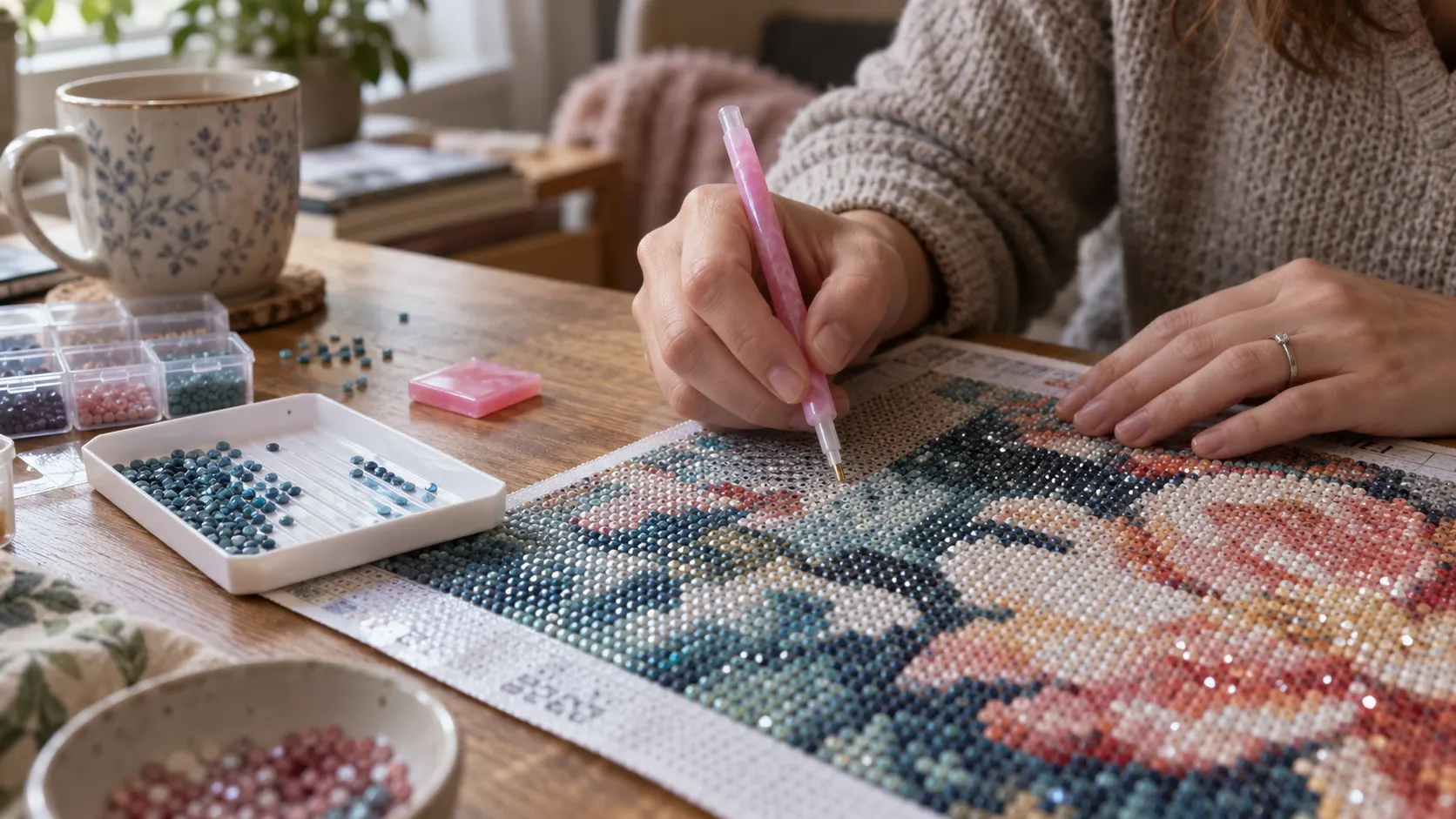
Diamond art — also called diamond painting — is cross-stitch's shinier, lazier cousin: you press tiny flat-backed resin "diamonds" onto a sticky, numbered canvas until a picture appears. There's no drawing, no mixing, and no talent requirement. You are, technically, just sorting by color and pressing down. It is shockingly hard to stop once you start.
What it costs
Bare-minimum start: about $15 — a small kit, roughly 20x25 cm, comes with everything you need: canvas, diamonds, a pen-style applicator, and a tray. Nothing extra to buy.
Practical setup: about $35. That's a medium kit (around 30x40 cm) plus a light pad — a thin LED tablet you place the canvas on, which makes the printed symbols on the canvas far easier to read, especially for darker images or tired eyes at 10pm. The kit itself already includes the applicator pen and wax, so the light pad is the one real upgrade worth adding.
Optional later: a custom photo-to-diamond-art kit made from your own picture (pricier, often $40-60 depending on size), a rolling storage caddy with labeled bins for loose diamonds, and a "diamond drill pen" with interchangeable tips if you get serious about speed.
The one thing worth spending on is the light pad — it's the single upgrade that makes long sessions less eye-straining. There's no real ongoing cost beyond buying your next canvas; diamonds and applicator wax that come in a kit are already enough for that kit.
What to buy
A kit sized to how much time you actually want to commit — small canvases finish in a few sittings, large ones can take months. A light pad, which most people end up buying within their first two kits anyway. A shallow tray with a lip, usually included, for sorting diamonds by color code as you work.
Skip buying a "diamond drill pen" upgrade before your first kit — the basic pen included in every kit works fine, and you won't know if you want the upgrade until you've felt the basic one's limits. Skip huge canvases (60x80 cm or bigger) as a first project; they're a serious time commitment and can sour a beginner before they've even seen a finished piece.
How to start
Start with a small square kit under 30x40 cm. You don't need a light pad or storage system yet — a plain table and good daylight get you through your first canvas.
Peel back a small section of the plastic film covering the sticky canvas at a time, rather than the whole thing at once, so it doesn't collect dust before you get to it. Sort a handful of one color into your tray, load a few diamonds onto the wax-tipped pen, and press them onto their matching numbered squares. Work section by section rather than jumping around — it's both faster and more satisfying to watch a corner actually finish. Most people find a rhythm within the first hour; the most common beginner mistake is pressing too hard, which can crack a diamond, or picking up diamonds face-down, which won't stick to the wax at all — check the flat side is up before loading the pen.
Is it for you?
Diamond art suits people who want their hands busy while their brain does something else entirely — a podcast, a show, a conversation. It's genuinely meditative in a way that's hard to describe until you've done it: repetitive, low-stakes, and visibly progressing the whole time. If you need a hobby that finishes fast, a large canvas will frustrate you — some take weeks of evenings. If you like a slow build you can pick up and put down freely with something to show for every session, it delivers exactly that.
Starter gear
Soft suggestions to get going. These are affiliate links — buying through one may earn us a commission at no extra cost to you.
Tagged
More like this
Mixology
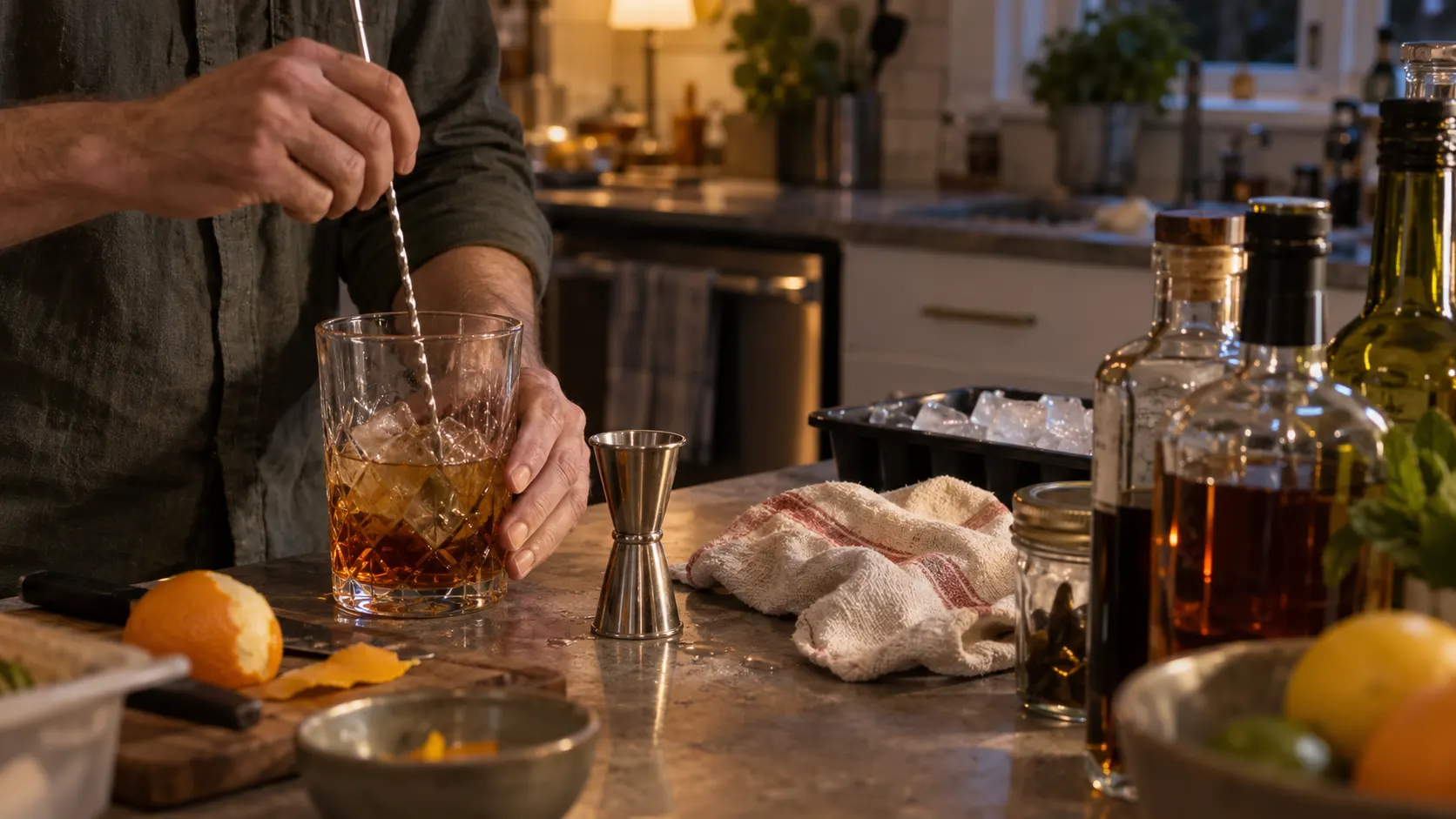
Measuring liquids precisely so that later you can drink them less precisely.
Pearl Art
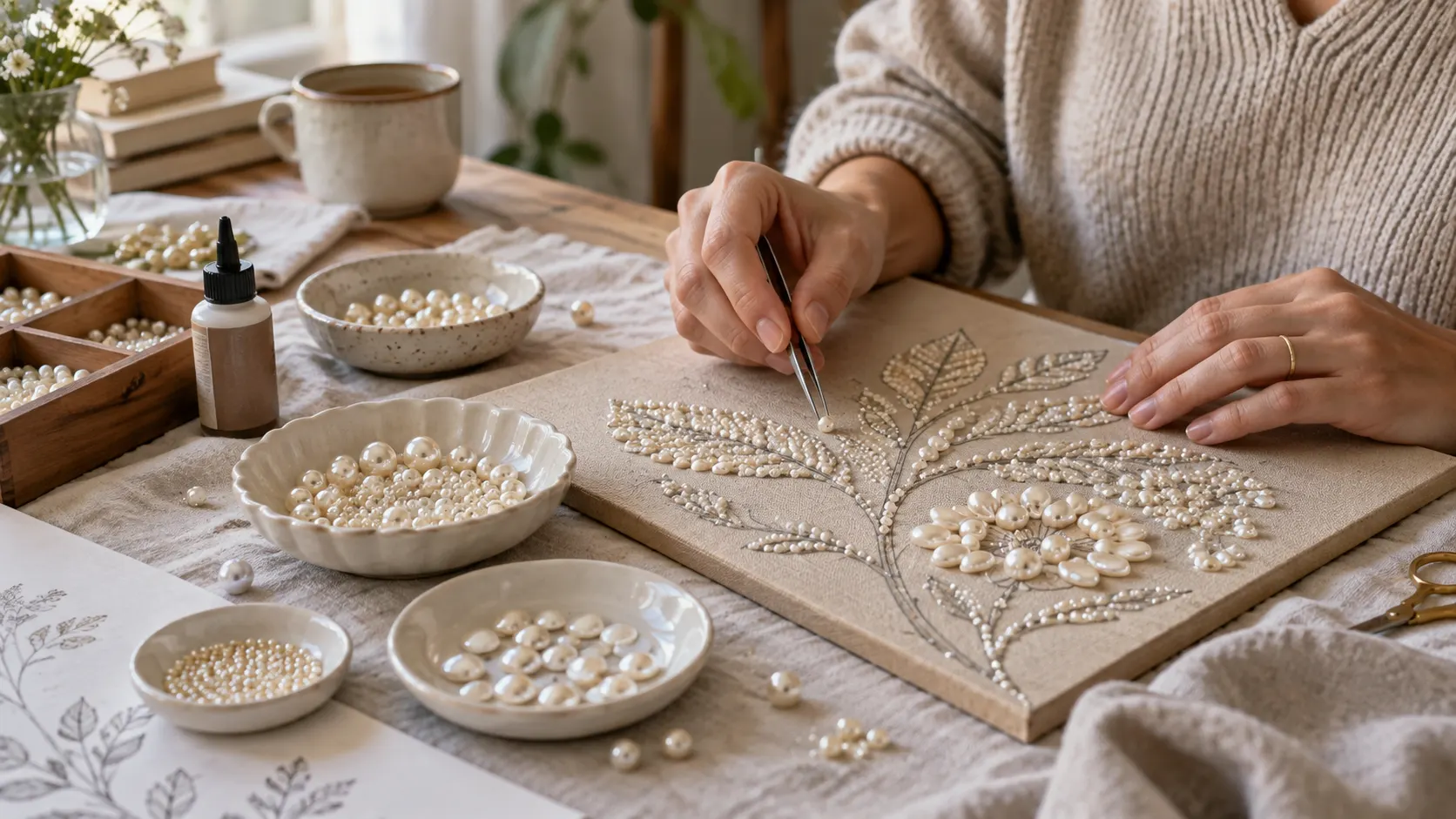
Diamond art's quieter cousin, for people who think glitter is a little much.
Woodworking
Turning boards into furniture, or, on your first attempt, into a wobbly cautionary tale.
Rock Tumbling
Putting ugly rocks in a machine for a week so they come out looking expensive.
Coffee Brewing
Spending $80 on gear to make a coffee objectively worse than the $2 gas station one, at first.