Go
A board game with two rules and a genuinely lifelong ceiling on how good you can get.
- Cost to start
- ~$30 to start
- Learning curve
- 4 / 5
- Typical session
- 30–60 min
- Physical demand
- 1 / 10
- Social level
- 5 / 10
- Setting
- At home
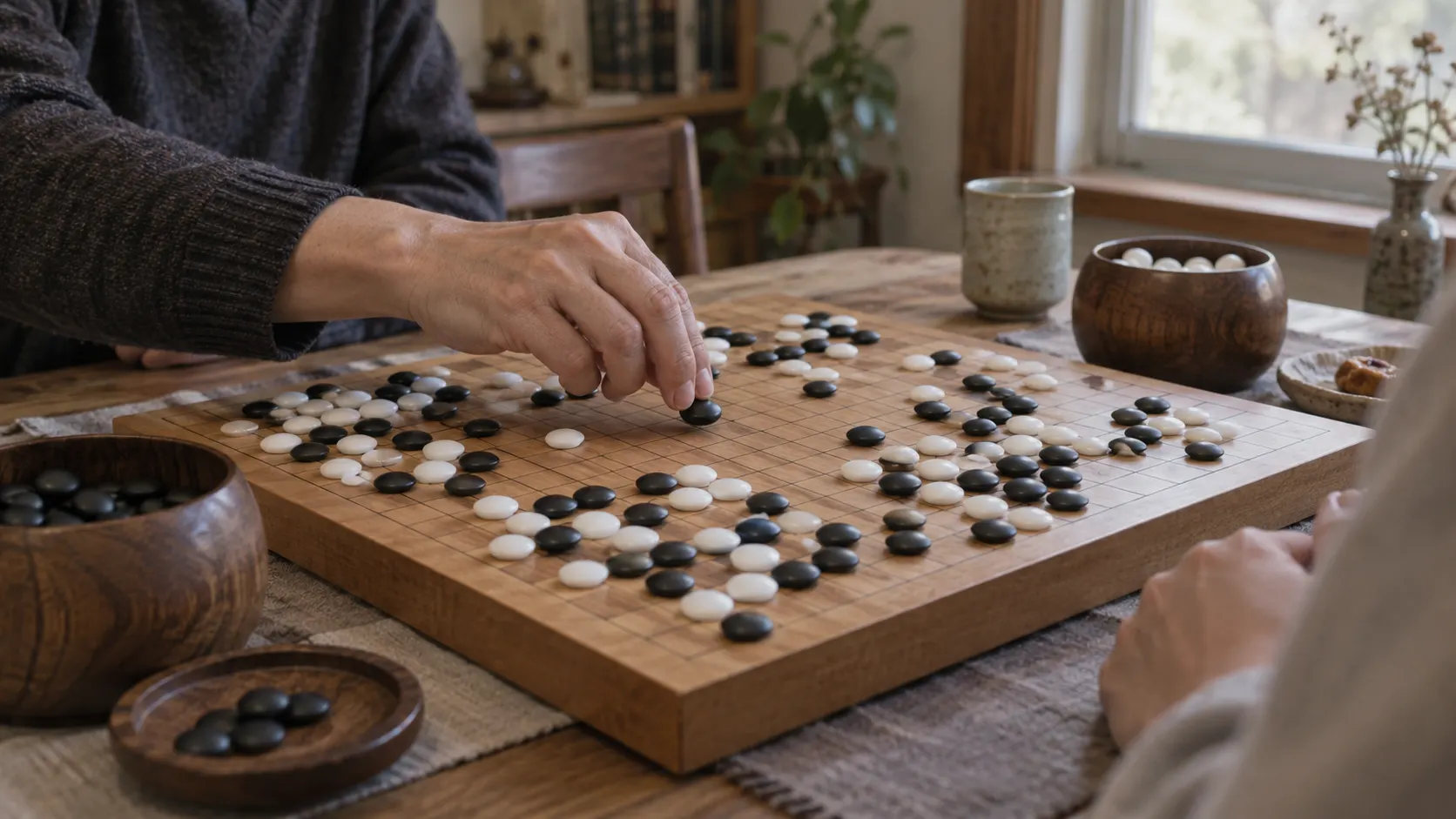
Go has a reputation as the "hard" strategy board game, which is true and also slightly misleading — the actual rules fit in a single paragraph and take about ten minutes to learn. What takes years is getting good at it, which is a very different thing from understanding how to play.
What it costs
Bare-minimum start: $0. Free servers like OGS (the Online Go Server) and several free apps let you play immediately against other beginners or a computer opponent, with no physical board needed at all.
Practical setup: about $30. That's a foldable or roll-up beginner Go board (~$15) and a set of glass or plastic stones (~$15). A physical board is genuinely nicer for learning than a screen, since placing stones by hand builds a feel for the board that tapping a phone doesn't.
Optional later: a proper wooden board (a kaya board can run from a couple hundred dollars into the thousands for high-end ones) and slate-and-shell stones, both of which are a serious hobbyist's upgrade, not a beginner purchase.
There's no ongoing cost with a basic set — stones and a board last indefinitely with normal care. Playing online costs nothing at all beyond the initial device you already own.
What to buy
A beginner-sized board, usually a smaller 9x9 or 13x13 grid rather than the full 19x19 tournament size — smaller boards finish faster and are specifically recommended for learning, since a full-size board can make early games feel endless. A set of stones in a bowl or bag. That's the entire physical kit; nothing else is required.
Skip the full 19x19 board and any book on advanced theory before you've played several smaller games — jumping to full-size boards and opening theory before understanding basic capturing and territory is a common way beginners get discouraged early. You can also borrow a board from a local Go club before buying one — many cities have a small, welcoming club specifically looking to teach new players, often for free.
How to start
Start on a 9x9 board, either physical or on a free app, and learn just two rules: surround territory, and capture stones by surrounding them completely. You don't need to know any opening theory or full-size strategy yet.
Play against a very weak computer opponent or a friend who's equally new for your first several games, focusing purely on not losing groups of stones to capture rather than territory efficiency. Once games on 9x9 feel comfortable, move to 13x13 before attempting the full 19x19 board — each size genuinely plays differently, and skipping straight to full-size is the single biggest reason beginners bounce off the game early.
The most common beginner mistake is spreading stones too thin across the board instead of building a few strong, connected groups — a scattered position looks like more control but is actually easier for an opponent to pick apart piece by piece. A second common mistake is playing too fast without reviewing losses — after a game, checking where a group got captured and why teaches more than several unreviewed games in a row.
Is it for you?
Go suits people who want a strategy game with real, long-term depth and don't mind that genuine competence takes months, not an afternoon. It asks for patience with losing a lot early, since even experienced players describe a steep, humbling curve at every level. If you want a game you can master quickly, this isn't it; if you want one you could realistically study for the rest of your life without running out of new things to learn, few games match it.
Starter gear
Soft suggestions to get going. These are affiliate links — buying through one may earn us a commission at no extra cost to you.
Tagged
More like this

Reiki Healing
Lying still while someone holds their hands near you, which is relaxing whether or not chi is real.

Immersion Reading
Reading and listening to the same book at once, because apparently one sense wasn't enough.

Escape Rooms
Paying a stranger to lock you in a room, then thanking them for it afterward.
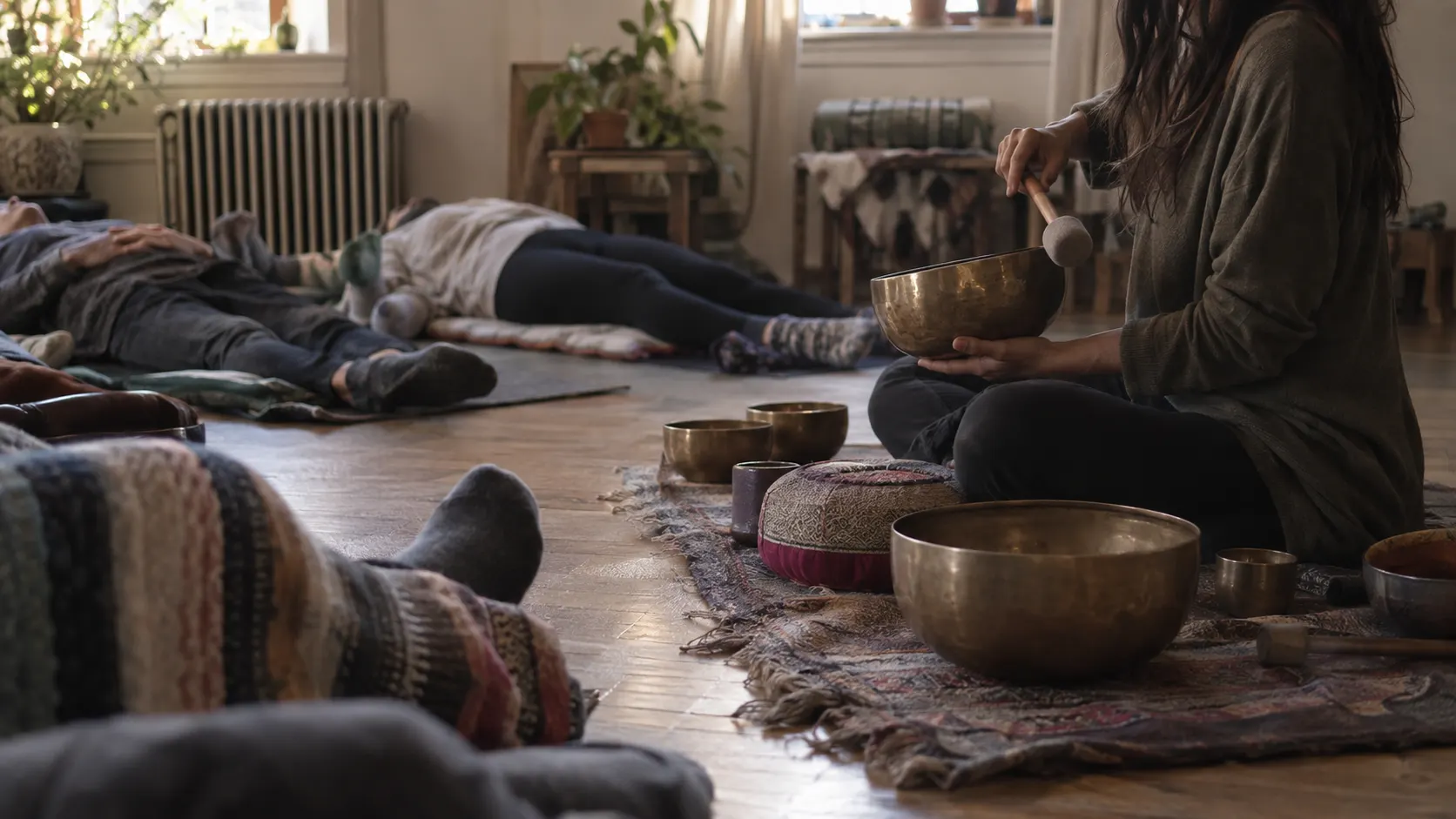
Sound Bath
Lying on the floor while bowls hum at you, which is more relaxing than it sounds.
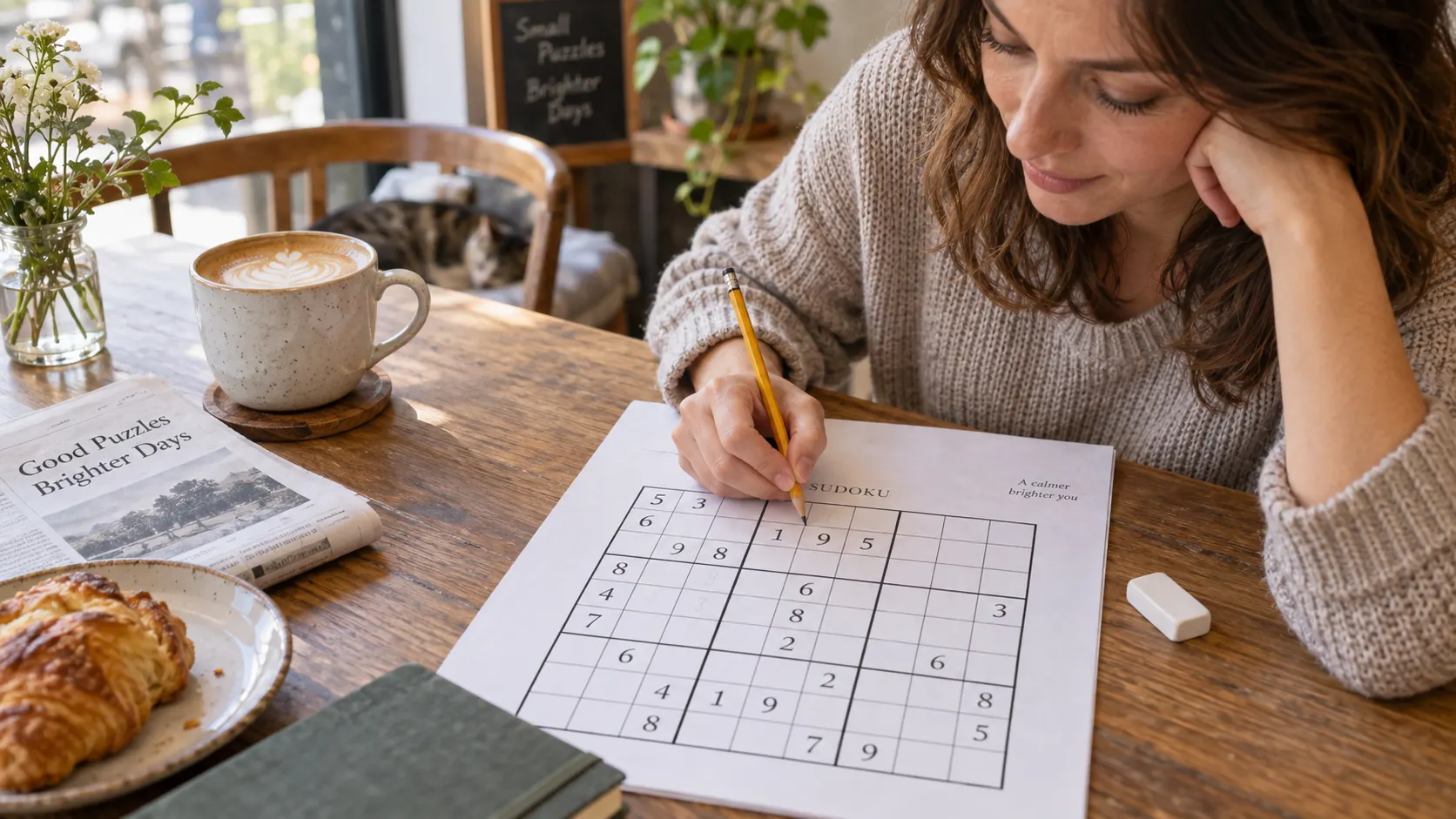
Sudoku
Nine numbers, one grid, and a strange sense of moral failure when you get one wrong.