Bird Watching
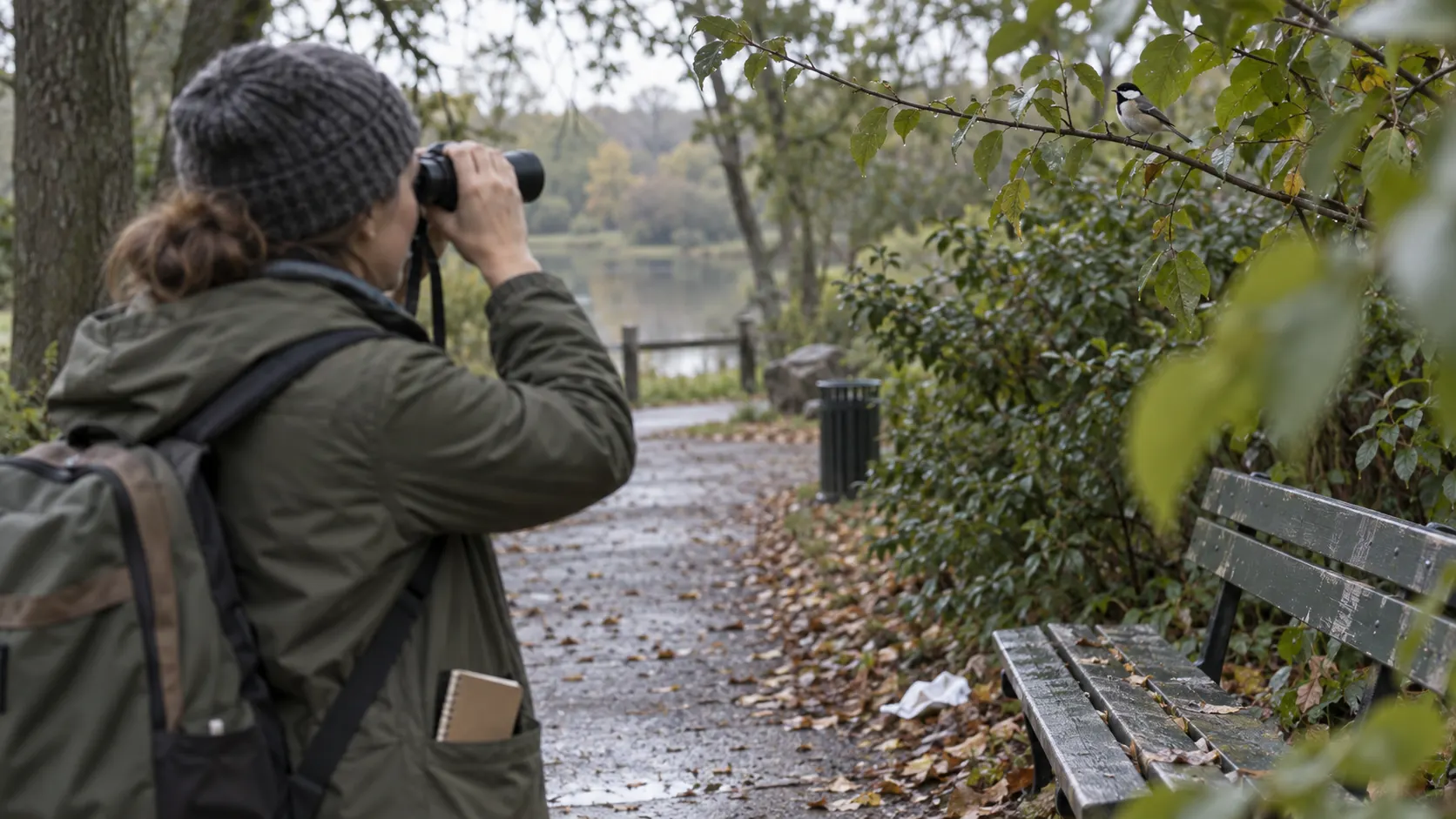
Standing very still outside, staring at a tree, until it turns out to have a bird in it.
- Cost to start
- ~$90 to start
- Learning curve
- 2 / 5
- Typical session
- 30–60 min
- Physical demand
- 2 / 10
- Social level
- 2 / 10
- Setting
- Outdoors
Bird watching has an image problem: khaki vests, a life list kept in a leather notebook, decades of patience required. Most of it is actually just standing in your own backyard or a nearby park, noticing something you would normally walk past entirely.
What it costs
Bare-minimum start: $0. Your eyes, your ears, and a free bird-ID app — Merlin Bird ID from the Cornell Lab is the standard, and it can identify a bird from a photo or even a recording of its call. You can genuinely start today with nothing else.
Practical setup: about $90. That is a real pair of entry-level birding binoculars (Celestron Nature DX or a similar 8x42, ~$80) and a small notebook or field guide (~$10) for tracking what you have seen. Binoculars are the one thing worth spending on properly — true budget pairs under about $30 tend to have blurry edges and poor low-light performance that make birding genuinely harder, not just less comfortable.
Optional later: a spotting scope and tripod (several hundred dollars) once you are seriously into it, and a nicer binocular upgrade with better light-gathering for dawn and dusk, when a lot of bird activity actually happens.
There's no real ongoing cost beyond that — binoculars last for years with basic care, mainly keeping the lenses clean and avoiding drops. This is a hobby where the starting cost really is close to the total cost, for a long time.
What to buy
8x42 binoculars are the standard beginner recommendation — enough magnification to see real detail, wide enough field of view to actually find a moving bird before it flies off. A small notebook for a simple life list, or just the free app's built-in log. That is genuinely the whole kit.
Skip a spotting scope and tripod for now. They are built for scanning open water or distant fields, which is not where most beginners start, and they are dead weight on a first backyard or park walk. You can also borrow binoculars for your first few outings — a family member's old pair, or a nature center's loaner set, is a genuinely good way to confirm you like this before spending $80.
How to start
Start in your own backyard or nearest park with just your eyes, ears, and the free ID app running. You do not need binoculars yet for this part.
Spend the first couple of weeks just noticing — what is common where you live, what times of day are busiest (usually early morning), and what habitats attract what birds. Once you are regularly seeing something you cannot identify by eye alone, that is the sign binoculars will actually add something. Go out two or three times a week, even for ten minutes; birding rewards frequency and familiarity with one place more than long, occasional outings.
The most common beginner mistake is trying to identify everything by sight alone. Sound is often faster and more reliable once you learn a handful of common calls, so lean on the app's audio identification early rather than treating it as cheating. A second common mistake is chasing every rare-bird alert you see online before you've learned the common species in your own area well — the common birds are what actually build the pattern-recognition that makes rarer sightings easier to notice later.
Is it for you?
Bird watching suits people who like a hobby that rewards patience and repetition over big single events — most days you will see the same common handful of species, and that is the actual practice, not a letdown. It asks for a tolerance for standing or sitting still and quiet, which not everyone finds relaxing. If you need constant novelty to stay interested, it can feel slow; if you like the idea of getting quietly better at noticing your own neighborhood, it rewards that almost immediately.
Starter gear
Soft suggestions to get going. These are affiliate links — buying through one may earn us a commission at no extra cost to you.