
Bonsai
All the patience of meditation, except you end up with a tiny tree to show for it.
- Cost to start
- ~$70 to start
- Learning curve
- 3 / 5
- Typical session
- 20–40 min
- Physical demand
- 2 / 10
- Social level
- 2 / 10
- Setting
- At home
Bonsai has a reputation as a hobby for retirees with infinite time and a spare greenhouse. Ignore that. At its core it is one small tree, a pair of scissors, and ten minutes a week of deciding which branch has to go. The tree does the slow part for you.
What it costs
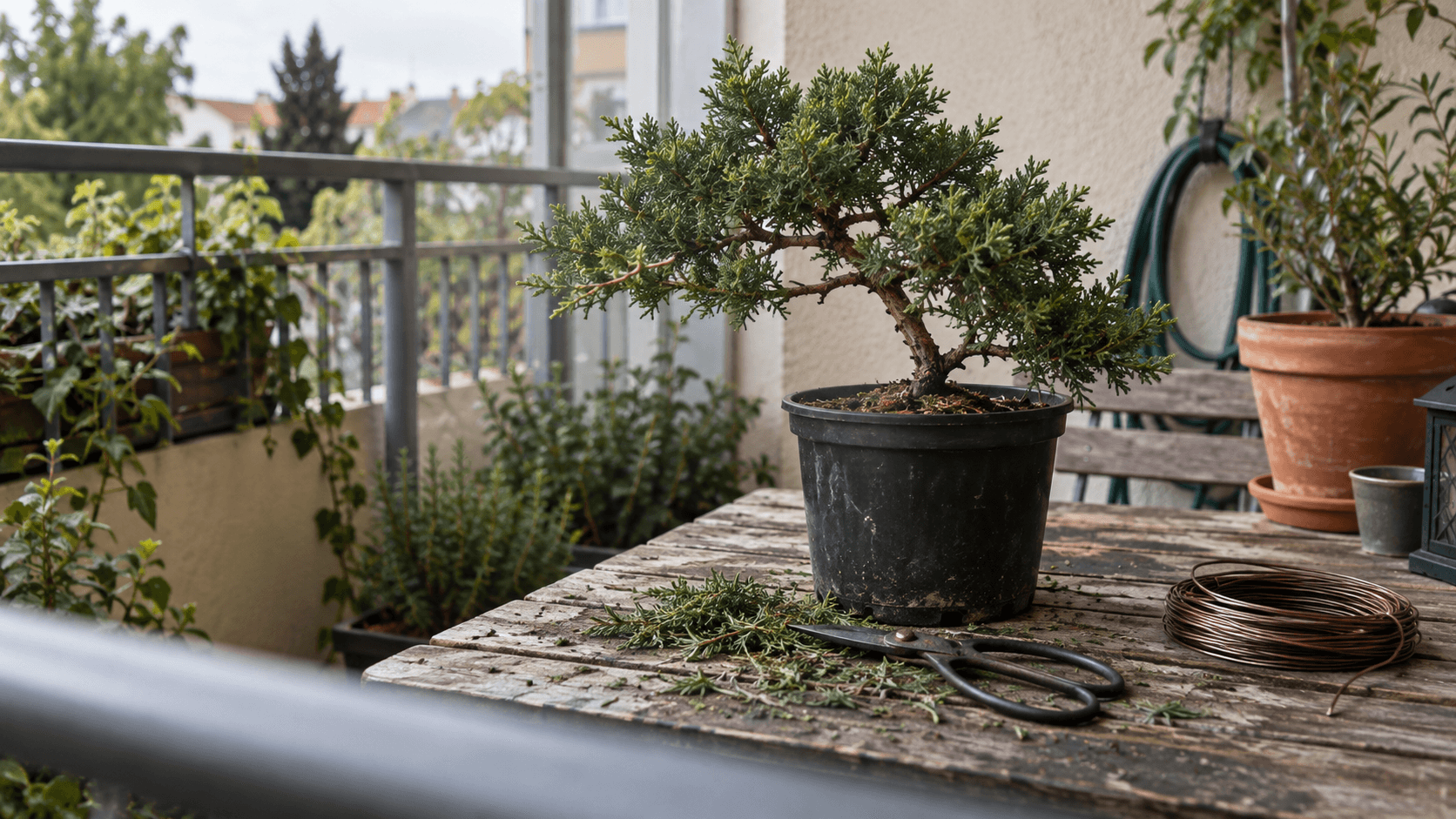
Bare-minimum start: about $35 for a hardy nursery tree (juniper or Chinese elm are the classic beginner picks) and nothing else — use kitchen scissors for your first few cuts and the soil already in the pot it comes in.
Practical setup: about $70. That's the nursery tree ($35), a proper pair of bonsai shears ($25), and a small roll of training wire ($12) — the shears alone are worth it, since kitchen scissors crush stems instead of cutting them cleanly. Skip the pre-styled "bonsai gift" trees sold in malls; they are usually unhealthy and glued into their pots.
Optional later: a small root rake (~$8) for repotting, and a proper ceramic pot (from $25) once you know the tree will live — a plastic nursery pot works fine for the first year.
The one ongoing cost is soil: a bag of free-draining bonsai or cactus mix (~$8) lasts several repottings, so budget for it every year or two, not monthly.
One climate note before you buy: junipers and Chinese elms are temperate trees that need a real winter outdoors to stay healthy — keeping one on a warm windowsill through the cold months is one of the fastest ways beginners kill a tree that otherwise would have been fine. If you're in an apartment with no real outdoor space, a ficus bonsai is the one common beginner species that tolerates indoor life year-round, though it wants bright light.
What to buy
A hardy nursery tree — juniper and Chinese elm tolerate beginner mistakes best. A pair of sharp bonsai shears, which make clean cuts that heal properly (regular scissors tear the bark). A small roll of training wire in one or two gauges, for shaping branches as the tree grows. That's the whole beginner kit.
Don't buy a root rake or a ceramic pot yet — the rake is for repotting, which you won't do for a year, and a nice pot is wasted on a tree you're still learning to keep alive. And don't buy a "starter bonsai kit" bundle; they usually include a weak seedling and tools you won't touch for months. A decent pair of shears will last for years with basic care — wipe the blades dry after use so they don't rust — so this isn't a cost you'll be repeating the way you will with soil.
How to start
Start with a healthy nursery-grown juniper and spend the first month just watering it when the topsoil dries. You don't need shears or wire yet.
Keep it outdoors — bonsai are outdoor trees except for a handful of tropical species, and indoor placement is the single most common way beginners kill one. Once the tree has settled in, make your first cuts: remove one branch that crosses another, and one that grows straight down toward the trunk. That's it for month one.
From there, check the tree every few days (watering needs change with the weather) and prune lightly every few weeks rather than all at once — bonsai rewards small, repeated decisions, not one dramatic edit. By the following spring, check whether roots are circling the bottom of the nursery pot; if they are, it's time for your first repot, using the root rake to gently comb out old soil before adding fresh mix. Most beginner trees only need repotting every one to two years, not every season, so this isn't a frequent chore. Most beginners over-water out of anxiety or over-prune out of excitement; both stress the tree more than doing nothing would. Progress looks boring: a slightly denser, slightly more shaped tree every season, not a finished miniature by month three.
Is it for you?
Bonsai suits people who like a small, recurring task more than a big project — you're tending, not building. It asks for patience with a payoff measured in years, not weekends, and for somewhere outdoors (a balcony is fine) year-round. If you want dramatic results fast, or you travel enough that watering becomes unreliable, it's a hard sell; if you like having one calm, low-stakes thing to check on, it delivers exactly that.
Starter gear
Soft suggestions to get going. These are affiliate links — buying through one may earn us a commission at no extra cost to you.
Tagged
More like this
Hand Embroidery
Stabbing fabric with a needle, repeatedly and on purpose, until a picture shows up.

Pottery
Wet clay, a spinning wheel, and the humbling discovery that centering it is most of the job.
Watercolor Painting
The most portable way to make something lovely on a lunch break — where a happy accident still counts as skill.