
Fermenting
Controlled rot, on purpose, that turns cabbage into something worth eating.
- Cost to start
- ~$45 to start
- Learning curve
- 2 / 5
- Typical session
- 20–30 min active
- Physical demand
- 1 / 10
- Social level
- 1 / 10
- Setting
- At home
Fermenting sounds like a science experiment that could go wrong in your kitchen. In practice, basic vegetable fermentation — sauerkraut, kimchi, pickles — is one of the safest, most forgiving forms of food preservation that exists, because the process itself makes the environment inhospitable to anything dangerous, not despite the smell, but partly because of it.
What it costs
Bare-minimum start: about $10–15 — a head of cabbage, non-iodized salt, and a mason jar you already own. Basic sauerkraut needs almost nothing beyond that and a few days of patience on your counter.
Practical setup: about $45. That's a proper fermentation jar with an airlock lid (~$20), which vents gas without letting air or contaminants in, a set of glass fermentation weights (~$10) to keep vegetables submerged under their own brine, and a wide-mouth jar sized for the weights and lid (~$15). None of this is strictly required — the mason jar approach genuinely works — but the airlock setup is noticeably more forgiving for a first-timer.
Optional later: a crock for larger batches, a pH meter if you want to verify acidity numerically instead of by taste and smell, and specialty ingredients (specific chili pastes for kimchi, particular salt types) once you know your preferences.
What to buy
A wide-mouth glass jar sized to fit an airlock lid and weights. An airlock lid, which lets fermentation gas escape without needing to "burp" a regular jar lid daily. Glass fermentation weights, since vegetables that float above the brine are what actually mold — keeping everything submerged is the single most important technique here. Non-iodized salt; iodized table salt can interfere with the fermentation culture.
Skip a fermentation crock and specialty cultures or starters for your first batch — wild fermentation (using the bacteria already on the vegetables) works reliably for sauerkraut and needs nothing added.
How to start
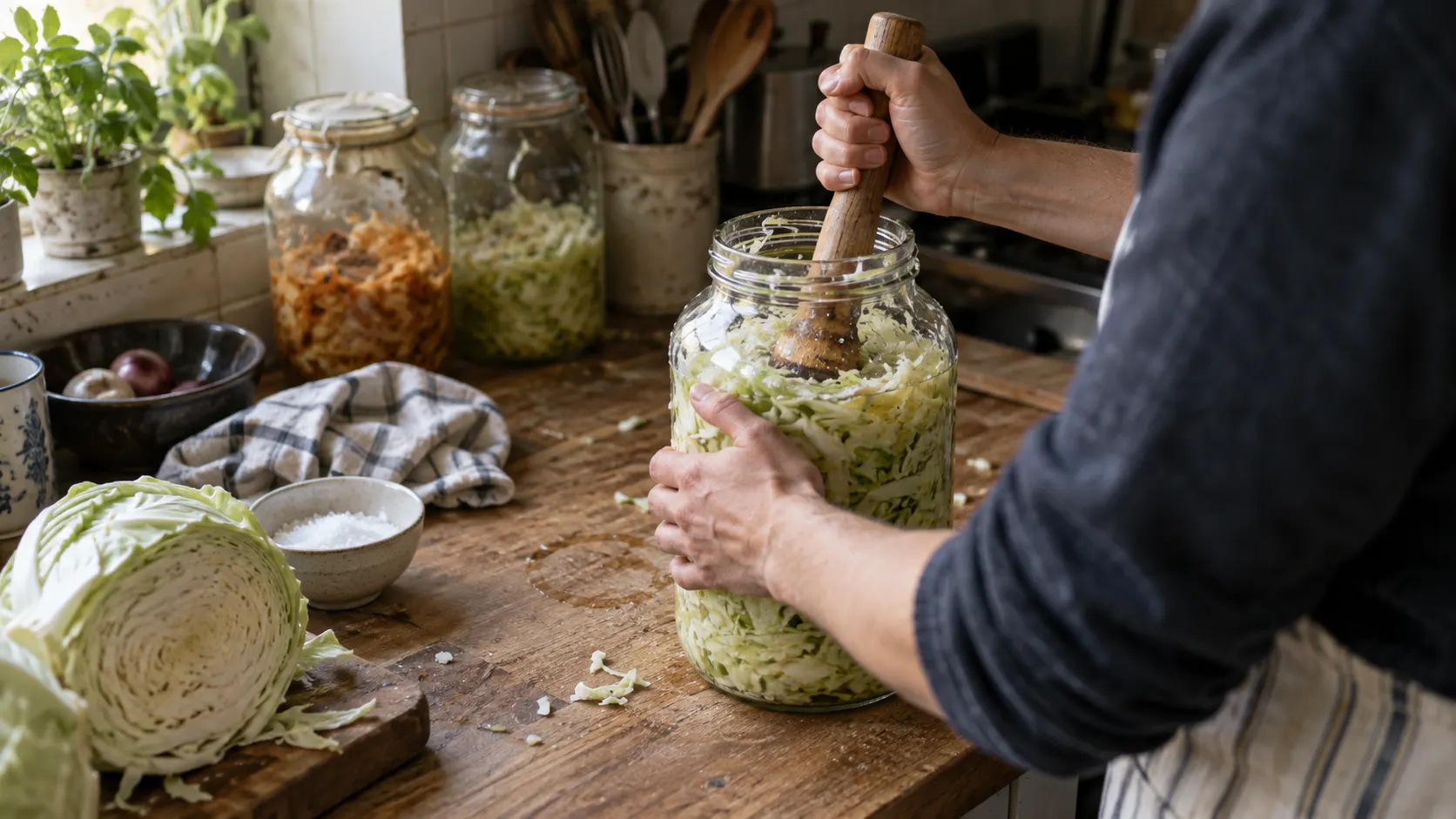
Start with a small batch of sauerkraut: shredded cabbage, salted and massaged until it releases its own liquid, packed tightly into a jar and weighted under that liquid. You don't need an airlock lid for this first batch — a loose regular lid works if you check it daily.
Keep it at room temperature, out of direct sunlight, and taste it starting around day three; fermentation time varies with kitchen temperature, and "done" is a taste preference, not a fixed number of days. Once it tastes sour enough for you, move it to the fridge, which slows fermentation down to a near-stop. Do a new small batch every couple of weeks rather than one huge batch while you're learning — smaller batches ferment faster and let you calibrate taste and timing more quickly.
The most common beginner mistake is not using enough salt, which is both a texture and a safety margin — properly salted vegetables ferment predictably; under-salted ones are more likely to go genuinely bad instead of just fermenting. A real safety note: if a batch grows fuzzy mold (not the harmless white kahm yeast film, which can just be skimmed off) or smells rotten rather than sour, discard it rather than risk it.
Is it for you?
Fermenting suits people who like a slow, mostly hands-off project with a genuinely useful result — you end up with food you'll actually eat, not just a finished craft object. It asks for comfort trusting a process you can't fully see happening inside a sealed jar, and a tolerance for some trial and error on salt levels and timing before your batches taste consistently good. If you want an instant result, this isn't it; if you like checking on a slow project every day or two, it rewards that attention.
Starter gear
Soft suggestions to get going. These are affiliate links — buying through one may earn us a commission at no extra cost to you.
Tagged
More like this
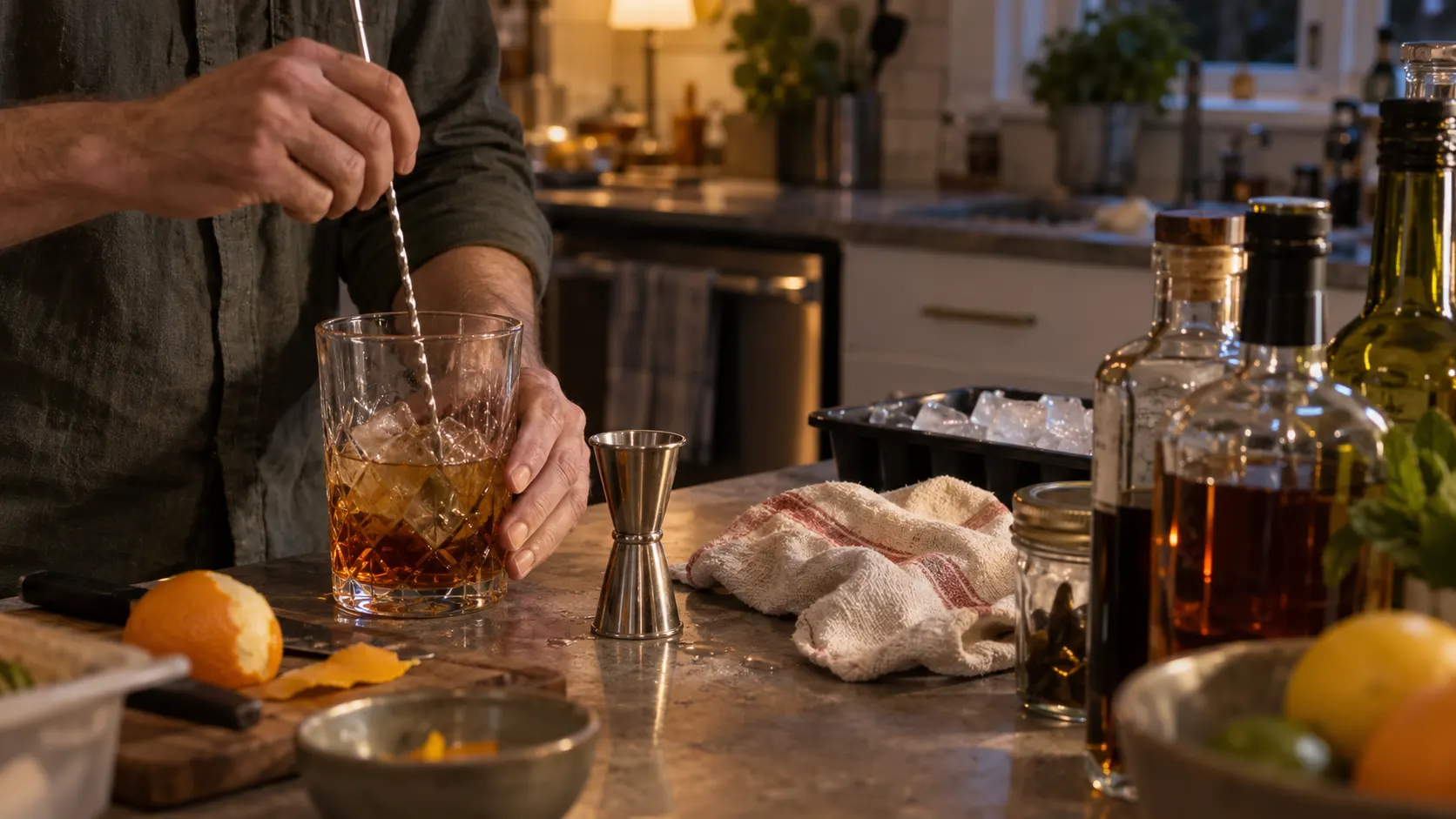
Mixology
Measuring liquids precisely so that later you can drink them less precisely.
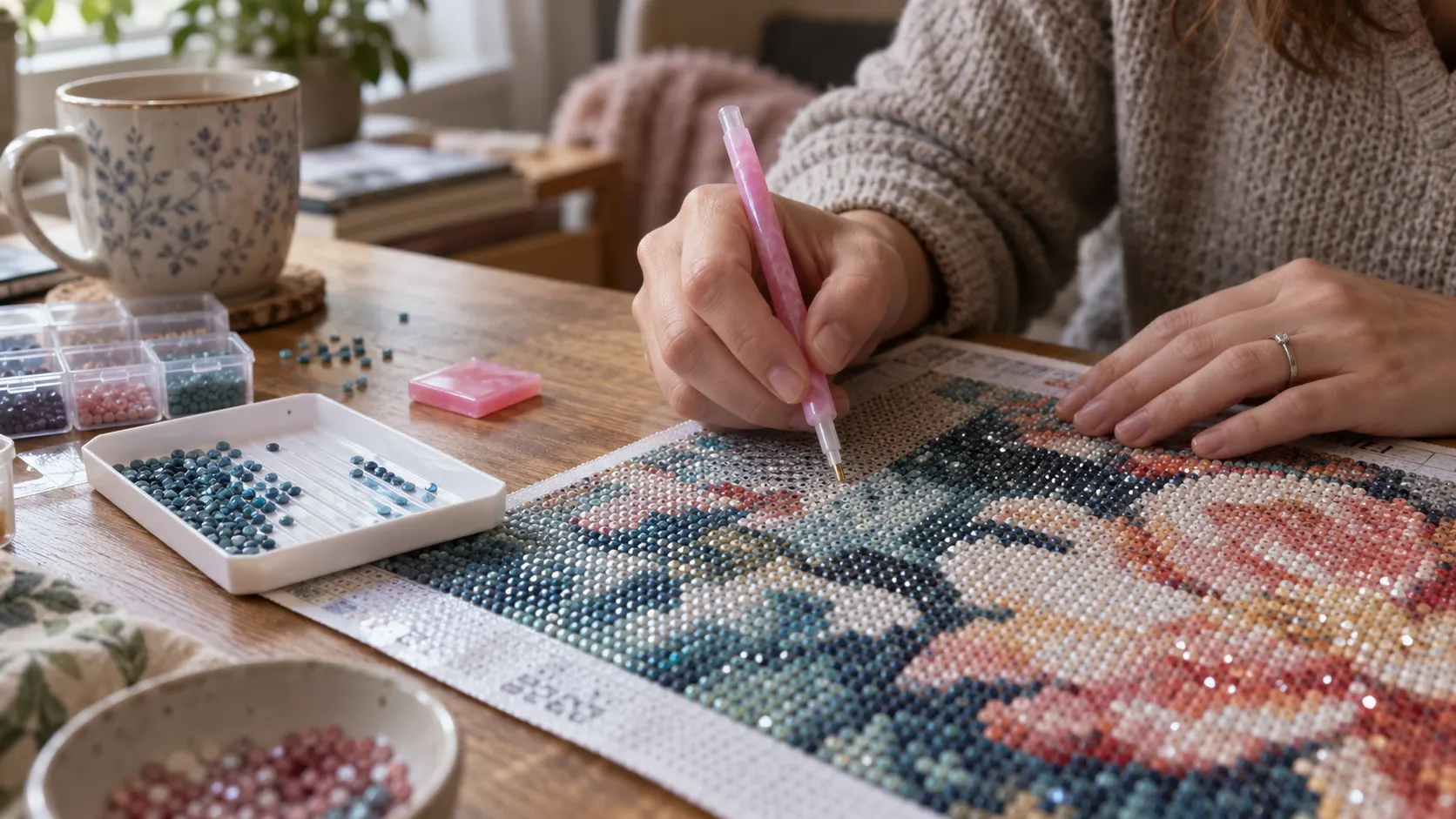
Diamond Art
Paint by numbers for people who found paint by numbers insufficiently sparkly.
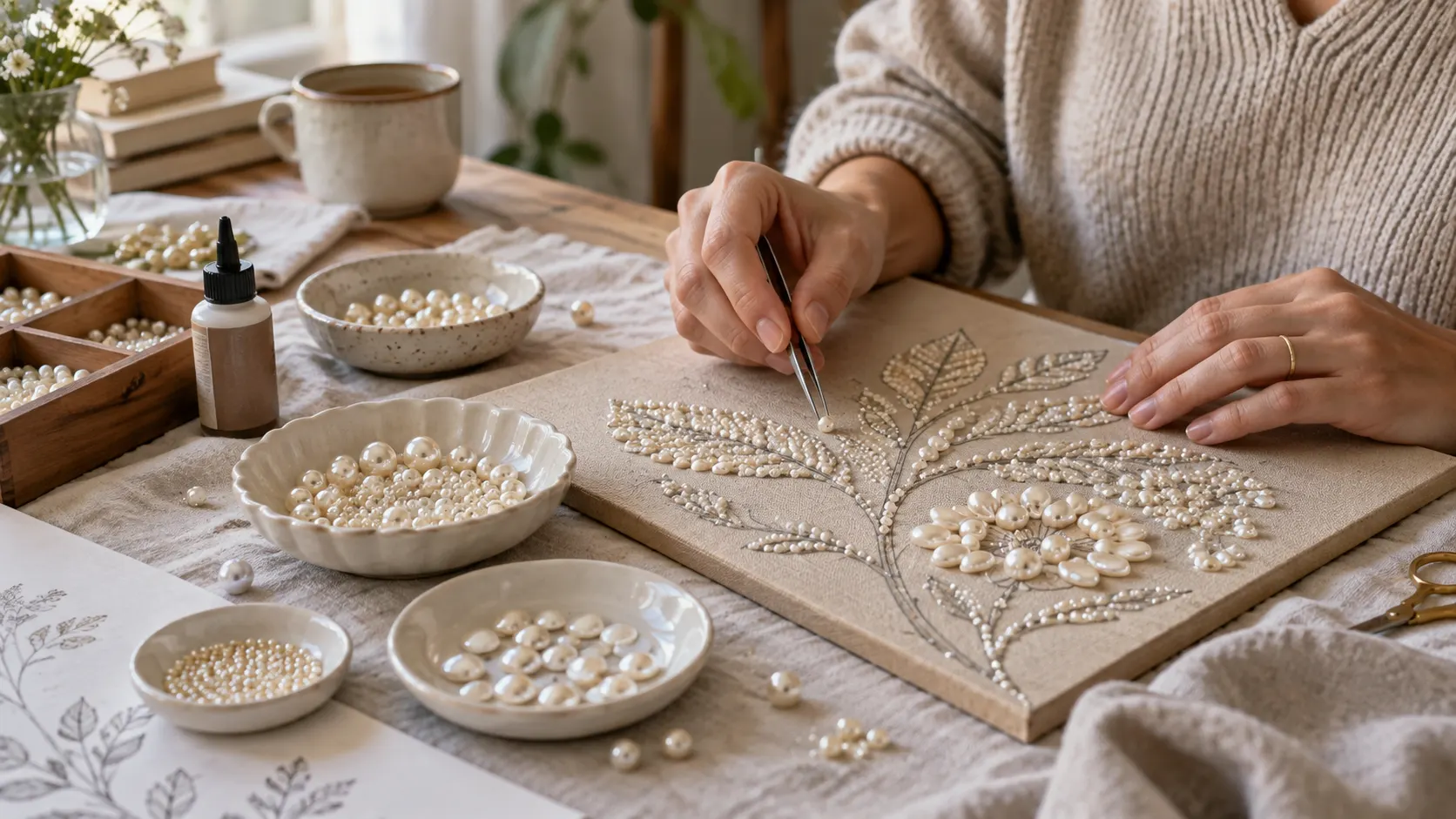
Pearl Art
Diamond art's quieter cousin, for people who think glitter is a little much.
Woodworking
Turning boards into furniture, or, on your first attempt, into a wobbly cautionary tale.
Rock Tumbling
Putting ugly rocks in a machine for a week so they come out looking expensive.