Fountain Pens
The most expensive way to write a grocery list, and somehow the calmest too.
- Cost to start
- ~$45 to start
- Learning curve
- 2 / 5
- Typical session
- 10–20 min
- Physical demand
- 1 / 10
- Social level
- 1 / 10
- Setting
- At home
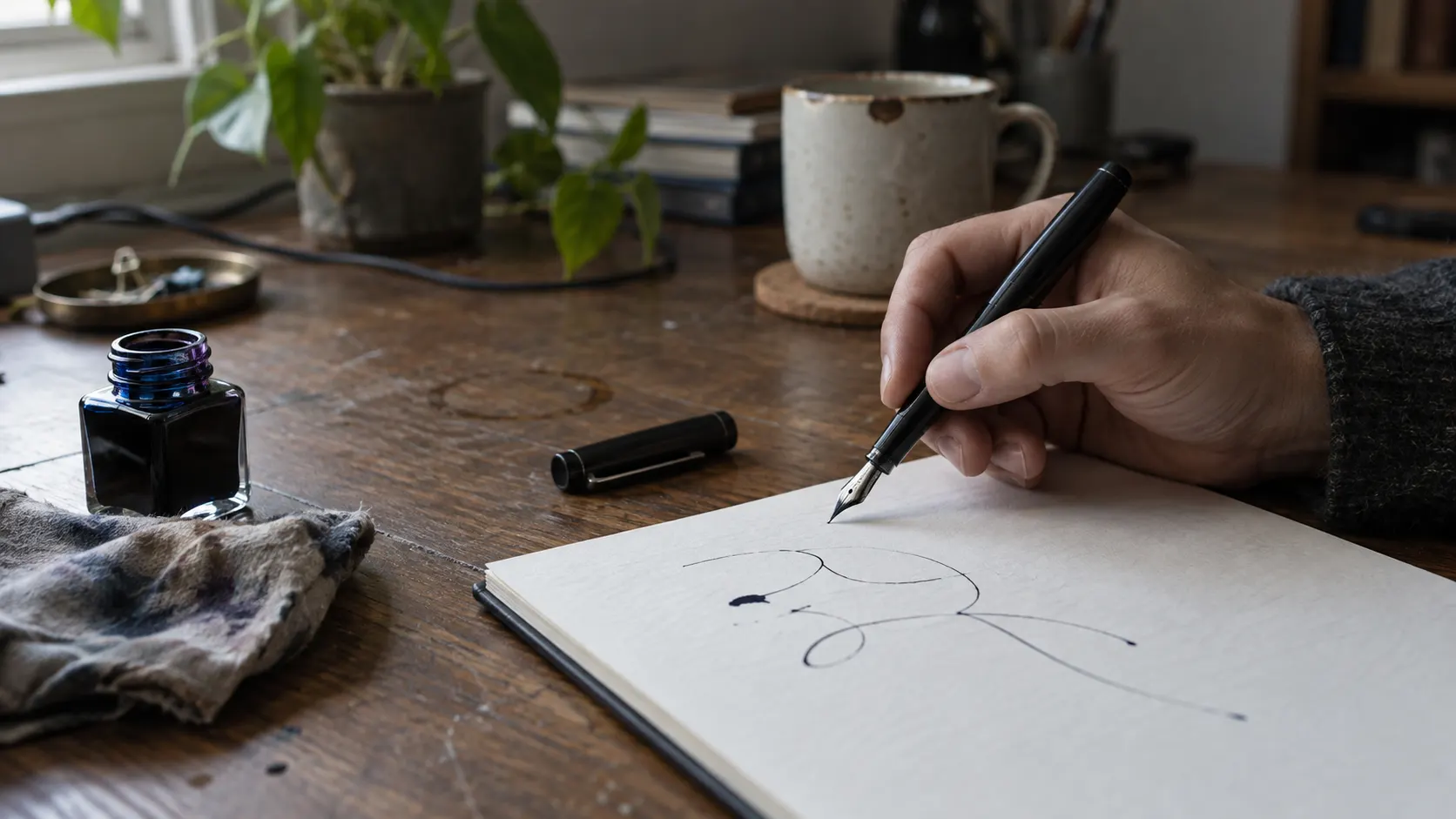
Fountain pens have a reputation as a rich person's fidget toy — a $500 pen for signing checks nobody sends anymore. Ignore the flagship pens influencers wave around. A genuinely nice fountain pen starts at about $20, writes smoother than almost anything from a drugstore, and turns writing a grocery list into a small, pointless pleasure. That's the whole appeal.
What it costs
Bare-minimum start: about $20 — a Pilot Metropolitan or similar starter pen, which ships with an ink cartridge already in it. That's genuinely enough to find out if you like how it writes.
Practical setup: about $45. That's the same starter pen ($20), a bottle of ink (~$10) for once the included cartridge runs out — a bottle lasts a very long time and opens up thousands of color options — and a pad of fountain-pen-friendly paper (~$15), since regular printer paper feathers and bleeds through with wet ink. The paper is the one thing worth spending on properly; a great pen on bad paper still looks bad.
Optional later: a converter (a small piston that lets a cartridge pen use bottled ink, ~$8; some starter pens already include one), and a step-up pen (Lamy Safari, ~$30) once you know your preferred nib size and grip.
Ink is the only real ongoing cost, and it's a small one — a $10 bottle lasts many months of regular writing, refilled a few drops at a time. Nibs themselves rarely need replacing unless one is bent or dropped.
What to buy
A reliable starter pen with a fine or medium nib — Pilot Metropolitan and Lamy Safari are the two most recommended beginner pens, for good reason: consistent quality control and parts that are easy to replace. One bottle of ink in a color you'll actually use daily (black or blue-black are the practical choices; save the teals and purples for later). A pad of genuinely fountain-pen-friendly paper — Rhodia or Clairefontaine are the standard recommendations.
Skip the pen case and the display box for now; a pen you use daily doesn't need to live anywhere fancy. And don't buy an expensive pen first — nib preference (how broad, how much flex) is personal, and you'll only know yours after writing with a cheap one for a while. You can also borrow a friend's fountain pen for five minutes before buying anything — it's the fastest way to find out whether you actually like the feel of one at all.
How to start
Start with a fine-nib starter pen and whatever cartridge it ships with. You don't need bottled ink or specialty paper yet.
Hold it at a slightly higher angle than a ballpoint — fountain pens write off the angle of the nib slit, not from pressing harder — and use it normally for a week before judging it. Most "this pen skips" complaints in the first few days are grip angle, not a faulty pen. Once that feels natural, switch to bottled ink and real paper, and notice the difference; it's bigger than people expect from something this simple.
The most common beginner mistake is pressing down like a ballpoint, which can bend or splay a nib permanently. Fountain pens need almost no pressure to write — let the ink do the work. Clean the pen every few ink changes with plain water to keep it from clogging, and if you're switching ink colors, always flush the pen out first — different inks can react and clog the feed if you mix them without rinsing.
Is it for you?
Fountain pens suit people who already write by hand regularly — notes, journaling, letters — since the pen only pays off with daily use, not sitting in a drawer. It asks for a little patience while your grip adjusts, and a willingness to occasionally clean a pen with water. If you mostly type, it's a novelty that fades fast; if you're already a paper-and-pen person, it makes something you already do noticeably nicer.
Starter gear
Soft suggestions to get going. These are affiliate links — buying through one may earn us a commission at no extra cost to you.