Improv
Making things up out loud, with other people watching, until it stops being terrifying.
- Cost to start
- ~$200 to start
- Learning curve
- 3 / 5
- Typical session
- 60–90 min
- Physical demand
- 3 / 10
- Social level
- 9 / 10
- Setting
- At a venue
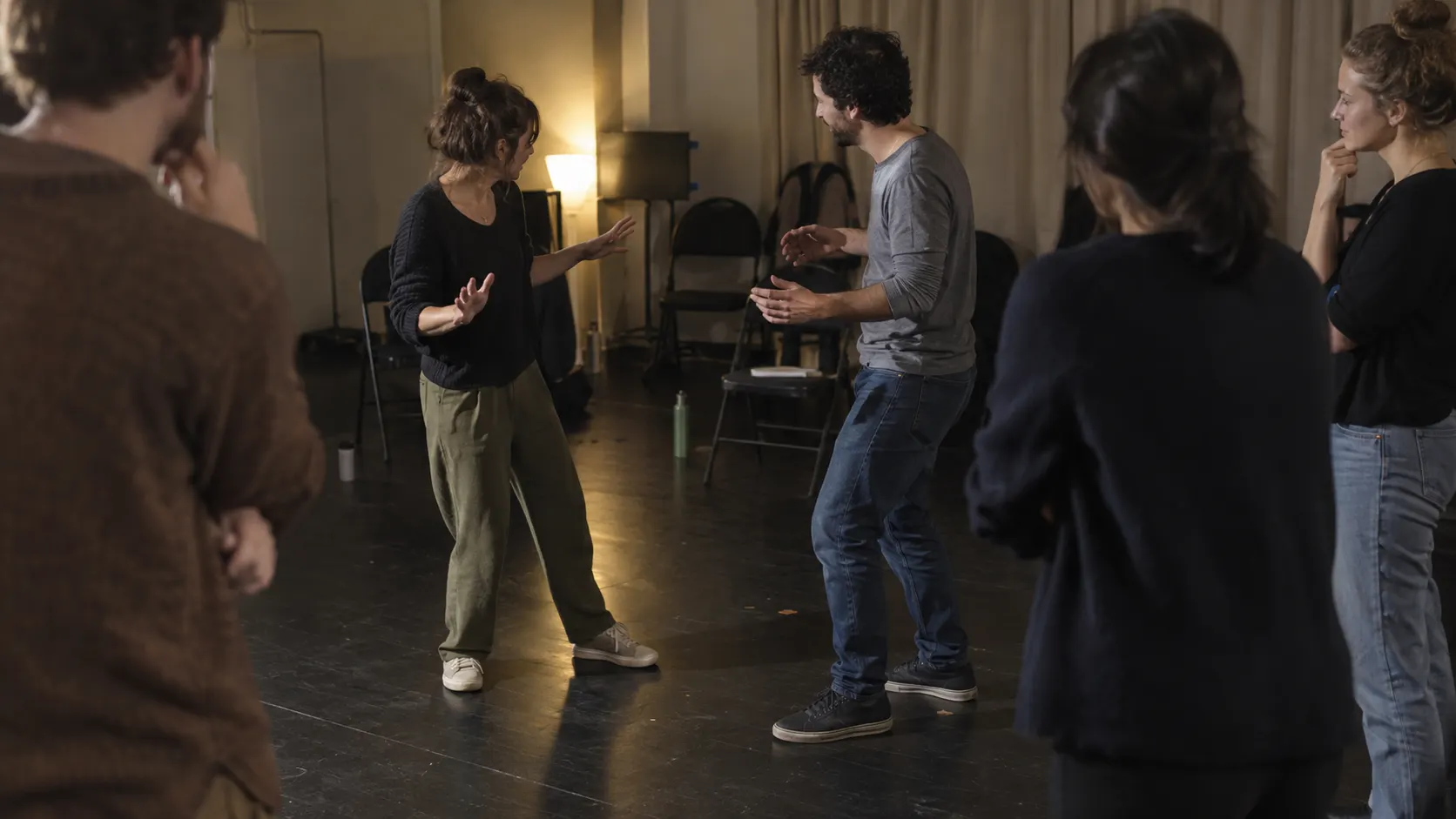
Improv sounds like the hobby for people who were "theater kids" and never quite stopped. In practice it is a room full of adults agreeing to make something up together, in real time, with no script and no way to prepare — which is exactly why it is less about talent than most people assume, and more about just showing up enough times to get comfortable being bad at it in public.
What it costs
Bare-minimum start: $0–15. Most improv theaters run a free or cheap drop-in "jam" — a casual open workshop, often $0–10 — specifically so newcomers can try a class-like format without committing to a full course.
Practical setup: about $200. That is a Level 1 improv class, a structured 6–8 week course, which is genuinely how almost everyone who sticks with this actually starts. Theaters like Second City, UCB, and their local equivalents run these in most mid-size cities, typically $150–250 depending on where you live. This is one of the few hobbies here where the real cost is tuition, not gear, so there is nothing meaningful to link as a product.
Optional later: Level 2 and beyond, workshop intensives with touring performers, and eventually auditioning for a house team, which is usually free or low-cost once you are invited onto one.
There is no real recurring cost beyond tuition for the next level up — no consumables, no equipment to replace. The only ongoing expense is your own time, since the format genuinely rewards taking classes back to back rather than one and done.
What to buy
Comfortable clothes you can move in — nothing special, whatever is already in your closet. A notebook, if you like reviewing games and formats after class, and a water bottle, since sessions often run long and get physically warm.
Skip buying "how to improvise" books before your first class. Almost everything worth knowing gets taught live and through doing, and reading about improv is a genuinely poor substitute for actually being thrown into a scene and having to respond. You can also borrow the experience entirely for free the first time — most theaters let you watch a class or a jam from the audience before signing up for anything, if you want to see the format before stepping into it yourself.
How to start
Start with a single drop-in jam at a local theater before signing up for a class. You do not need any experience or a scene partner lined up.
Show up, watch a round or two if you are nervous, then step into a scene when you are ready — most jams are structured so newcomers get eased in with short, simple games before longer scenes. Once you know you like the format, sign up for a Level 1 class, which is where the real fundamentals — "yes, and" (building on your partner's idea instead of blocking it), and listening instead of planning your next line — actually get taught properly. Attend every week of the run if you can; improv skills compound class to class, and missing weeks means relearning ground the rest of the group has already moved past.
The most common beginner mistake is trying to be funny instead of being truthful to the scene. The laughs usually come from a real, committed reaction, not from reaching for a joke. A closely related mistake is "blocking" — shutting down a scene partner's idea instead of building on it, which kills momentum for the whole group, not just the scene. There's no physical risk here, but there is an emotional one worth naming honestly: a bad scene can feel personal in the moment. Most experienced improvisers will tell you the discomfort fades faster than you expect, and it fades fastest for the people who keep showing up.
Is it for you?
Improv suits people who can tolerate being visibly bad at something in front of a room of near-strangers, since that discomfort does not fully disappear, it just becomes more familiar. It rewards consistent attendance over natural wit — the people who improve fastest are the ones who take the most classes, not the ones who were funniest on day one. If public failure genuinely terrifies you, start with the free jam rather than jumping straight into a paid class.