
Lego
Furniture-grade pain tolerance required, disproportionate sense of achievement guaranteed.
- Cost to start
- ~$60 to start
- Learning curve
- 1 / 5
- Typical session
- 30-90 min
- Physical demand
- 1 / 10
- Social level
- 1 / 10
- Setting
- At home
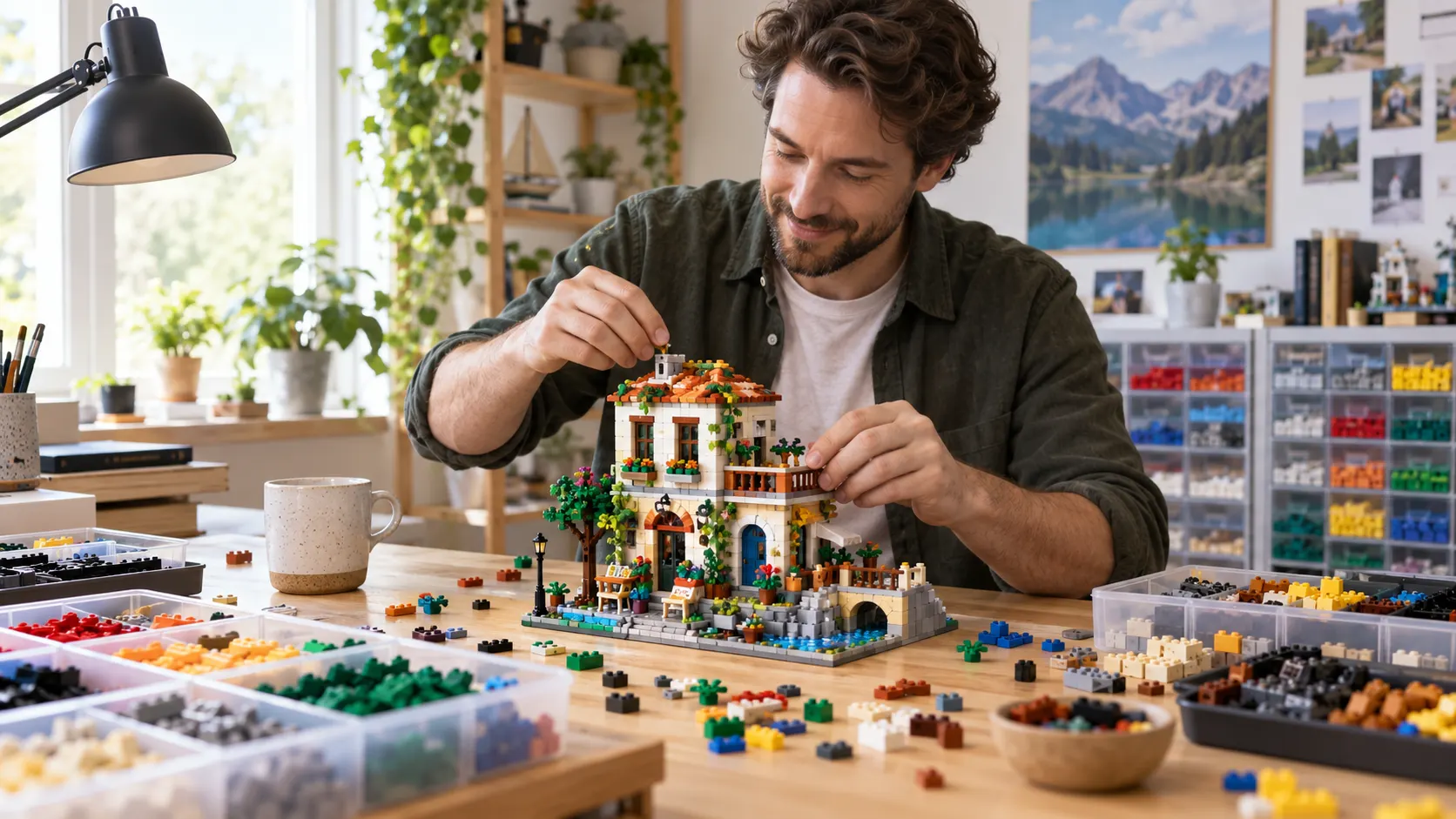
Lego as an adult hobby is bigger than most people realize — there's an entire "adult fan of Lego" community built around sets designed specifically for grown-up builders: botanicals, architecture, detailed vehicle models. It's genuinely meditative in the same repetitive-motion way as a lot of crafts, just with clearer instructions than most of them.
What it costs
Bare-minimum start: about $20 — a small official set, or a mixed bag of secondhand loose bricks from a resale marketplace or thrift store, which is a completely legitimate way to start if you don't mind building something without a box or instructions.
Practical setup: about $60. That's a mid-size official set, typically 500-800 pieces, which is enough to feel like a real, satisfying project without the multi-day commitment of the largest sets. Sets built specifically for adult builders (often labeled under lines like Icons or Botanicals) tend to have more subtle color schemes and detail-focused building rather than being aimed at kids.
Optional later: larger adult-focused sets ($100 and up, sometimes well up), clear storage and sorting bins once loose pieces start accumulating, and a building mat or tray that keeps a build contained and easy to move mid-project.
The one thing worth spending on, once you're past your first set, is proper sorted storage — hunting for one specific piece in a giant mixed bin is the single biggest time-waster in the hobby. There's no real ongoing cost beyond your next set; pieces don't wear out or need replacing.
What to buy
A mid-size set (500-800 pieces) in a theme you actually like — motivation drops fast on a set you're building just because it was on sale. A shallow sorting tray or a set of small bins, useful the moment you own more than one set's worth of loose pieces. A building mat, mainly useful if you build somewhere you'll need to clear the table before finishing.
Skip buying a huge display-piece set (2,000+ pieces) as your first build — they're genuinely rewarding but represent many hours across multiple sessions, which can feel discouraging if it's your very first Lego project as an adult. Skip specialty sorting systems with dozens of labeled bins until you actually own enough sets to need them; one or two trays cover a first set fine.
How to start
Start with a mid-size set in a theme you're genuinely drawn to, not whatever's cheapest. You don't need sorting bins or a building mat yet — a clear table and the box's built-in bags are enough for one set.
Open and build using the numbered bags in order rather than dumping every piece out at once — Lego instructions are sequenced around those bags for a reason, and skipping ahead usually just means hunting for pieces you've already separated out. Build in one sitting if you can for a small set, or mark your stopping point clearly with the instruction booklet if you need to split it across sessions — restarting after finding the right page is easy; restarting after losing track of which step you were on is not. The most common beginner mistake is forcing a piece that doesn't look quite right instead of double-checking the instruction diagram; Lego pieces fit with real intention, and persistent resistance almost always means a wrong piece or a misread step, not a piece that just needs more pressure.
Is it for you?
Lego suits people who like clear, satisfying progress with a guaranteed successful outcome — unlike most hobbies here, you genuinely cannot mess up a Lego build in a way that ruins it; every piece fits or it doesn't. It rewards patience with instructions more than any creative skill, at least for official sets. If you want a hobby with open-ended creative freedom, official sets are more about following a plan than inventing one — that comes later, if you get into custom building. If you want a low-stress project that reliably finishes looking exactly like the box promised, it's one of the most dependable hobbies on this whole site.
Starter gear
Soft suggestions to get going. These are affiliate links — buying through one may earn us a commission at no extra cost to you.
Tagged
More like this
Mixology
Measuring liquids precisely so that later you can drink them less precisely.
Diamond Art
Paint by numbers for people who found paint by numbers insufficiently sparkly.
Pearl Art
Diamond art's quieter cousin, for people who think glitter is a little much.
Woodworking
Turning boards into furniture, or, on your first attempt, into a wobbly cautionary tale.
Rock Tumbling
Putting ugly rocks in a machine for a week so they come out looking expensive.