
Mechanical Keyboard
Spending $120 to make typing 'the weather is fine' sound like a percussion solo.
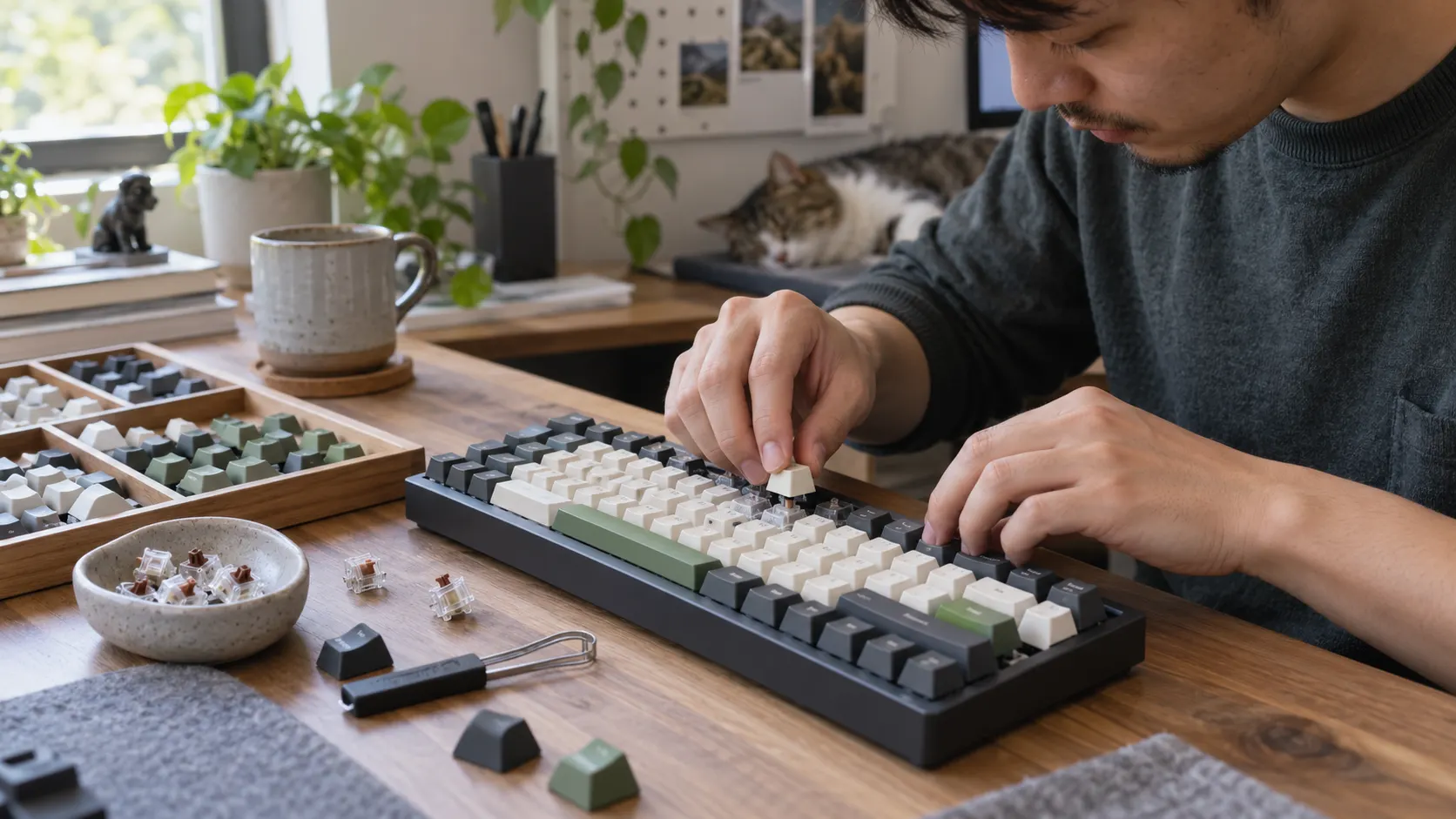
- Cost to start
- ~$120 to start
- Learning curve
- 3 / 5
- Typical session
- 1-3 hours
- Physical demand
- 1 / 10
- Social level
- 1 / 10
- Setting
- At home
Mechanical keyboards start as a typing upgrade and quietly turn into a hobby the first time you swap a set of switches and feel the difference — every key can be tuned for exact sound and feel, which sounds excessive until you've felt a good one. It sits somewhere between electronics tinkering and collecting, and you can go as deep or as shallow as you want.
What it costs
Bare-minimum start: about $40 — a budget hot-swappable prebuilt mechanical keyboard. Hot-swappable means the switches pop out and in without soldering, so even a "finished" cheap board is still a real entry point into customizing later.
Practical setup: about $120. That's a barebones keyboard kit (case, plate, and circuit board, no switches or keycaps included), a pack of switches in a style you think you'll like, and a keycap set. Building from a barebones kit rather than buying prebuilt is where the actual hobby starts — you're choosing every part instead of inheriting someone else's choices.
Optional later: artisan keycaps (novelty single keys, often $15-40 each, purely decorative), a fully custom aluminum case, foam and tape mods that change the sound profile, and a lubing station for switches and stabilizers once you're chasing a specific sound rather than just typing comfortably.
The one thing worth spending on is trying a switch tester pack before committing to a full set — switch feel is genuinely personal, and a $10 tester saves you from buying 90 switches you don't like. There's no real ongoing cost beyond occasional new switch or keycap sets as your taste changes.
What to buy
A barebones keyboard kit in the layout you want (60%, 65%, and full-size are the common choices — smaller layouts are cheaper and use fewer switches). A switch pack matched to a feel you like: linear for smooth silent presses, tactile for a bump you can feel, clicky for an audible click. A keycap set, which is mostly aesthetic but also affects finger feel slightly depending on the profile.
Skip buying a full custom aluminum case as your first purchase — plastic barebones kits perform nearly identically for a fraction of the price, and you won't know your preferred layout until you've built at least one board. Skip lubing switches by hand on your first build; it's a genuinely fiddly extra step worth learning once you already know you're hooked.
How to start
Start with a $40-60 hot-swappable prebuilt board rather than a full barebones kit build. You don't need to solder or understand circuit layouts yet — hot-swap sockets let you experiment with switches immediately without any of that.
Try swapping in a small switch tester's worth of different feels before buying a full 70-plus switch set, since your preference between linear, tactile, and clicky switches is genuinely hard to predict from descriptions alone. Once you've picked a switch type you like, swap your whole board over a few keys at a time rather than all at once, so you can compare old and new side by side. Expect the process to take a couple of hours the first time, mostly because you'll stop to type on it constantly. The most common beginner mistake is buying a full keycap set before checking it matches your keyboard's layout — non-standard bottom rows (a stretched spacebar, split modifiers) trip up a lot of first purchases; check your board's exact layout before ordering.
Is it for you?
Mechanical keyboards suit people who already spend hours a day typing and want that time to feel and sound better, plus anyone who likes a tinkering project with a clear, immediate payoff — you feel the difference the moment you type. It rewards patience with small tweaks more than any big skill. If you don't type much, the appeal will be lost on you fast. If you've ever typed on someone else's loud, clicky keyboard and felt a pang of jealousy, this hobby exists entirely for that feeling.
Starter gear
Soft suggestions to get going. These are affiliate links — buying through one may earn us a commission at no extra cost to you.
Tagged
More like this
Mixology
Measuring liquids precisely so that later you can drink them less precisely.
Diamond Art
Paint by numbers for people who found paint by numbers insufficiently sparkly.
Pearl Art
Diamond art's quieter cousin, for people who think glitter is a little much.
Woodworking
Turning boards into furniture, or, on your first attempt, into a wobbly cautionary tale.
Rock Tumbling
Putting ugly rocks in a machine for a week so they come out looking expensive.