
Pottery
Wet clay, a spinning wheel, and the humbling discovery that centering it is most of the job.
- Cost to start
- ~$180 to start
- Learning curve
- 3 / 5
- Typical session
- 60–120 min
- Physical demand
- 3 / 10
- Social level
- 4 / 10
- Setting
- At a venue
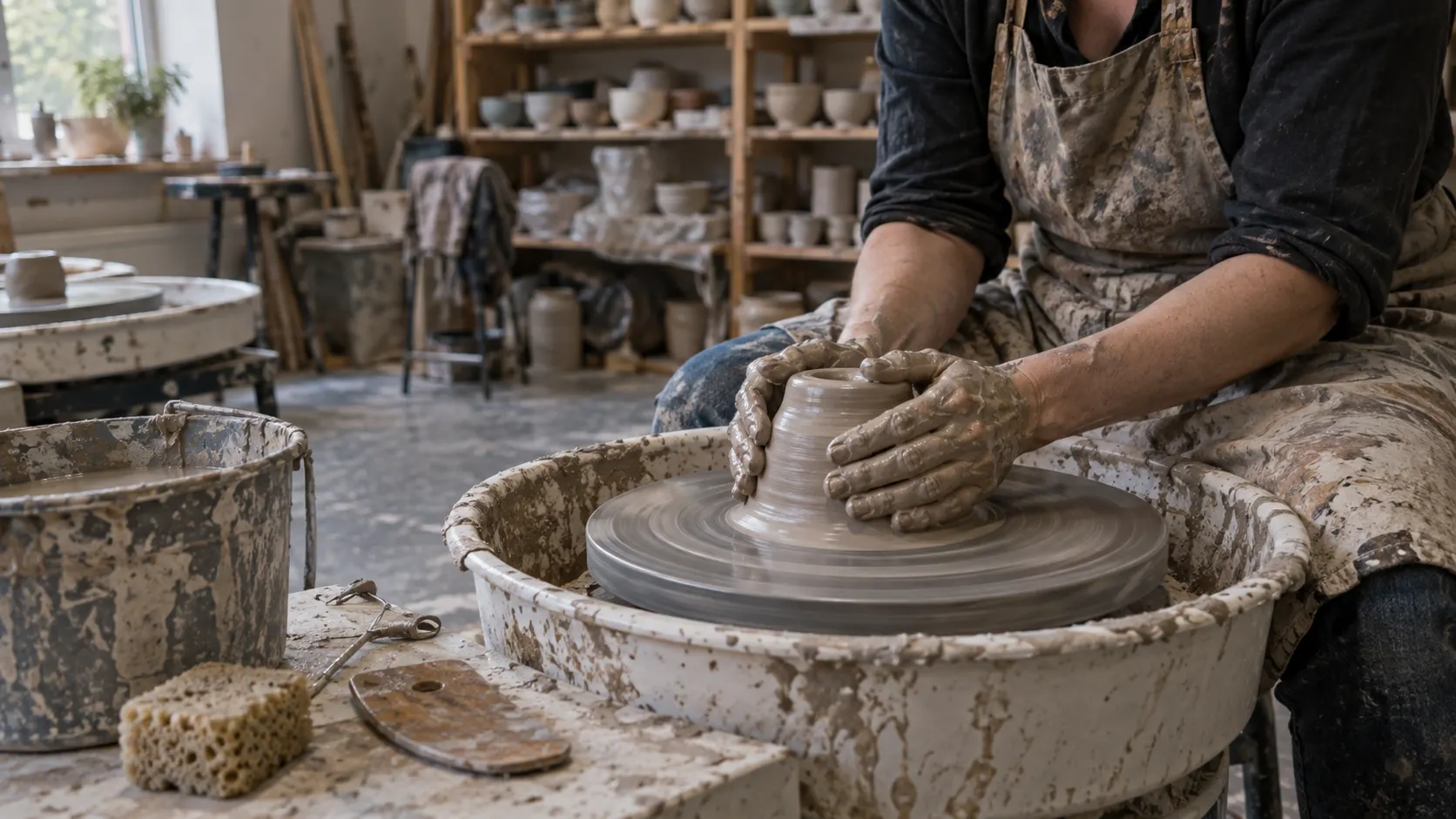
Pottery looks like one smooth motion on social media: hands, spinning wheel, a perfect bowl rising out of nothing. The reality is that most beginners spend their first few sessions just getting the clay to sit still in the center of the wheel, which turns out to be the actual skill everything else depends on.
What it costs
Bare-minimum start: about $20 — a block of air-dry clay (~$12) and a basic wooden modeling tool set (~$8), which lets you hand-build pinch pots and coil pots at your own table with no wheel, kiln, or studio required.
Practical setup: about $180. This is genuinely tuition, not gear — most people who stick with pottery start with a beginner wheel-throwing course at a local studio (typically 6–8 weeks, including clay, wheel time, and firing), which usually runs $150–250 depending on the city. A wheel and kiln of your own cost well into the thousands, which is exactly why almost nobody buys those to start.
Optional later: your own basic tool kit (~$30) to bring to class instead of using shared studio tools, and, much later, a used wheel if you already know you are staying with this.
The recurring cost, if you keep going at a studio, is per-piece firing fees or a membership covering studio access and clay by the pound — ask upfront, since this varies a lot between studios and can matter more than the class fee itself over a year.
What to buy
If you are trying it at home first, air-dry clay and a simple tool set — a wire cutter, a rib, a needle tool — covers hand-building completely. If you are going the studio route, most studios provide clay, tools, and firing as part of the course fee, so you likely do not need to buy anything before the first class; check with the specific studio, since a few ask you to bring your own apron.
Skip buying a wheel or a kiln as a beginner, even a cheap one. The learning curve on a wheel benefits enormously from in-person correction that a home setup cannot give you, and a kiln is a genuine safety and cost commitment that only makes sense once you already know you are staying with this. Most studios also rent shelf space for works in progress, so you don't need storage at home for pieces waiting to be fired.
How to start
Start with a single beginner wheel-throwing class, or a block of air-dry clay at home if a studio is not accessible yet. You do not need your own tools for either option.
At a studio, expect the first sessions to be almost entirely about centering the clay on the wheel — it looks simple and is not, and most early frustration comes from rushing past it before it clicks. At home, start with a plain pinch pot before attempting anything with a lid or a spout. Practice two or three times a week if you can; clay's tendency to warp or crack responds better to frequent short sessions than occasional long ones.
The most common beginner mistake on a wheel is adding too much water trying to fix wobbling clay, which usually makes the wobble worse rather than better — less water and more patience almost always wins. A second common one, in hand-building, is joining two pieces of clay without scoring and wetting the seam first — it looks fine wet and cracks apart once it dries. There's no real physical risk here beyond mess and the occasional cut from a wire tool, so no special safety gear is needed.
Is it for you?
Pottery suits people who want a tangible, physical hobby and do not mind getting genuinely messy — clay gets everywhere, and that is part of the deal. It asks for real patience with failure, since early pieces collapse, crack, or crack further in the kiln more often than beginners expect. If you want quick, clean results, this will frustrate you; if you are fine with an ugly first mug in service of eventually making a good one, it delivers a satisfaction few other hobbies match.
Tagged
More like this
Hand Embroidery
Stabbing fabric with a needle, repeatedly and on purpose, until a picture shows up.
Bonsai
All the patience of meditation, except you end up with a tiny tree to show for it.
Watercolor Painting
The most portable way to make something lovely on a lunch break — where a happy accident still counts as skill.