
Street Photography
Taking pictures of strangers and calling it art instead of what your therapist would call it.
- Cost to start
- ~$250 to start
- Learning curve
- 2 / 5
- Typical session
- 60-120 min
- Physical demand
- 3 / 10
- Social level
- 1 / 10
- Setting
- Outdoors
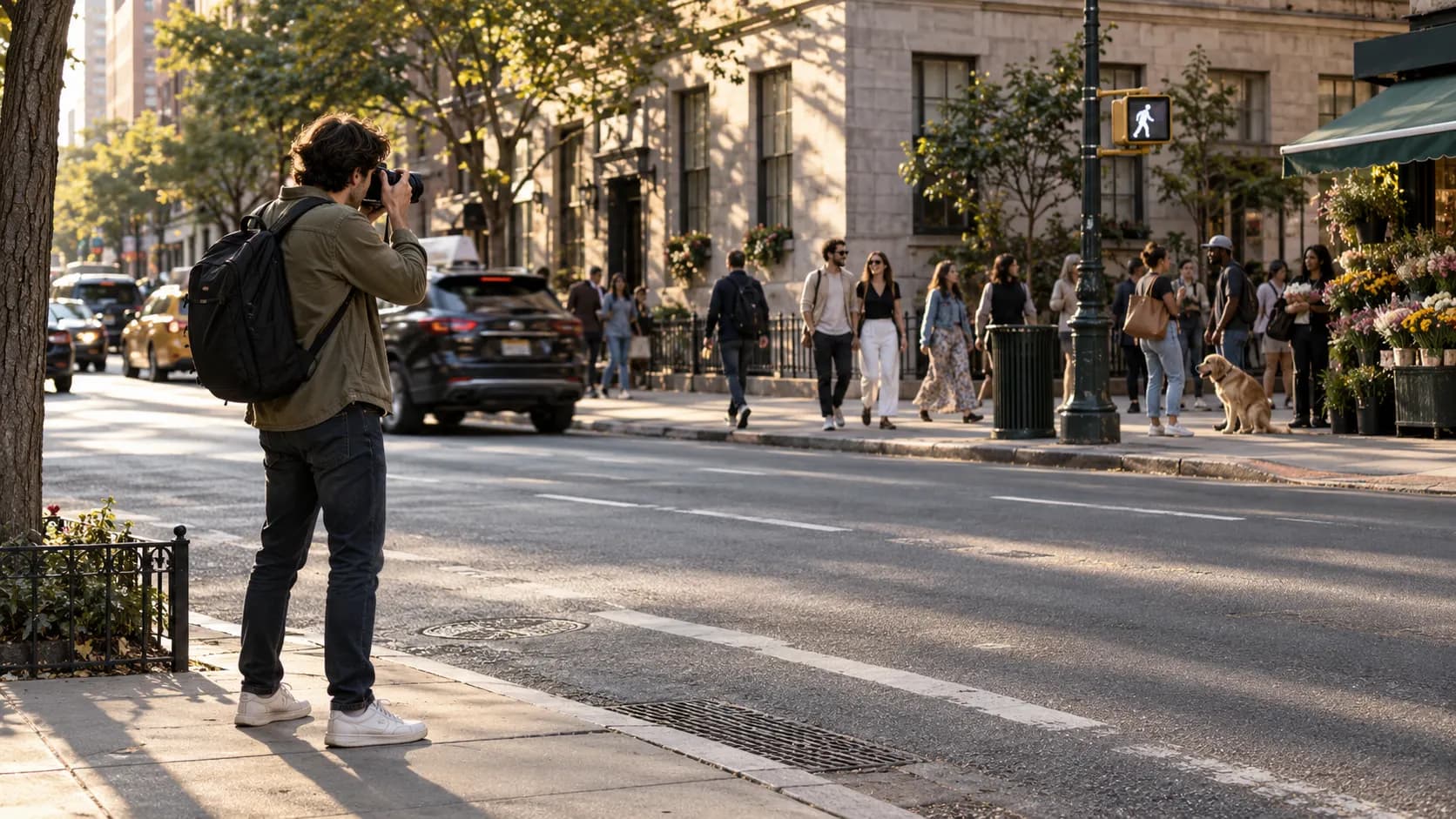
Street photography is candid photography of everyday public life — strangers, city corners, a moment that would've disappeared in a second if you hadn't been holding a camera. No studio, no models, no lighting setup: the entire skill is noticing something interesting before it's gone and having a camera ready when it happens.
What it costs
Bare-minimum start: $0 — the phone in your pocket takes genuinely good street photos, and plenty of celebrated street photographers shoot phone-only. This is a real, complete way to start, not a placeholder until you buy a "real" camera.
Practical setup: about $250. That's a used or entry-level mirrorless or compact camera with a fixed or moderate zoom lens — street photographers generally favor smaller, less conspicuous cameras over large DSLRs, since a big camera changes how people react to you on the street. A basic 32-50mm-equivalent focal length is the classic street photography range, close to how the human eye sees.
Optional later: a second, faster prime lens for low light, a small camera bag that doesn't scream "expensive gear," and photo-editing software, though a phone's built-in editor handles most street photography editing fine.
The one thing worth spending on, if you go beyond a phone, is a camera you'll actually carry everywhere — the best street photography gear is the gear that's in your hand when something happens, not the gear sitting at home because it's too bulky to bring along casually.
What to buy
A compact or mirrorless camera with a normal-range lens (35-50mm equivalent), prioritizing size and how comfortable you are carrying it daily over spec-sheet numbers. Nothing else is required — no lighting, no tripod, no studio gear applies to this genre at all.
Skip buying a large DSLR with a big zoom lens as your first camera — it's genuinely harder to shoot candidly with a large, obvious camera, and most experienced street photographers actively downsize their gear over time, not up. Skip photo-editing subscriptions before you've shot enough to know your own style; free tools handle basic edits fine.
How to start
Start with your phone and a walk somewhere with real foot traffic — a market, a busy intersection, a park. You don't need a dedicated camera or any legal research yet for public photography in most places, though it's worth a quick check of your local laws if you plan to publish or sell images.
Shoot far more than you think you need to; street photography has a low hit rate even for experienced shooters, and culling ruthlessly afterward is part of the process, not a sign you did something wrong. Get comfortable being close enough to a subject that the shot has real presence — a common beginner habit is shooting from too far away out of nervousness, which flattens the image. Learn a little about street photography's legal and ethical norms in your country regarding photographing strangers in public, and develop your own comfort line about which shots you take and which you don't. The most common beginner mistake is chasing "interesting" subjects (a costume, a street performer) instead of interesting light and composition on ordinary subjects — some of the strongest street photography is a completely mundane moment shot well.
Is it for you?
Street photography suits people who like walking and noticing things, and who don't mind some social discomfort around photographing strangers — that discomfort fades with practice for most people, but it never fully disappears for everyone. It rewards patience and a good eye more than expensive gear. If you want full control over your subject and lighting, this genre is the opposite of that — you're reacting to the world, not directing it. If you already walk around noticing little visual moments and wishing you'd captured them, this just gives you a reason to actually bring a camera.
Starter gear
Soft suggestions to get going. These are affiliate links — buying through one may earn us a commission at no extra cost to you.
Tagged
More like this
Mixology
Measuring liquids precisely so that later you can drink them less precisely.
Diamond Art
Paint by numbers for people who found paint by numbers insufficiently sparkly.
Pearl Art
Diamond art's quieter cousin, for people who think glitter is a little much.
Woodworking
Turning boards into furniture, or, on your first attempt, into a wobbly cautionary tale.
Rock Tumbling
Putting ugly rocks in a machine for a week so they come out looking expensive.