
Tabletop Gardening
A garden for people whose only outdoor space is a windowsill and a strong sense of denial.
- Cost to start
- ~$50 to start
- Learning curve
- 2 / 5
- Typical session
- 10-20 min
- Physical demand
- 1 / 10
- Social level
- 1 / 10
- Setting
- At home
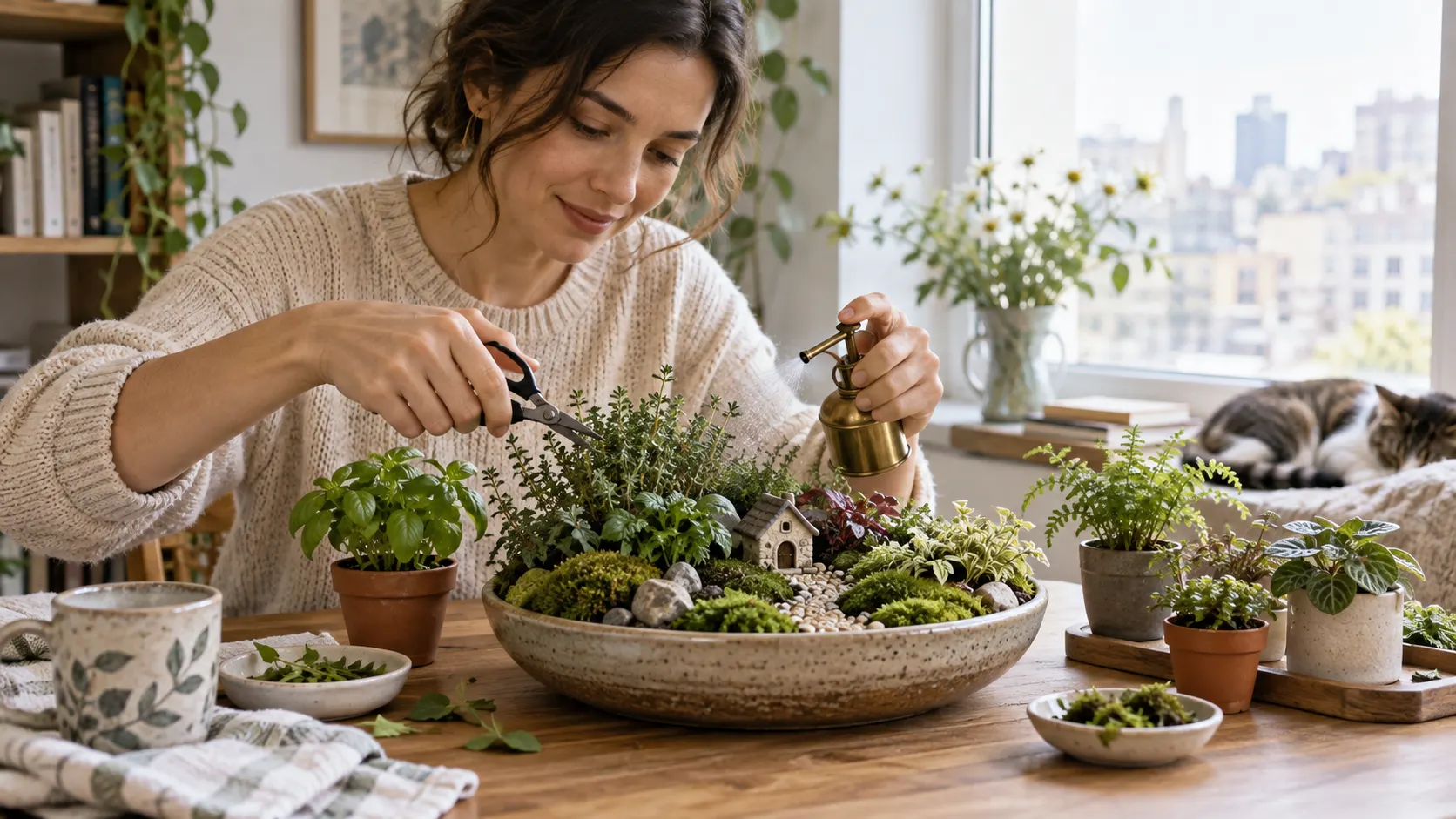
Tabletop gardening is regular gardening shrunk down to apartment scale — a mini greenhouse, a tray of herbs, or a tiny terrarium-adjacent setup that lives entirely on a counter or windowsill. No yard, no bending over a garden bed, no weather to fight. It's the version of "I want to grow something" that survives a lease with no backyard.
What it costs
Bare-minimum start: about $15 — a couple of herb seed packets (basil, mint, or chives are nearly foolproof) sown into reused containers like yogurt cups or egg cartons with drainage holes, placed on your sunniest windowsill. This is a genuinely complete first project.
Practical setup: about $50. That's a small tabletop greenhouse kit or a dedicated herb-garden starter kit — usually a tray of small pots, a humidity dome, and either seed pods or seeds included — plus a bag of potting mix. If your kitchen or apartment doesn't get much direct light, a small clip-on or desk grow light is worth adding now rather than later, since low light is the single most common reason tabletop setups stall out.
Optional later: a proper LED grow light panel for a bigger setup, self-watering planters that cut down on daily maintenance, and a small tiered shelf unit if one windowsill's worth of herbs turns into three.
The one thing worth spending on, if your space runs dim, is a grow light — it's the difference between herbs that thrive and ones that get pale and leggy reaching for a window. Ongoing costs are minor: potting mix refills and the occasional new seed packet.
What to buy
A tabletop greenhouse or herb-starter kit, which bundles small pots, a humidity dome, and seeds or seed pods into one beginner-friendly package. A bag of potting mix suited to small containers. A small grow light if your space doesn't get several hours of direct sun daily — most kitchens and apartments qualify.
Skip a full LED grow light panel meant for a whole shelf of plants before you know you'll actually fill one; a small clip-on light covers a starter setup fine. Skip self-watering planters at first — checking soil moisture by hand for a few weeks teaches you your plants' actual needs before you automate it.
How to start
Start with two or three easy herbs — basil, mint, and chives are close to foolproof — in a small kit or reused containers on your brightest windowsill. You don't need a grow light or self-watering setup yet if your spot gets a few hours of real sun.
Check soil moisture with a finger before watering rather than on a fixed schedule; small containers dry out fast, sometimes daily in a sunny spot, and overwatering in a container with poor drainage is the fastest way to kill a tabletop plant. Rotate pots every few days if light only comes from one direction, so growth doesn't lean permanently toward the window. Expect visible growth within one to two weeks for fast herbs like basil. The most common beginner mistake is picking a spot that looks bright but only gets indirect light — hold your hand near the glass at midday; if it doesn't cast a sharp shadow, it's not enough direct sun for most herbs, and a grow light will fix it fast.
Is it for you?
Tabletop gardening suits people who want the daily-checking-in satisfaction of a garden without any outdoor space or heavy lifting. It rewards a small daily glance more than any real time commitment — a session is genuinely a couple of minutes most days. If you want a big, sprawling project, this stays small by design. If you've wanted to garden but write it off because you don't have a yard, this is built for exactly that excuse.
Starter gear
Soft suggestions to get going. These are affiliate links — buying through one may earn us a commission at no extra cost to you.
Tagged
More like this
Mixology
Measuring liquids precisely so that later you can drink them less precisely.
Diamond Art
Paint by numbers for people who found paint by numbers insufficiently sparkly.
Pearl Art
Diamond art's quieter cousin, for people who think glitter is a little much.
Woodworking
Turning boards into furniture, or, on your first attempt, into a wobbly cautionary tale.
Rock Tumbling
Putting ugly rocks in a machine for a week so they come out looking expensive.