
Terrarium Making
Building a tiny, self-contained jungle that occasionally waters itself.
- Cost to start
- ~$40 to start
- Learning curve
- 2 / 5
- Typical session
- 45–90 min
- Physical demand
- 1 / 10
- Social level
- 1 / 10
- Setting
- At home
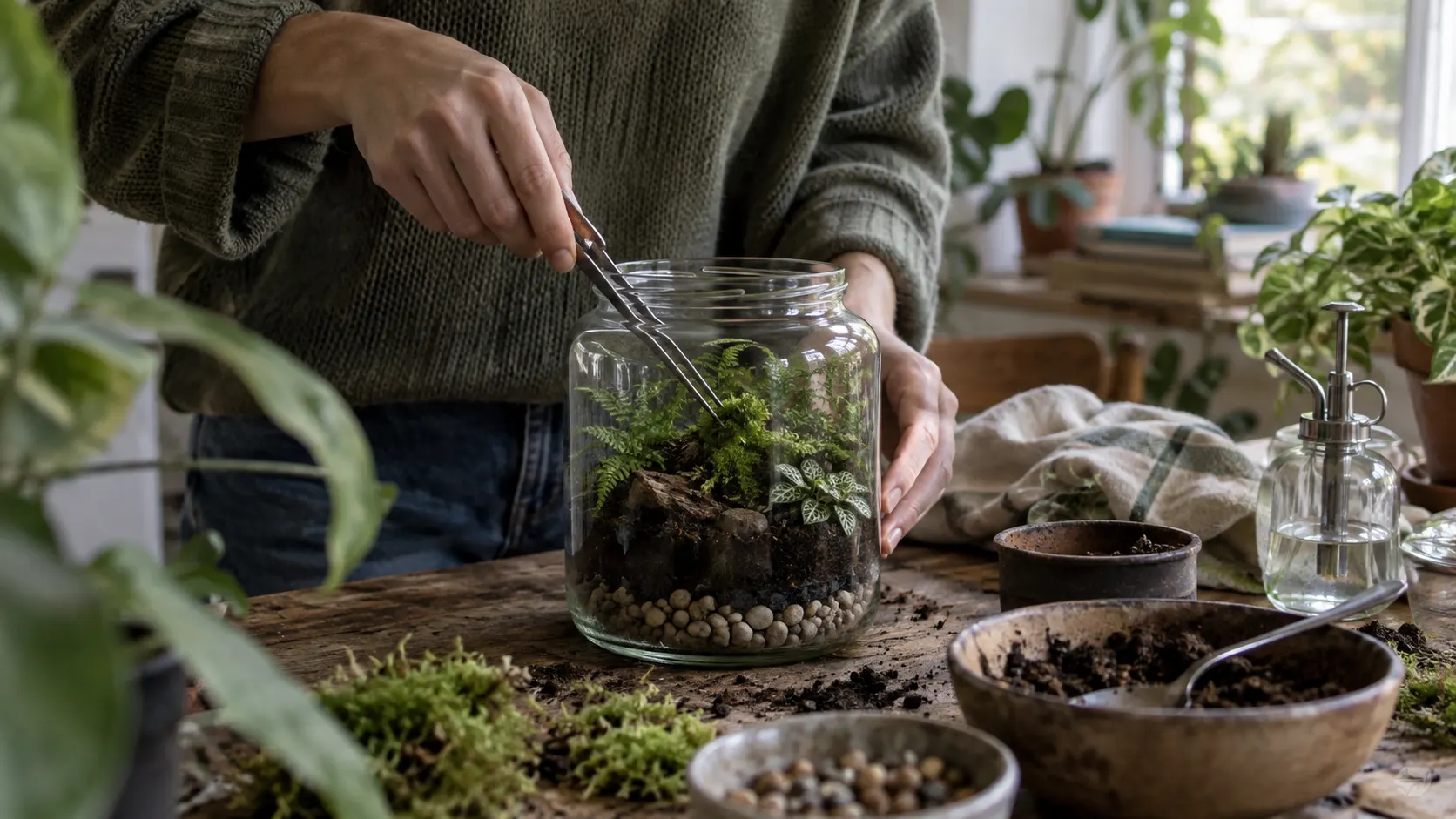
A terrarium sounds like a specialty project requiring a greenhouse's worth of knowledge. It's really a glass container with a few carefully layered materials and one or two plants that, done right, can go weeks between waterings — closer to a small, self-sustaining diorama than a demanding plant to keep alive.
What it costs
Bare-minimum start: about $15–20 — any glass jar or container you already own, a bag of basic potting soil (~$10), and a handful of small pebbles for drainage (~$5), using a plant cutting from an existing houseplant or a friend's.
Practical setup: about $40. That's a proper glass terrarium vessel with reasonable depth for layering (~$20), a terrarium substrate kit — activated charcoal, sphagnum moss, and appropriate soil (~$10) — and a starter plant suited to enclosed environments, like moss or a small pothos cutting (~$10). Not every plant tolerates a closed, humid terrarium; picking the wrong one is the most expensive mistake here, since it just dies.
Optional later: small decorative elements (rocks, figurines) once you've got the layering and plant health down, and a second, larger vessel for a more ambitious build.
There's minimal ongoing cost once a terrarium is established — occasional trimming and, rarely, a top-up of soil is about it. A well-built closed terrarium can run for a year or more on the same initial setup, which makes this one of the cheaper hobbies here to sustain long-term.
What to buy
A glass vessel with enough depth to properly layer drainage material, charcoal, and soil — a shallow dish looks nice but genuinely limits what will grow well. Activated charcoal, which keeps the enclosed, humid environment from developing a bad smell or mold. Appropriate soil for the specific plant you're using — succulents and tropical moss want very different mixes, so buy plant-specific rather than generic potting soil. One or two plants suited to closed, humid terrariums specifically, not just "small" plants — many common houseplants actually rot in a sealed environment.
Skip buying multiple plant species for your first build — one or two that you've confirmed tolerate closed terrariums is more likely to succeed than a varied mix where one incompatible plant rots and takes the others with it. You can also borrow a small cutting from a friend's houseplant instead of buying a starter plant, as long as the species is genuinely suited to a closed, humid environment.
How to start
Start with a single small vessel and one confirmed terrarium-friendly plant, layering drainage material, then charcoal, then soil before planting. You don't need decorative elements or multiple plants for a first build.
Water lightly right after planting, then close the lid and watch for condensation over the next few days — heavy, constant fogging means too much water went in; no condensation at all means too little. A well-balanced closed terrarium can go two to four weeks between waterings once it settles into its own small water cycle, which is the actual payoff of doing the layering correctly. Check on it every few days at first while you learn its specific rhythm, rather than watering on a fixed schedule.
The most common beginner mistake is overwatering at setup, which leads to mold and rot before the terrarium's self-sustaining cycle even has a chance to establish. A less obvious one is direct sunlight, which cooks a closed glass container fast — bright indirect light is what most terrarium plants actually want. A third common mistake is skipping the drainage layer entirely, assuming a small container doesn't need it — without somewhere for excess water to go, roots sit in standing water and rot regardless of how carefully you water.
Is it for you?
Terrarium making suits people who want a low-maintenance living project with a genuinely attractive visual result, and who find the layering and building process itself satisfying, not just the finished object. It asks for a short period of close attention right after building, then rewards you with something that mostly runs itself. If you want a plant you actively tend daily, this is the opposite of that; if you want something beautiful that needs almost nothing from you once it's set up right, it delivers exactly that.
Starter gear
Soft suggestions to get going. These are affiliate links — buying through one may earn us a commission at no extra cost to you.
Tagged
More like this
Mixology
Measuring liquids precisely so that later you can drink them less precisely.
Diamond Art
Paint by numbers for people who found paint by numbers insufficiently sparkly.
Pearl Art
Diamond art's quieter cousin, for people who think glitter is a little much.
Woodworking
Turning boards into furniture, or, on your first attempt, into a wobbly cautionary tale.
Rock Tumbling
Putting ugly rocks in a machine for a week so they come out looking expensive.