Ukulele
Four strings, a forgiving learning curve, and a sound that is physically incapable of being menacing.
- Cost to start
- ~$70 to start
- Learning curve
- 2 / 5
- Typical session
- 15–30 min
- Physical demand
- 2 / 10
- Social level
- 3 / 10
- Setting
- At home
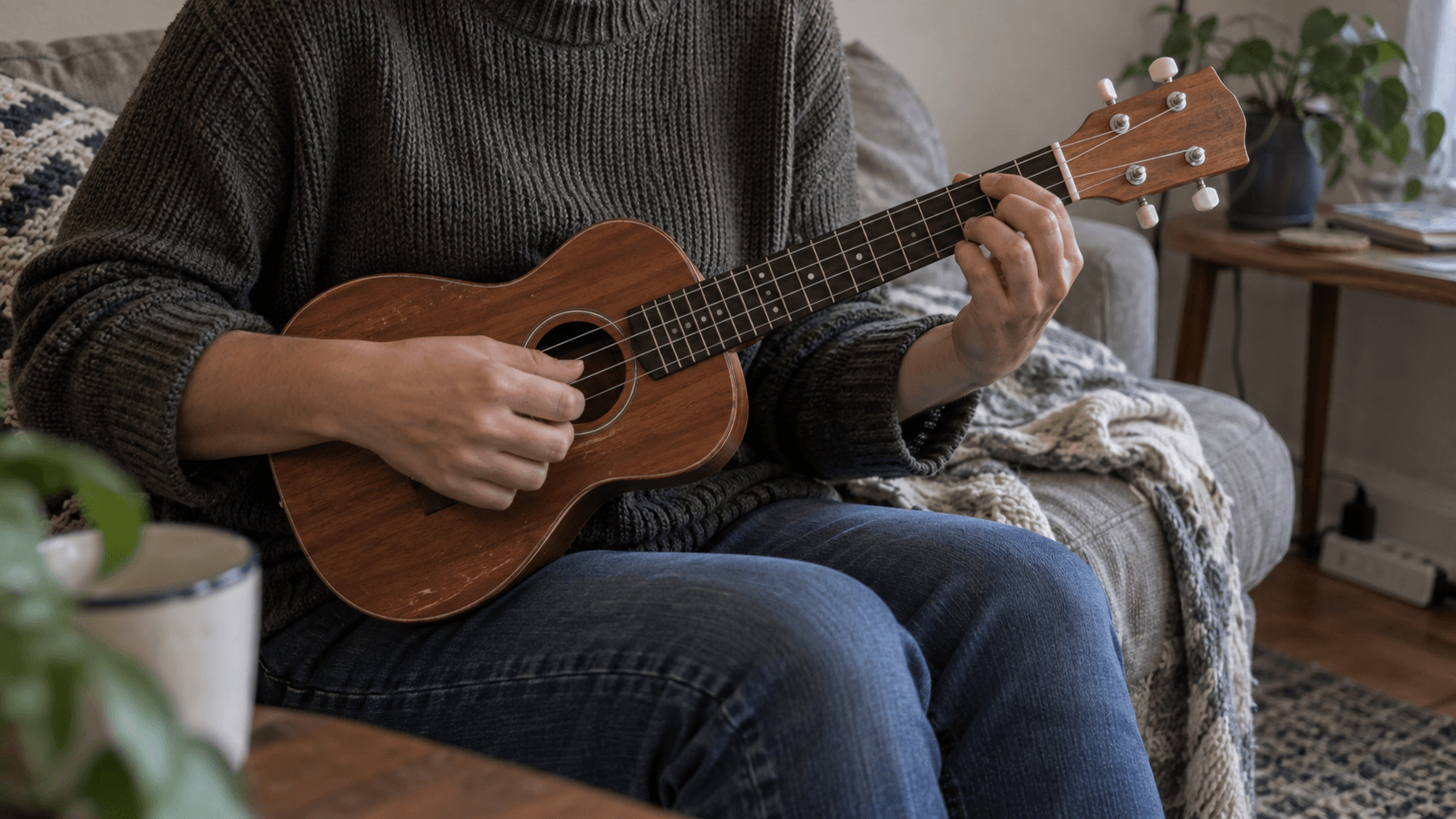
The ukulele is the instrument most likely to survive contact with an adult beginner. Four soft nylon strings, no barre chords for weeks, and songs you actually know within the first session. It is small enough to keep on the sofa, which is the real reason people stick with it.
What it costs
Bare-minimum start: about $35 — a budget soprano ukulele and a free tuner app on your phone. It'll get you through the first few weeks, though budget ukuleles go out of tune easily and can put people off.
Practical setup: about $70. That's a concert-size ukulele from a known brand — Kala, Cordoba, or Enya, in the $50–65 range — plus a $10 clip-on tuner. Concert size is a step up from soprano and easier on adult hands, and a known brand means it arrives actually in tune and holds it. This is the one thing worth spending on: anything cheaper than about $50 tends to arrive unplayable and is the most common reason people quit in week one.
Optional later: a beginner songbook (~$12) once you've got four chords down, and a padded gig bag if you'll be carrying it anywhere. Neither is needed to start.
Strings are the one ongoing cost, and it's a small one — a set runs about $8-10 and typically lasts a year or more of regular playing unless one snaps. Beyond that, there's nothing to keep buying; a ukulele doesn't need reeds, rosin, or consumables the way some instruments do.
What to buy
A concert ukulele from a recognizable brand — bigger than soprano, easier on adult hands, and reliably in tune out of the box. A clip-on tuner, which is faster and more accurate than tuning by ear as a beginner. That's genuinely it for gear.
Skip the ukulele-and-accessories bundle kits sold as a package — they usually pair a mediocre instrument with accessories (strap, cheap gig bag) you won't need in month one. A case is nice eventually, but a drawer works for now. You can also borrow a friend's ukulele for your very first try before committing to buy — the instrument is common enough that most groups of friends have one sitting in a closet somewhere.
How to start
Start by tuning it with the clip-on tuner, then learn four chords: C, Am, F, and G7. You don't need to read music or know any theory yet.
Those four chords cover a genuinely large share of pop songs, so spend your first sessions just practicing switching between two of them cleanly — five minutes at a time, several times a day beats one long weekly session for building finger memory. Once switching feels automatic, play along to one song a day using any of the thousands of ukulele tabs online.
The most common beginner mistake is trying to learn too many chords before any of them are smooth, which makes every song feel like starting over. Stick with the four until switching is boring, then add a fifth. Most people are recognizably playing music — not perfectly, but recognizably — within a week of consistent short sessions. Fingertip soreness in the first couple of weeks is normal and fades as light calluses form; playing through mild tenderness is fine, but stop if you feel sharp pain, which usually means you're pressing far harder than the strings need.
Is it for you?
The ukulele suits people who want a fast, visible sense of progress more than technical depth — four chords really do unlock a huge amount of music, which is rare for an instrument. It's forgiving of imperfect technique and small hands, and quiet enough for a shared flat. If you're hoping to eventually play complex fingerstyle or jazz, you'll outgrow it faster than a guitar; if you just want to strum songs you know within a week, it delivers almost immediately.
Starter gear
Soft suggestions to get going. These are affiliate links — buying through one may earn us a commission at no extra cost to you.