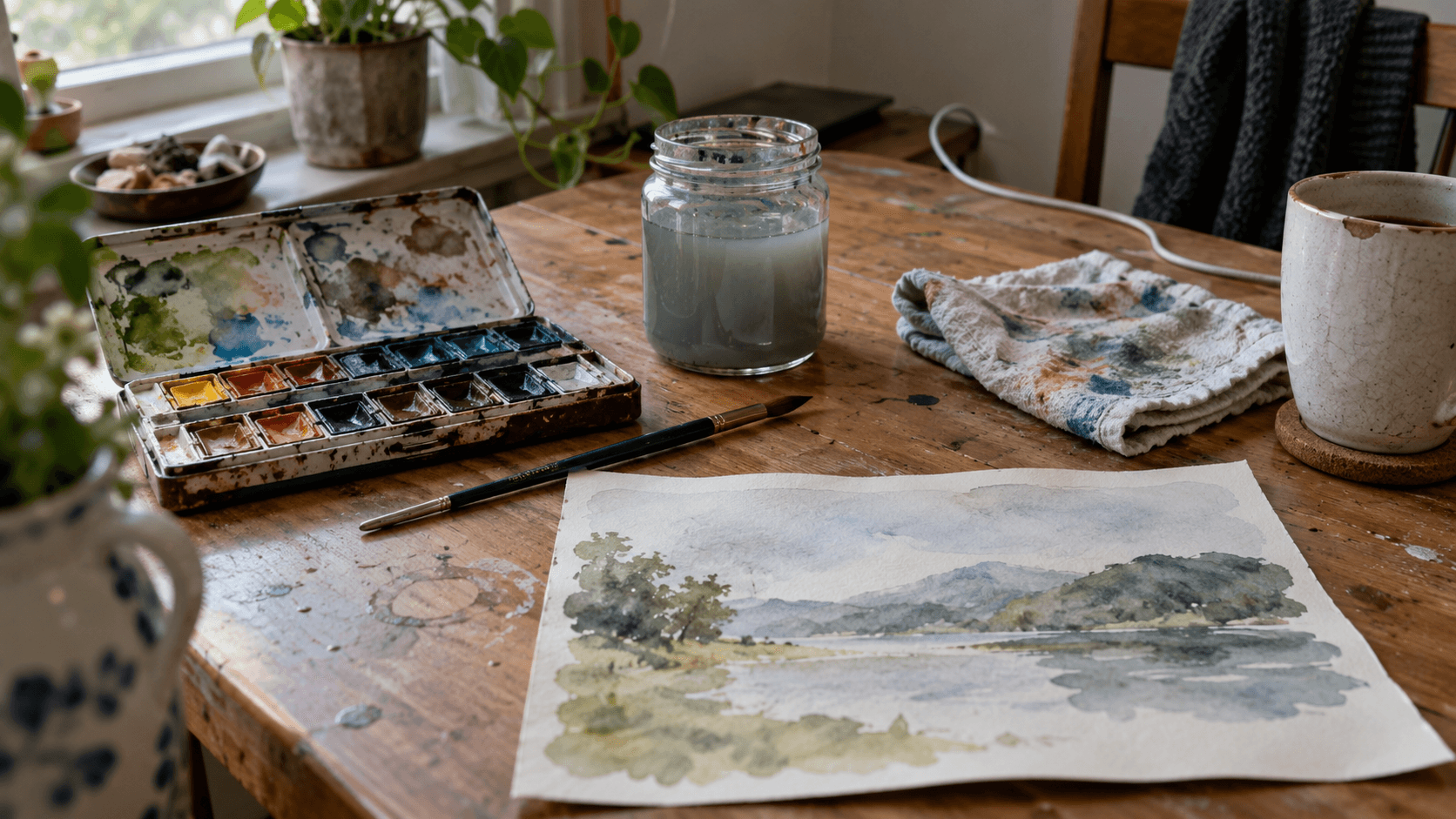
Watercolor Painting
The most portable way to make something lovely on a lunch break — where a happy accident still counts as skill.
- Cost to start
- ~$45 to start
- Learning curve
- 3 / 5
- Typical session
- 30–60 min
- Physical demand
- 2 / 10
- Social level
- 2 / 10
- Setting
- At home
Watercolor gets written off as the polite, watery cousin of "real" painting. In practice it is the least fussy way to make something beautiful with fifteen minutes and a table. No solvents, no drying racks, no smell — just water, pigment, and paper.
What it costs
Bare-minimum start: about $25 — a 12-color student set (Winsor & Newton Cotman or Van Gogh, ~$22) and a small pad of real watercolor paper (~$8), using any round brush you already own.
Practical setup: about $45. That's the same 12-color set ($22), one proper round brush in size 8 ($9), and a full pad of 140lb cold-press paper ($14). The paper is the one thing worth spending on properly — it's also the part beginners skimp on, then wonder why their washes look muddy or the paper buckles.
Optional later: artist-grade paints (roughly double the price, but you'll know exactly what you're upgrading for by then), and a second, smaller brush for detail. Don't buy the 48-color sets; you'll mix almost everything from six colors, so the extra tubes just sit there.
The one ongoing cost is paper — a pad lasts a few dozen small paintings, so budget to replace it every couple of months once you're painting regularly. Paints and brushes, by contrast, last a long time if you rinse the brush and let tube paints dry in their pans between sessions rather than replacing them.
What to buy
A 12-color student-grade set — Cotman or Van Gogh are the reliable, widely available options. If you want bolder, more opaque color straight from the pan, Kuretake Gansai Tambi (~$32 for 36 colors) is a well-loved alternative — it's technically gansai, a traditional Japanese pigment closer to gouache than classic transparent watercolor, but it's sold and used as a beginner "watercolor" set and works fine with the same brushes and paper. One round brush, size 8, which handles broad washes and finer lines alike; you don't need a brush set. Real watercolor paper, 140lb (300gsm) cold-press, in a pad rather than loose sheets so it doesn't curl.
Skip the multi-brush packs and the 48-color tins — more choice isn't more skill at this stage. And don't substitute printer or sketchbook paper for watercolor paper; it buckles and pills the moment it gets wet, which makes early attempts look worse than they are. You can borrow or skip a proper palette for the first month — the plastic lid the paint set comes in works as a mixing surface until you know you're sticking with it.
How to start
Start by painting a swatch of every color you own on a scrap of the real paper, so you know what each one actually looks like wet. You don't need a subject yet.
Then paint simple flat washes — a stretch of sky, a hillside — and let each layer dry completely before adding the next. Watercolor rewards that kind of patience and punishes fiddling with a still-wet area, which is where most muddy, overworked paintings come from. Do this two or three times a week in short sessions rather than one long one; the medium is more about touch than time.
After a couple of weeks of washes, try combining two or three simple shapes into one small scene. Early progress looks like control, not detail — knowing how wet your brush is before it touches the paper is the actual skill, and it comes from repetition, not longer sessions. The most common beginner mistake is overworking a painting — going back into a wash after it's dried to "fix" something, which usually leaves a harsh line or a muddy patch instead. If a painting isn't working, it's almost always faster to start a fresh one than to rescue it.
Is it for you?
Watercolor suits people who want a low-commitment creative habit — the whole kit fits in a bag, and a session can be fifteen minutes or two hours. It rewards accepting some unpredictability; if you need full control over the result, the medium will frustrate you at first. If you like the idea of a quick, portable, no-cleanup way to make something each week, it's an easy hobby to keep.
Starter gear
Soft suggestions to get going. These are affiliate links — buying through one may earn us a commission at no extra cost to you.
Tagged
More like this
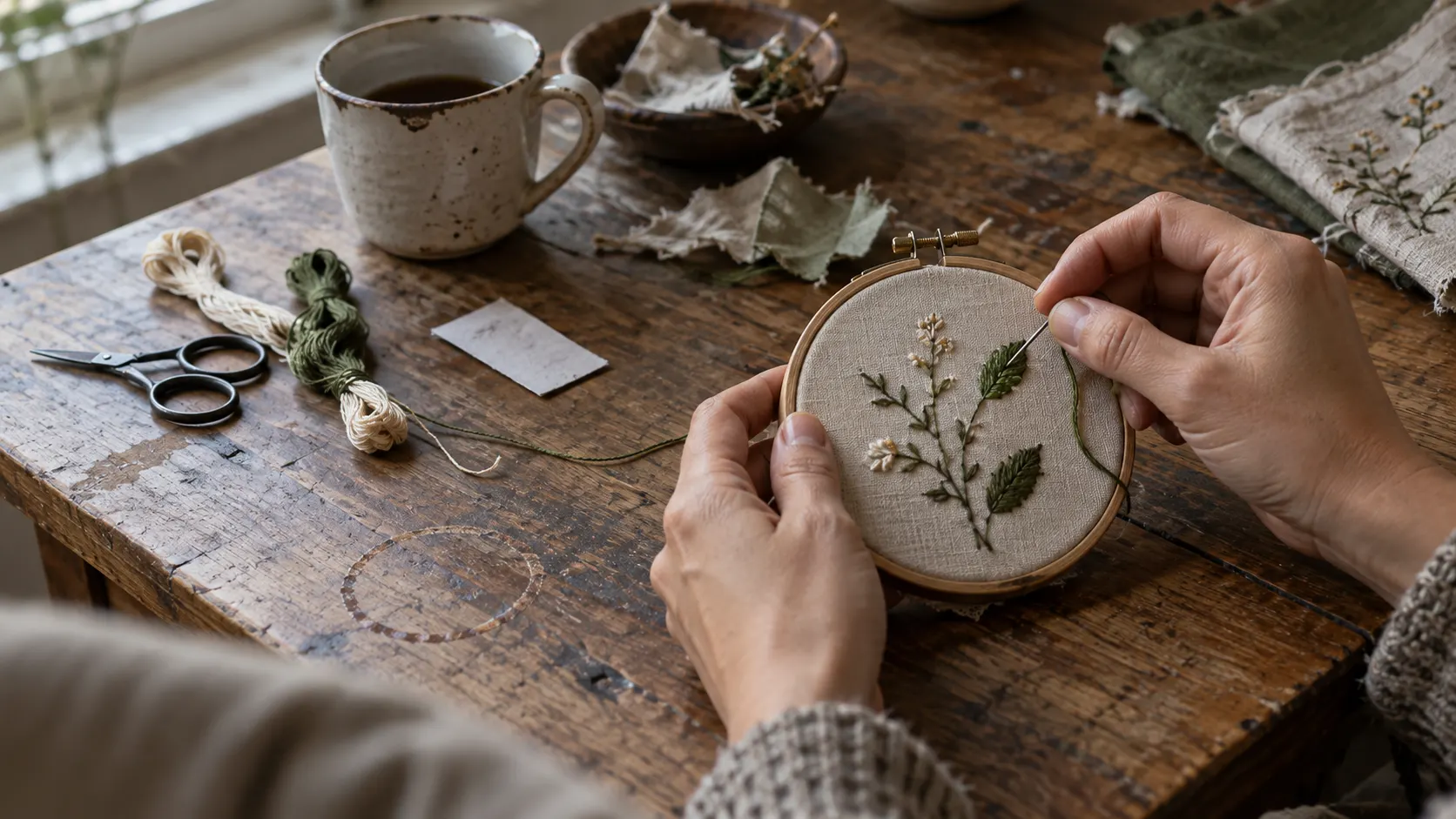
Hand Embroidery
Stabbing fabric with a needle, repeatedly and on purpose, until a picture shows up.
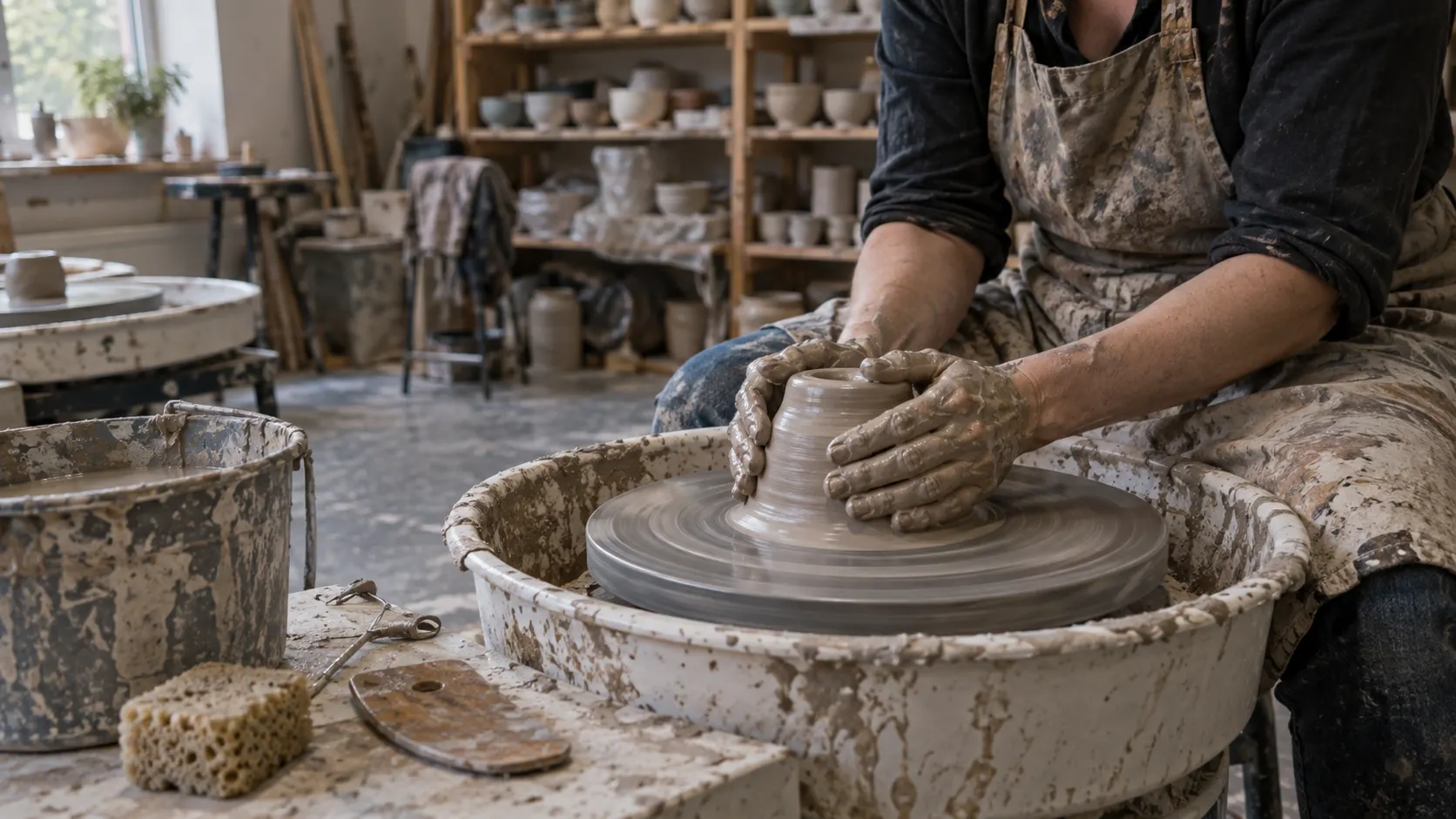
Pottery
Wet clay, a spinning wheel, and the humbling discovery that centering it is most of the job.
Bonsai
All the patience of meditation, except you end up with a tiny tree to show for it.