Amateur Wrestling
Chess, if the pieces could also put you in a headlock.
- Cost to start
- ~$120 to start
- Learning curve
- 4 / 5
- Typical session
- 60-90 min
- Physical demand
- 9 / 10
- Social level
- 6 / 10
- Setting
- At a venue
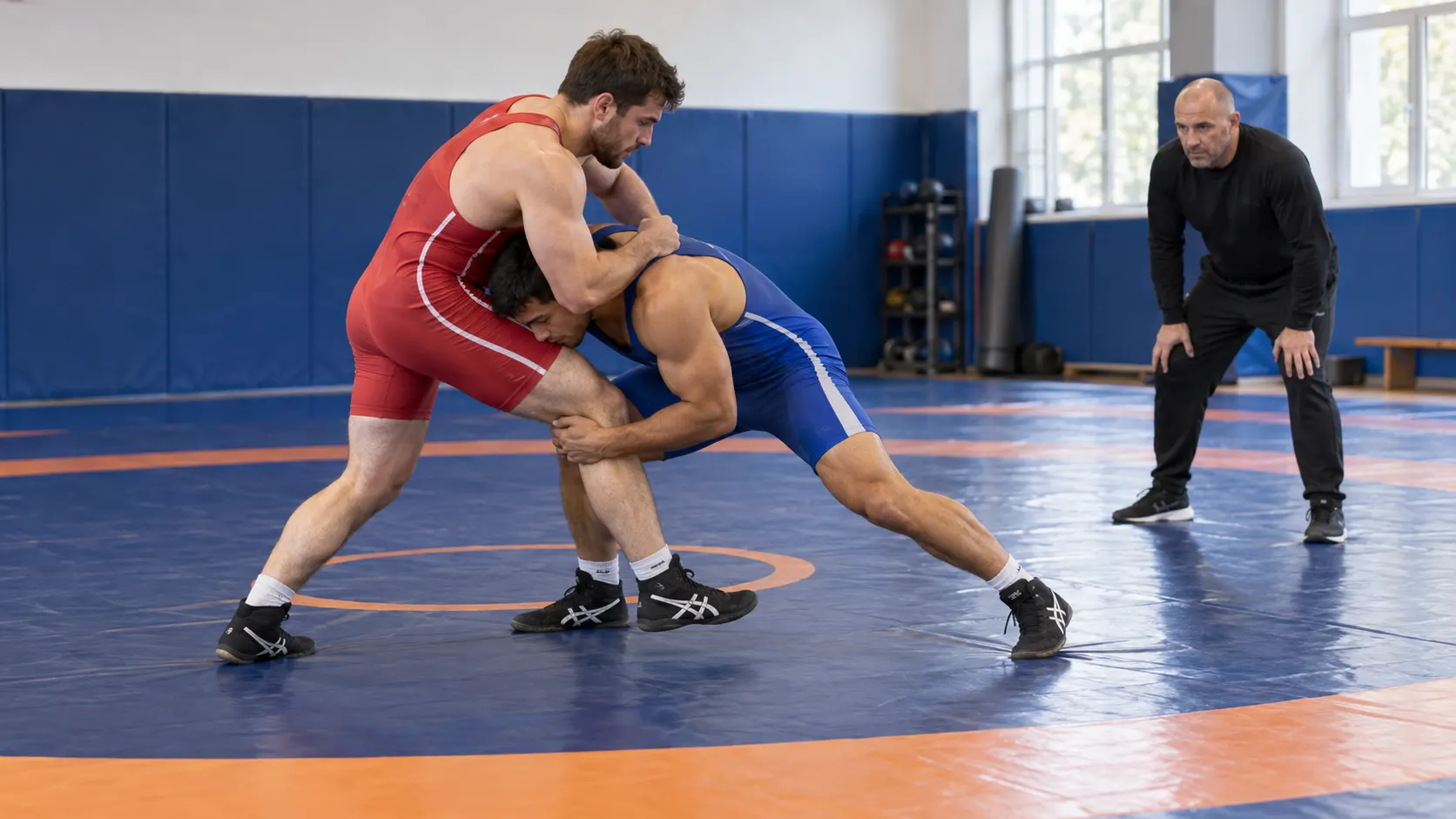
Amateur wrestling — the folkstyle and freestyle sport wrestled in gyms, high schools, and adult clubs — is one of the most physically demanding sports you can pick up as a beginner, and one of the most technical. There's no ball, no equipment to hide behind, no predetermined outcome the way pro wrestling has; it's two people using leverage, technique, and conditioning against each other, and it rewards technique over raw strength far more than it looks like it should from the outside.
What it costs
Bare-minimum start: about $30 — wrestling shoes (regular sneakers slip badly on wrestling mats and most clubs require proper shoes) and athletic shorts, joining a beginner or open-mat session at a local club, many of which offer a free or cheap first trial class.
Practical setup: about $120. That's a pair of wrestling shoes, a mouthguard, and basic headgear (ear guards, which protect against a real and common injury called cauliflower ear, caused by repeated ear trauma), plus a first month of club or gym dues, which vary widely by region and facility.
Optional later: a singlet for competition, once you're wrestling in actual matches rather than just training; knee pads for extra joint protection during heavy drilling; and a wrestling-specific practice mat if you're training moves at home between sessions.
The one thing worth spending on immediately is proper wrestling shoes — training in regular sneakers isn't just a performance disadvantage, it's a genuine injury risk, since normal shoe soles slip on mat surfaces during exactly the kind of quick, low-stance movement wrestling demands. Ongoing costs are mostly monthly club dues; gear itself lasts a long time with normal use.
What to buy
Wrestling-specific shoes, which grip mat surfaces very differently from regular athletic shoes. A mouthguard, since accidental head contact happens regularly in live drilling and matches. Headgear (ear guards), which most clubs require for live sparring specifically because cauliflower ear from repeated, unprotected trauma is common and permanent once it sets in.
Skip buying a singlet before you're actually entering competitions — most clubs train in shorts and a t-shirt or rash guard, and a singlet is competition-specific gear you won't need for regular practice. Skip a home practice mat until you know you'll be drilling moves outside of club sessions; most beginners get plenty of mat time at the gym itself.
How to start
Start by finding a local club or gym with a beginner or "adult novice" class — searching your city plus "adult wrestling club" usually turns up an option, and many welcome complete beginners with no athletic wrestling background. You don't need your own gear for a genuine trial class; most clubs lend headgear and let you borrow shoes for a first session.
Expect your first few sessions to be almost entirely about stance, movement, and basic takedowns rather than live sparring — a responsible coach builds fundamentals before putting a beginner into live drilling. Learn to tap out or communicate when a position is uncomfortable early and often; wrestling partners rely on that communication to train safely, and it's expected, not a sign of weakness. Safety note: wrestling carries real injury risk — joint injuries, concussions from head contact, and the cauliflower ear mentioned above are all genuinely common; proper technique, appropriate gear, and a coach who prioritizes safety over intensity matter enormously, especially in your first months. The most common beginner mistake is muscling through a position with strength instead of learning the technique that makes strength less necessary — wrestling technique consistently beats raw strength at every level of the sport, and skipping it just means hitting a ceiling sooner.
Is it for you?
Amateur wrestling suits people who want one of the most complete physical and mental workouts available and don't mind a real, sometimes humbling learning curve — most beginners get thoroughly out-wrestled by more experienced partners for months before technique starts closing the gap. It rewards discipline and repetition more than natural athleticism. If you're not comfortable with close physical contact or a real risk of minor injury, this sport asks for both directly. If you want a sport that will make you fitter, tougher, and more technically minded within a single season, few sports deliver that as completely as wrestling does.
Starter gear
Soft suggestions to get going. These are affiliate links — buying through one may earn us a commission at no extra cost to you.
Tagged
More like this
Ice Hockey
Learning to stand on knives while chasing a rubber disc, and somehow that's the fun part.
Skydiving
Voluntarily exiting a perfectly functional airplane, then paying for the privilege.
Overlanding
Camping, but you brought the entire garage with you and somehow still forgot a can opener.
Kitesurfing
Strapping a giant kite to yourself and letting the wind decide how your afternoon goes.
Lacrosse
Field hockey and basketball's fast, slightly violent cousin, played with a stick and a net.