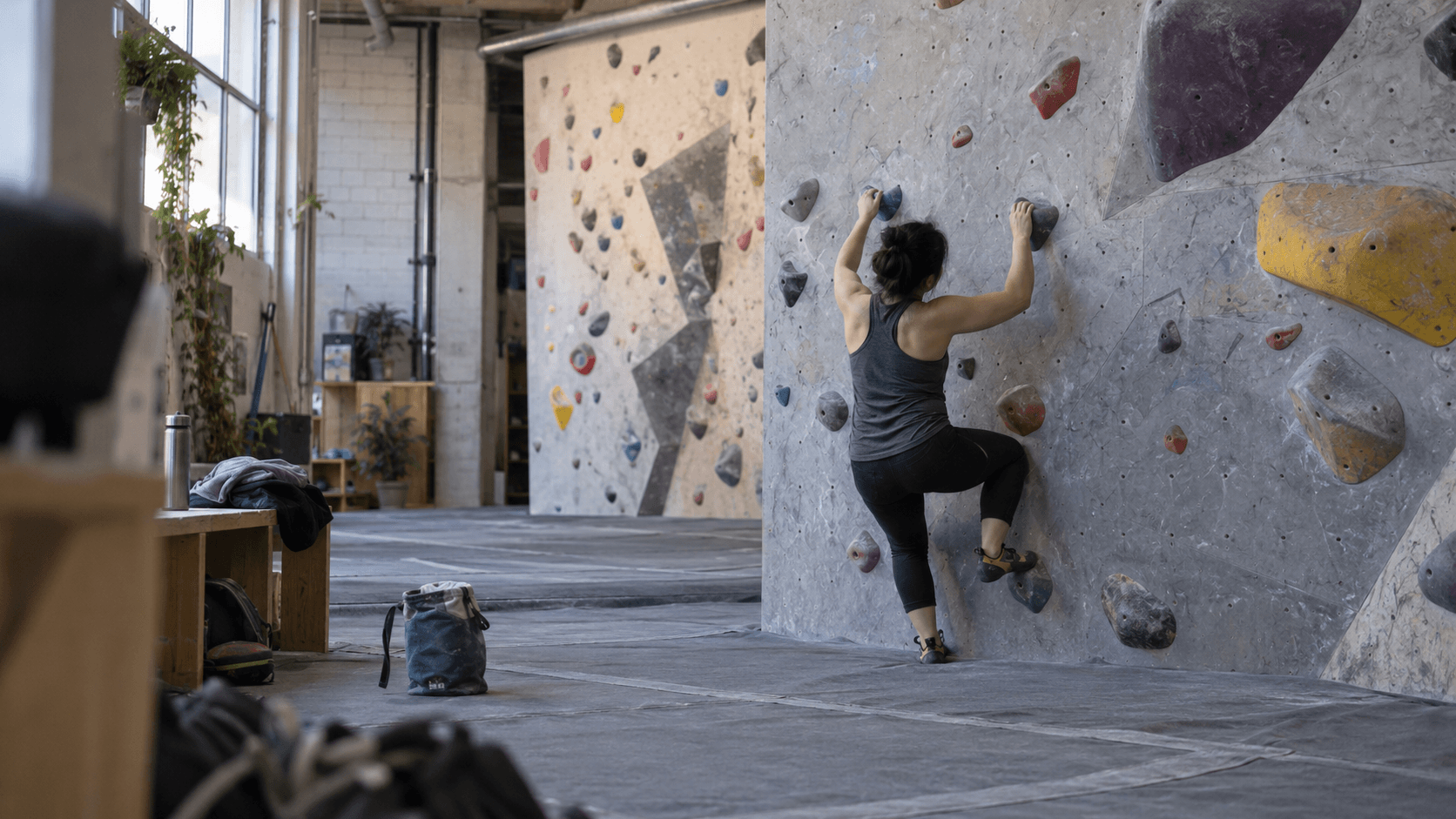
Bouldering
Climbing without ropes or heights — just you, a wall, a crash pad, and a very specific kind of forearm ache.
- Cost to start
- ~$75 to start
- Learning curve
- 3 / 5
- Typical session
- 60–90 min
- Physical demand
- 7 / 10
- Social level
- 6 / 10
- Setting
- At a venue
Bouldering is climbing stripped down to the interesting part: short, hard problems a few metres off the ground, with a thick mat instead of a rope. No partner or training required to start, which is why most indoor gyms are full of first-timers on any given evening.
What it costs
Bare-minimum start: about $20–25 for a single day pass or intro session, using the gym's rental shoes. This is genuinely enough to find out if you like it — most gyms include a free safety briefing with the first visit.
Practical setup: about $75, once you know you'll come back. That's a pair of entry-level climbing shoes (~$60) and a chalk bag with chalk (~$14). Shoes are the one thing worth owning rather than renting — a snug, well-fitting shoe makes a noticeable difference to what you can climb, and rental shoes are rarely a good fit. Rental shoes are fine for your first two or three visits; don't buy until then.
Ongoing cost is just day passes or a monthly membership if you're climbing regularly — check whether your gym's membership is worth it before buying single passes for months. Chalk is the one small consumable: a bag lasts a couple of months of regular sessions and costs a few dollars to refill.
What to buy
Climbing shoes that fit snug but not painful — sized differently from street shoes, so try them on in person if you can. A chalk bag with chalk, which keeps sweaty hands from slipping on the holds. That's the entire beginner kit; the gym provides the walls, the mats, and the safety briefing.
Skip buying your own crash pad or a climbing harness — bouldering doesn't use ropes or harnesses, and the gym's mats are the safety equipment. Rental shoes cover your first visits, so don't buy shoes before you're sure you'll be back. You can also borrow chalk from the communal bucket most gyms leave out, at least until you decide you want your own.
How to start
Start with an indoor gym's intro session and rental shoes. You don't need your own gear for at least the first two visits.
Climb the easiest color-graded problems first regardless of how simple they look — grading systems vary between gyms, so a first visit is partly about calibrating what "easy" means at this one. Focus on using your legs to push rather than hauling yourself up with your arms; it's the single biggest technique shift for people coming from other sports. Stop before your forearms are completely spent — pushing through forearm fatigue is how beginners strain fingers, the most common bouldering injury, and it can sideline you for weeks.
Two sessions a week is plenty to start. Early progress looks like reading a route before you climb it, not climbing harder grades — that comes later. The most common beginner mistake, beyond overusing your forearms, is skipping the warm-up — jumping straight onto hard problems cold is a fast way to strain a shoulder or a finger tendon. A few easy climbs first, and some basic wrist and finger stretches, take five minutes and meaningfully cut your injury risk.
Is it for you?
Bouldering suits people who want a workout that feels like a puzzle rather than a routine, and who don't mind training in a room full of strangers doing the same thing. It's genuinely accessible solo — no partner or class required — but it does ask you to be honest about fatigue and ease off before your forearms give out. If you want a quiet, low-key gym experience, it's not that; bouldering gyms are social by design.
Starter gear
Soft suggestions to get going. These are affiliate links — buying through one may earn us a commission at no extra cost to you.