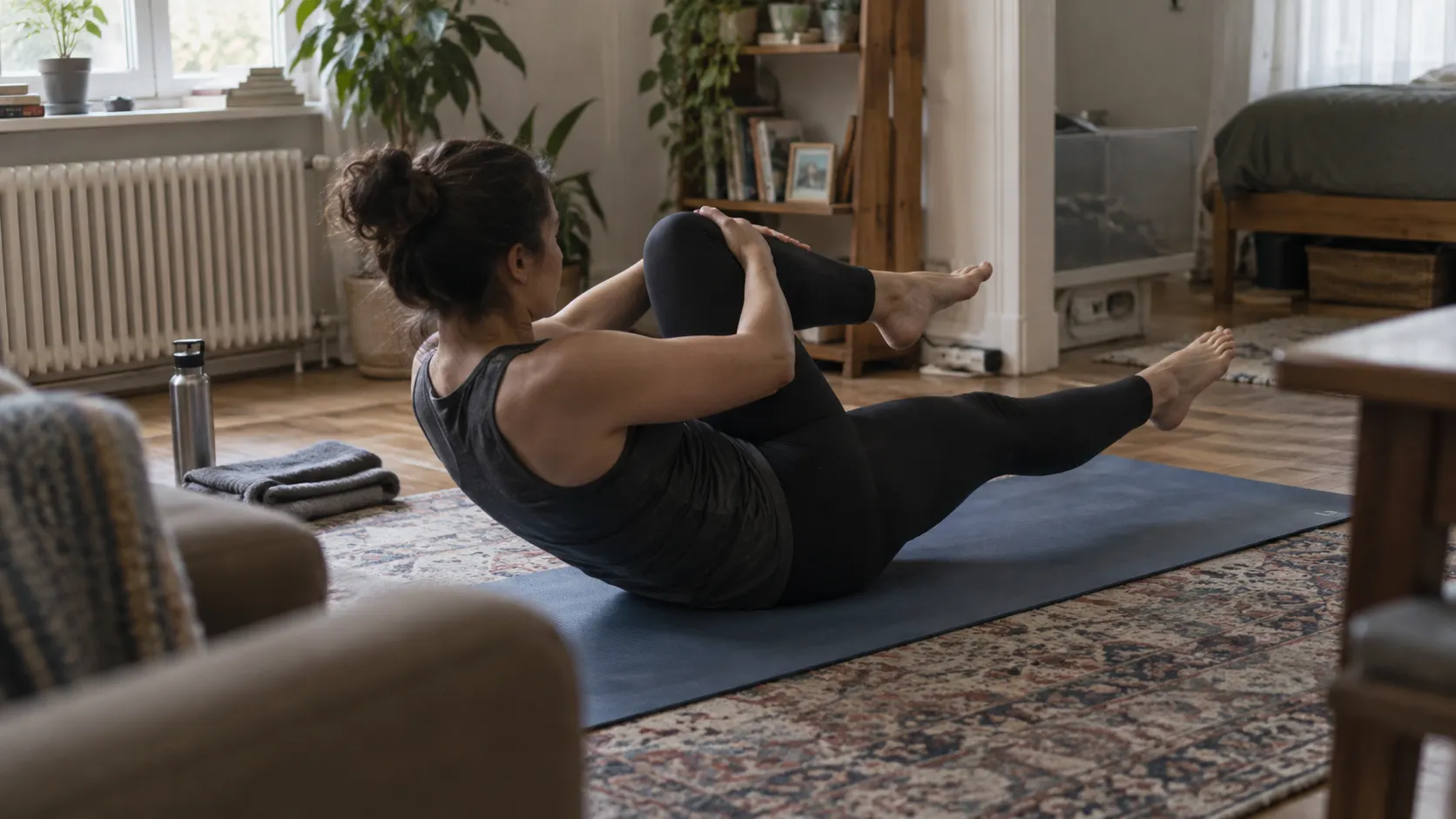
Pilates
Core work disguised as gentle stretching, until your abs disagree the next morning.
- Cost to start
- ~$45 to start
- Learning curve
- 2 / 5
- Typical session
- 30–45 min
- Physical demand
- 4 / 10
- Social level
- 1 / 10
- Setting
- At home
Pilates gets filed under "gentle stretching for people who don't like the gym," which undersells it — it's a genuinely demanding core and control workout that just doesn't look intense from across the room, right up until the next morning.
What it costs
Bare-minimum start: $0 — a folded blanket or towel on the floor and a free YouTube mat class. You don't need equipment to learn the fundamentals.
Practical setup: about $45. That's a proper exercise mat (~$30) — thicker than a standard yoga mat, since pilates involves more direct spine and hip contact with the floor — and a small pilates ring or a light resistance band (~$15) for added resistance on core and leg work. The mat is worth buying properly; a thin yoga mat noticeably hurts during roll-down and spine-contact moves.
Optional later: a studio reformer class (~$25–40 per session, ongoing) once you know you like the discipline and want the machine-based version, and a set of light hand weights for arm-focused sequences.
There's no real ongoing cost with mat pilates — a good mat lasts years, and the ring or band rarely wears out with home use. The reformer studio route is where recurring cost actually shows up, since class packages are an ongoing membership rather than a one-time purchase.
What to buy
A dedicated pilates or thicker exercise mat — this genuinely changes comfort on floor work, more than most beginners expect. A small pilates ring or a light-to-medium resistance band, which adds real resistance to moves that otherwise rely entirely on your own control. That's the complete starter kit.
Skip the reformer machine and studio membership until you've done mat pilates consistently for a month or two — the machine adds resistance and assistance that's genuinely more useful once you already understand the core movement patterns it's built around. You can also borrow a resistance band from anyone who does home workouts, since a light band from any fitness brand works fine here — it doesn't need to be pilates-specific.
How to start
Start with a free beginner mat routine and just a towel on the floor. You don't need a mat, ring, or any equipment for your first few sessions.
Focus on breath and control over range of motion — pilates rewards precise, controlled movement far more than reaching further or moving faster, which is the opposite of most fitness instincts. Do a session two or three times a week rather than daily at first; the core muscles being trained need real recovery time between sessions, more than people expect from something that looks this gentle. Expect noticeable soreness in your deep core and hips after the first few sessions — that's normal and fades as the muscles adapt.
The most common beginner mistake is holding your breath during effort, which pilates specifically trains against — breathing out during the hardest part of a movement, rather than holding it, is one of the actual skills being built here, not an afterthought. A second common mistake is letting the lower back arch off the mat during leg or ab work instead of keeping it pressed down — a real safety note, since an arched back under load is how pilates beginners most often strain something.
Is it for you?
Pilates suits people who want a low-impact, joint-friendly workout with a real strength payoff, especially if running or heavy lifting doesn't appeal. It asks for patience with a slow, controlled pace that can feel unsatisfying at first if you're used to feeling "worked out" through sweat and speed rather than precision. If you want fast cardio, this isn't it; if you want a workout that quietly rebuilds core strength and posture over weeks, it delivers reliably.
Starter gear
Soft suggestions to get going. These are affiliate links — buying through one may earn us a commission at no extra cost to you.
Tagged
More like this
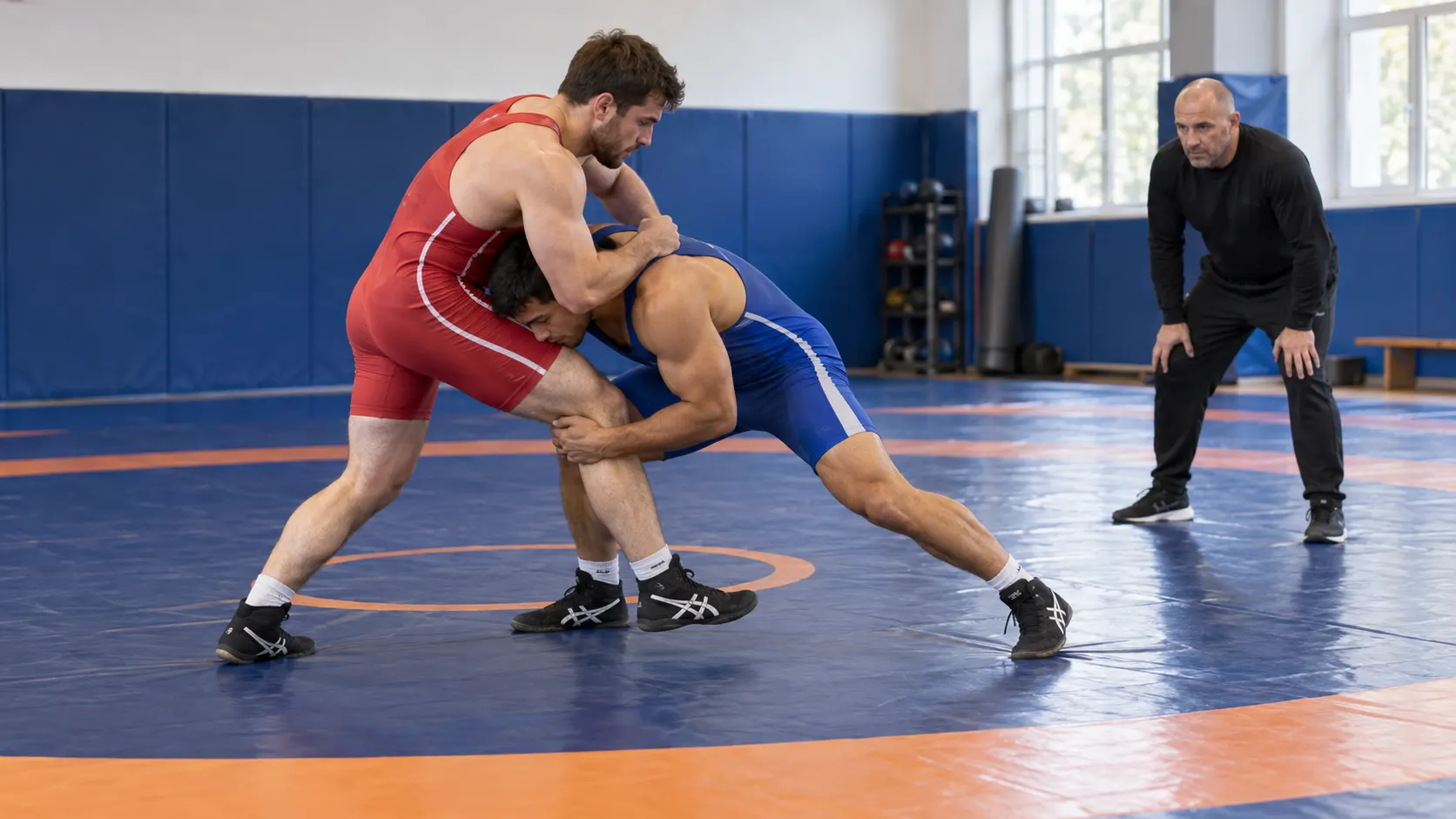
Amateur Wrestling
Chess, if the pieces could also put you in a headlock.
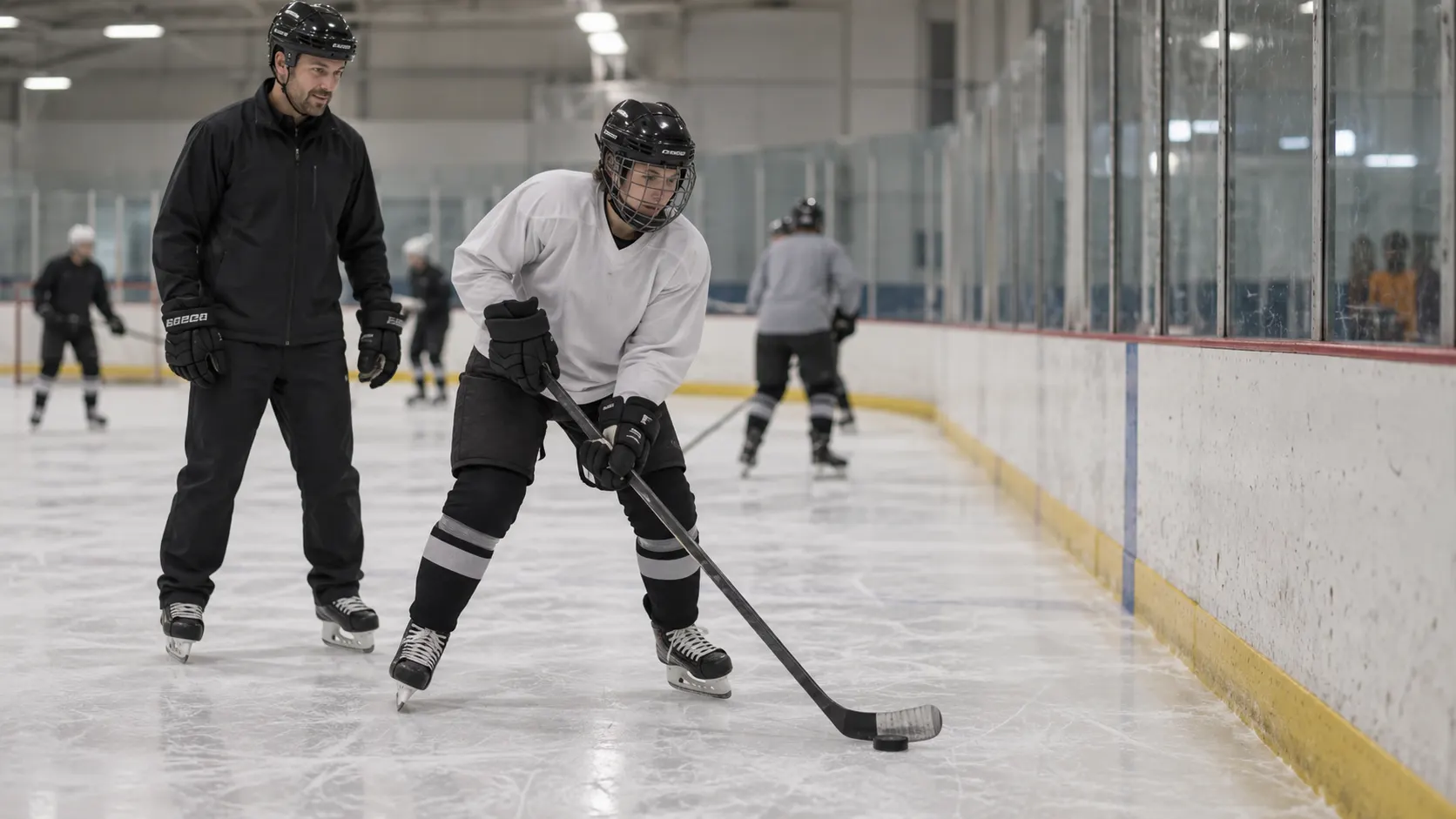
Ice Hockey
Learning to stand on knives while chasing a rubber disc, and somehow that's the fun part.
Skydiving
Voluntarily exiting a perfectly functional airplane, then paying for the privilege.
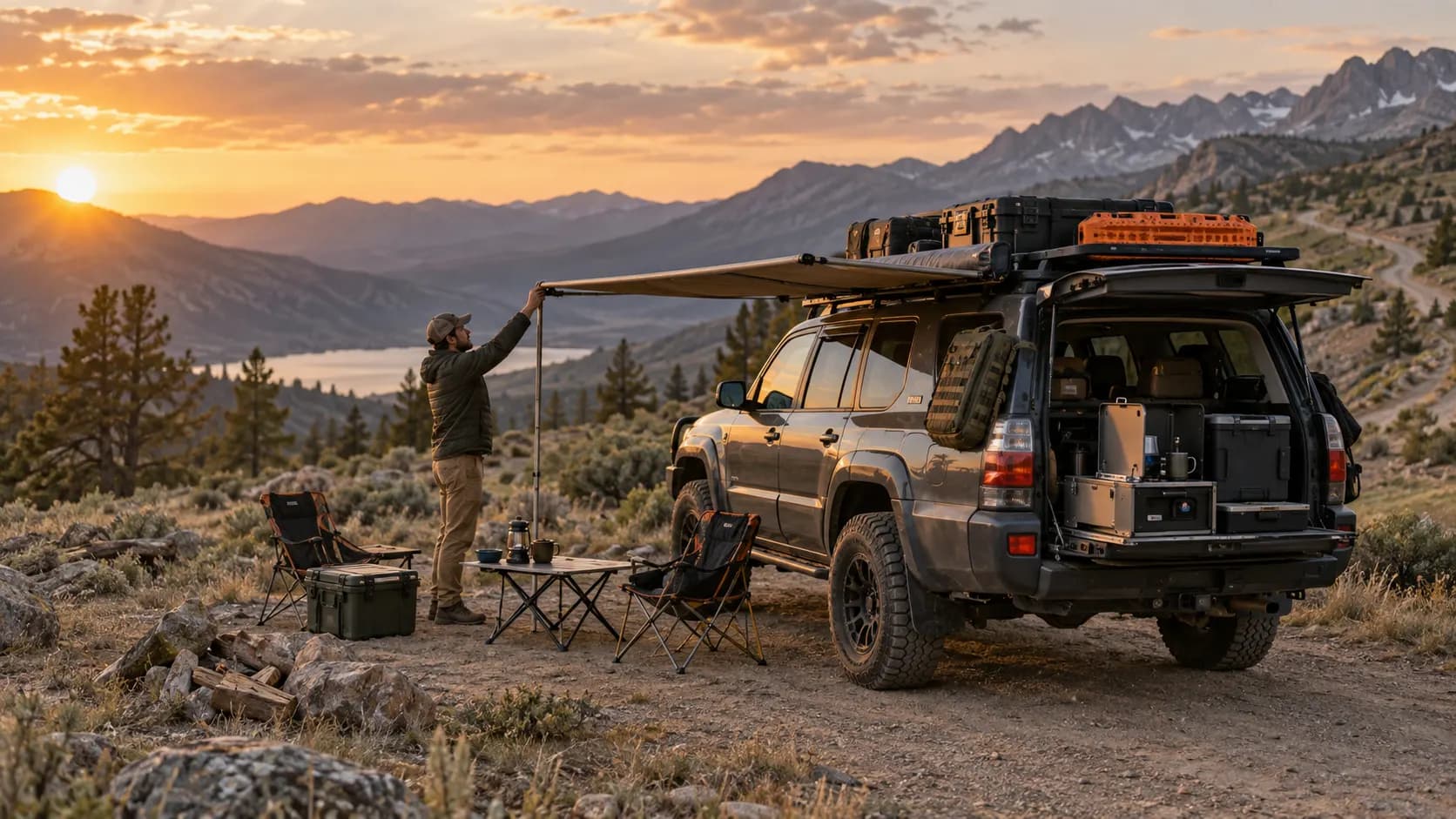
Overlanding
Camping, but you brought the entire garage with you and somehow still forgot a can opener.
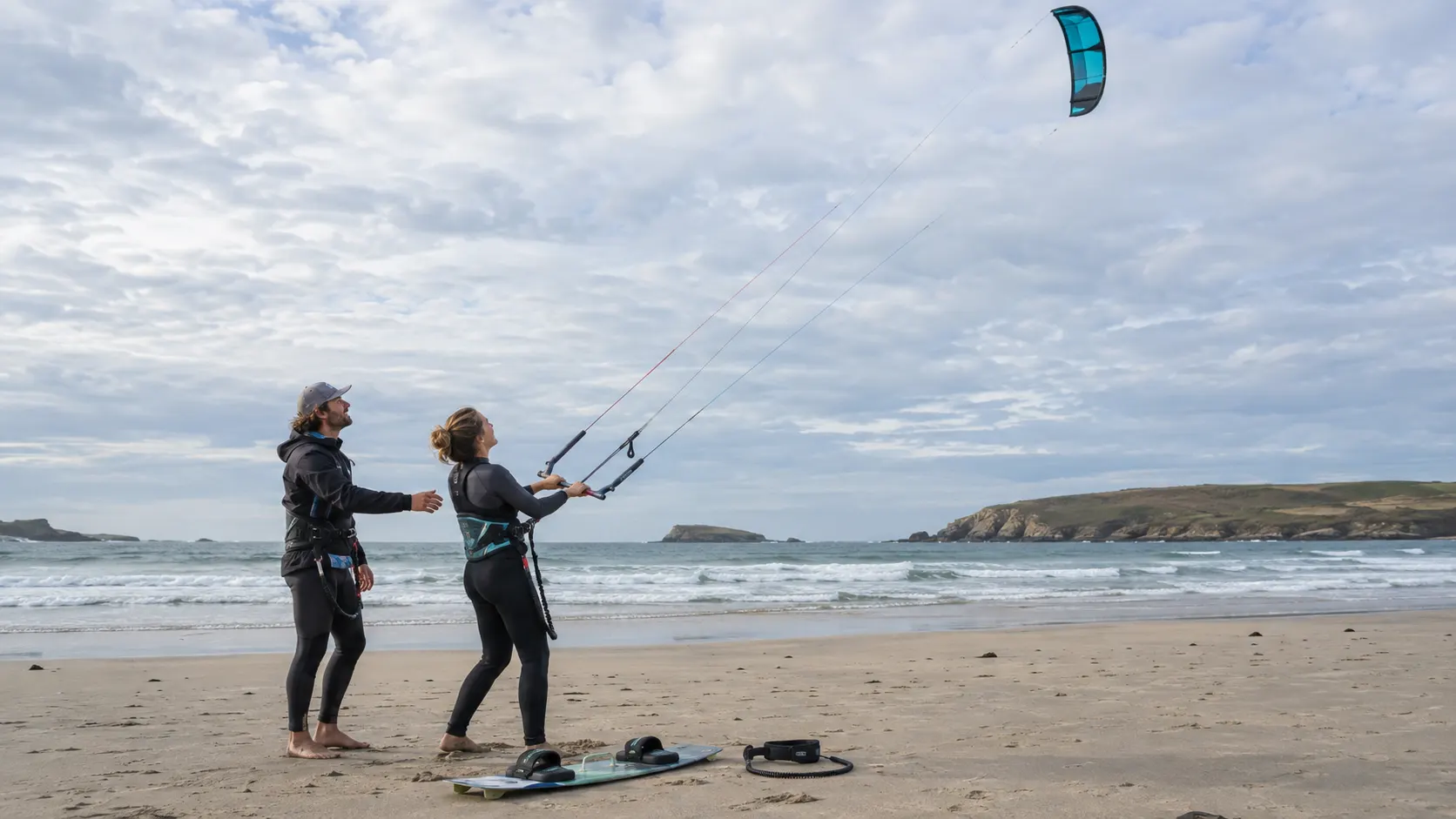
Kitesurfing
Strapping a giant kite to yourself and letting the wind decide how your afternoon goes.