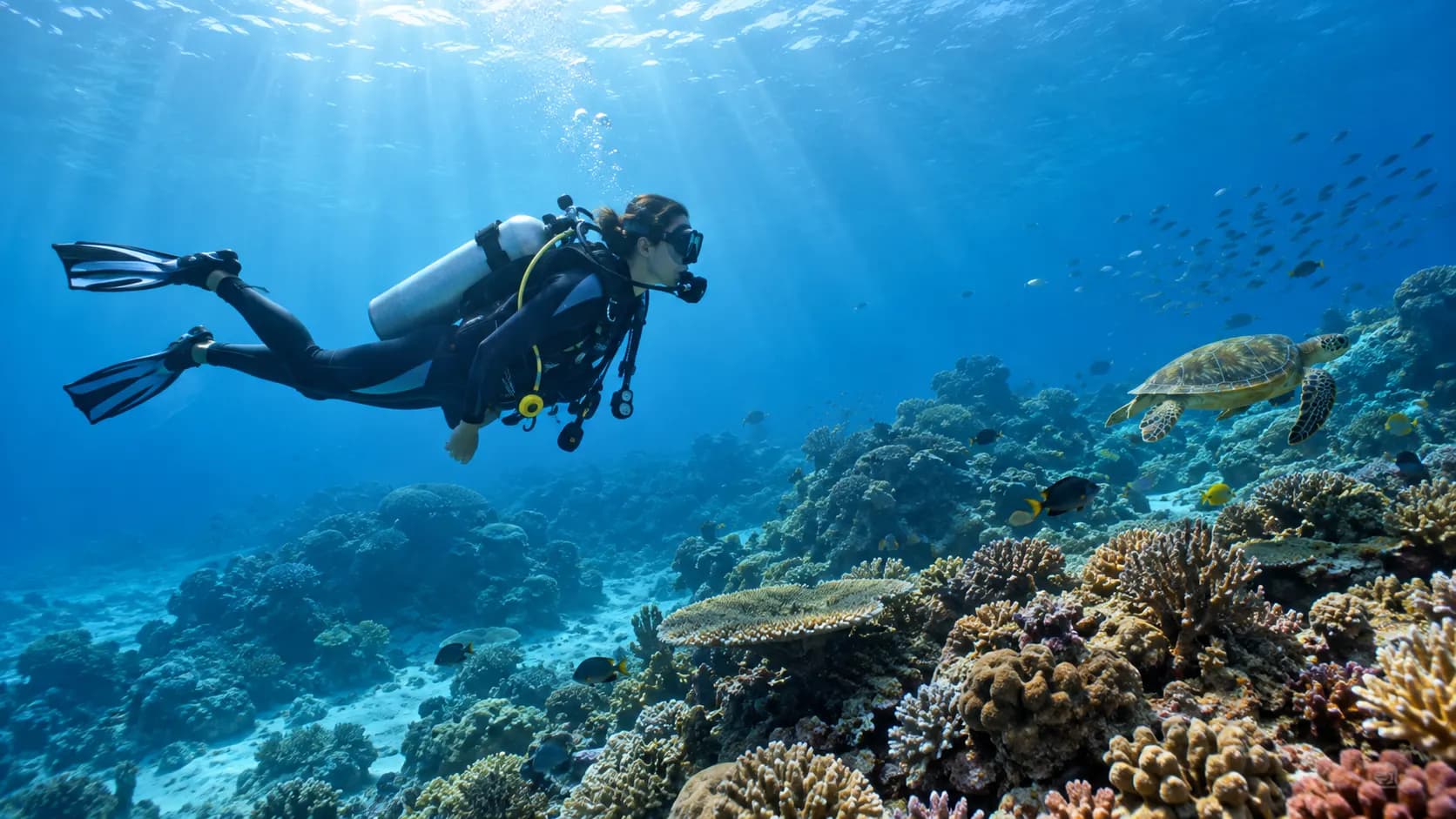
Scuba Diving
Breathing underwater, legally, for the price of a decent used bicycle.
- Cost to start
- ~$600 to start
- Learning curve
- 4 / 5
- Typical session
- 2-4 hours
- Physical demand
- 6 / 10
- Social level
- 4 / 10
- Setting
- Outdoors
Scuba diving has a reputation as a rich person's hobby, and the gear can absolutely get there, but the actual barrier to entry is a weekend course, not a boat. Once you're certified, the ocean — or a decent lake — is a place you can just go, the same way a trail is once you own hiking boots.
What it costs
Bare-minimum start: about $150 — a "Discover Scuba" experience at a local dive shop, a single supervised shallow dive with all gear rented and an instructor beside you the whole time. No certification needed, and it's the honest way to find out if being underwater freaks you out before spending real money.
Practical setup: about $600. That's an Open Water certification course — classroom sessions, confined-water (pool) dives, and a few open-water dives, typically $400-550 depending on your region — plus your own mask, snorkel, and fins (~$150), which most divers buy early since a well-fitted mask matters more than almost any other piece of gear and rental ones rarely fit well.
Optional later: your own BCD (buoyancy vest) and regulator, $800-1,500 combined, once you're diving regularly enough that renting every time gets old; a wetsuit suited to your local water temperature; Advanced Open Water certification, which opens up deeper and specialty dives.
The one thing worth spending on early is your own mask — a leaking or fogging rental mask ruins more first dives than any other single factor. Ongoing costs are mostly air fills and gear rental until you own your own set, plus occasional dive trips.
What to buy
An Open Water certification course through a shop affiliated with PADI or SSI, the two major certifying bodies — either is fine, and certification transfers worldwide. Your own mask, snorkel, and fins, fitted properly rather than grabbed off a rental rack. A dive logbook, which most agencies require you to keep during training anyway.
Skip buying a BCD or regulator before you're certified — you'll use rental gear throughout your course, and it's genuinely useful to try a few different setups before committing to your own. Skip a full wetsuit if you're training in warm water; a rash guard is often enough, and you can rent a wetsuit for colder conditions later.
How to start
Start by booking an Open Water certification course at a local, reputable dive shop. You don't need to own any gear yet — courses include rentals for the pool and open-water sessions.
The course typically runs a weekend to a week: classroom and quizzes covering dive theory and safety, pool sessions practicing skills like mask-clearing and controlled ascents, then several open-water dives applying what you learned. Practice breathing slowly and evenly from the very first pool session — panicked, shallow breathing burns through your air supply fast and is the most common reason new divers cut a dive short. Safety note: never dive without a certified buddy, always follow your dive computer's ascent rate and no-decompression limits, and never hold your breath while ascending — the single most important rule in the sport, since trapped expanding air can cause serious lung injury. The most common beginner mistake is overweighting your belt to compensate for poor buoyancy control instead of practicing buoyancy itself, which just makes every dive more tiring.
Is it for you?
Scuba diving suits people who like the idea of visiting a genuinely alien environment and don't mind a real, structured learning process to get there. It rewards calm, deliberate movement more than fitness — some of the best divers are the least athletic people in the group, because efficiency matters more than power. If you're claustrophobic or panic easily in water, the course itself is the right, low-stakes place to find that out. If you've ever watched an ocean documentary and felt a genuine pull toward it, certification is a much smaller step than it looks like from the outside.
Starter gear
Soft suggestions to get going. These are affiliate links — buying through one may earn us a commission at no extra cost to you.
Tagged
More like this
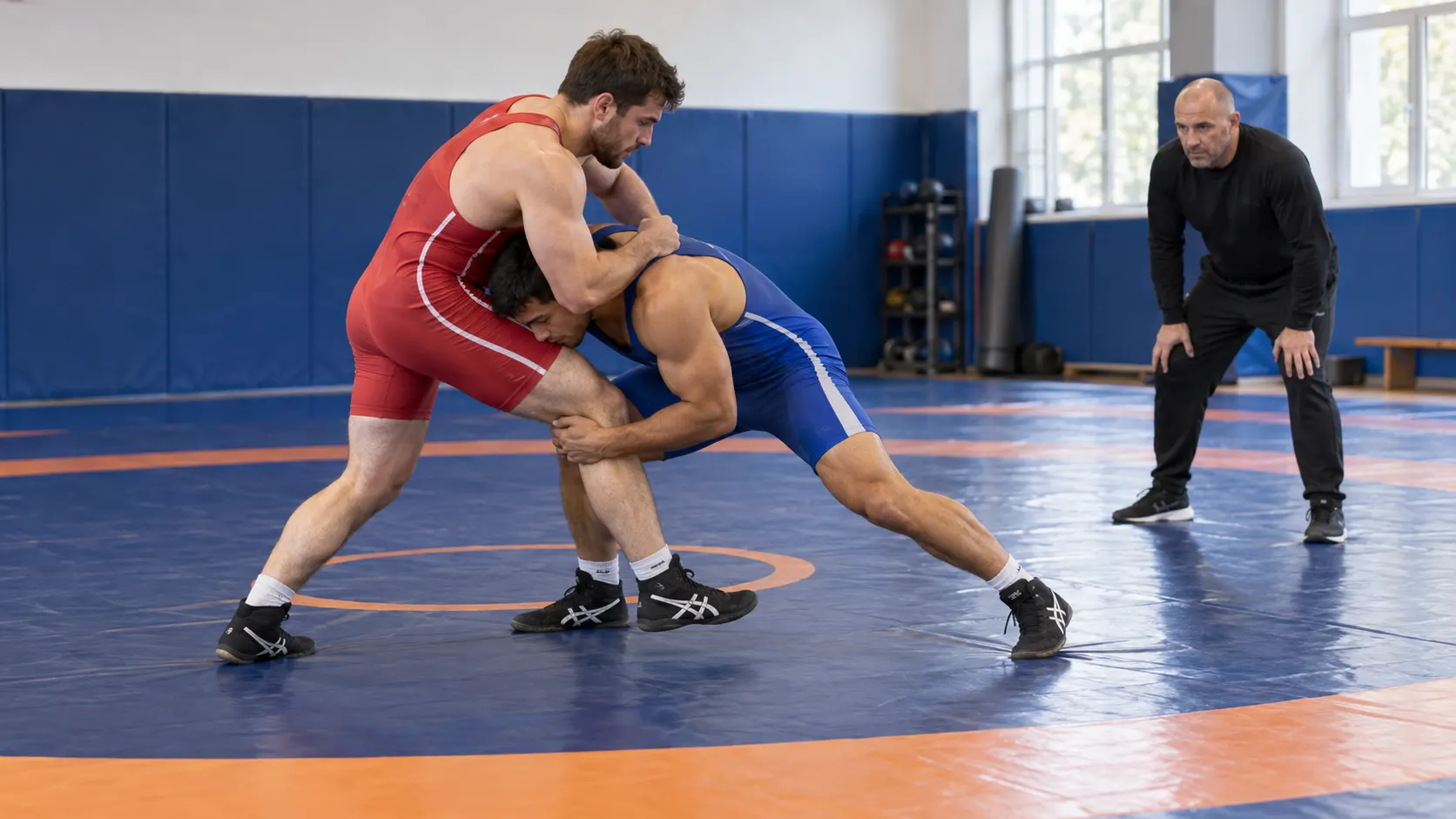
Amateur Wrestling
Chess, if the pieces could also put you in a headlock.
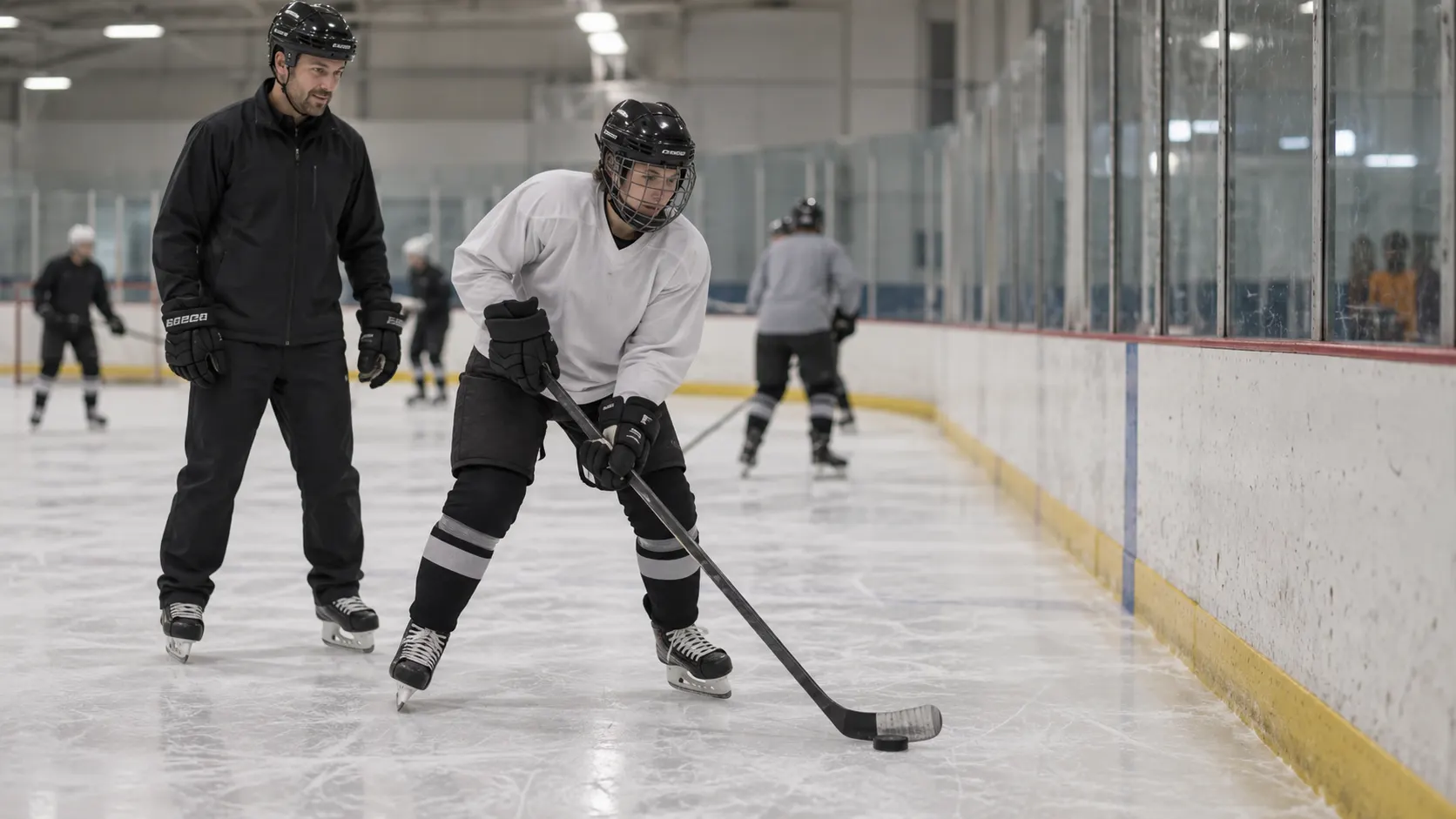
Ice Hockey
Learning to stand on knives while chasing a rubber disc, and somehow that's the fun part.
Skydiving
Voluntarily exiting a perfectly functional airplane, then paying for the privilege.
Overlanding
Camping, but you brought the entire garage with you and somehow still forgot a can opener.
Kitesurfing
Strapping a giant kite to yourself and letting the wind decide how your afternoon goes.