Trail Running
It's just running, but with a map and the low-grade fear of getting lost.
- Cost to start
- ~$125 to start
- Learning curve
- 2 / 5
- Typical session
- 40–90 min
- Physical demand
- 8 / 10
- Social level
- 3 / 10
- Setting
- Outdoors
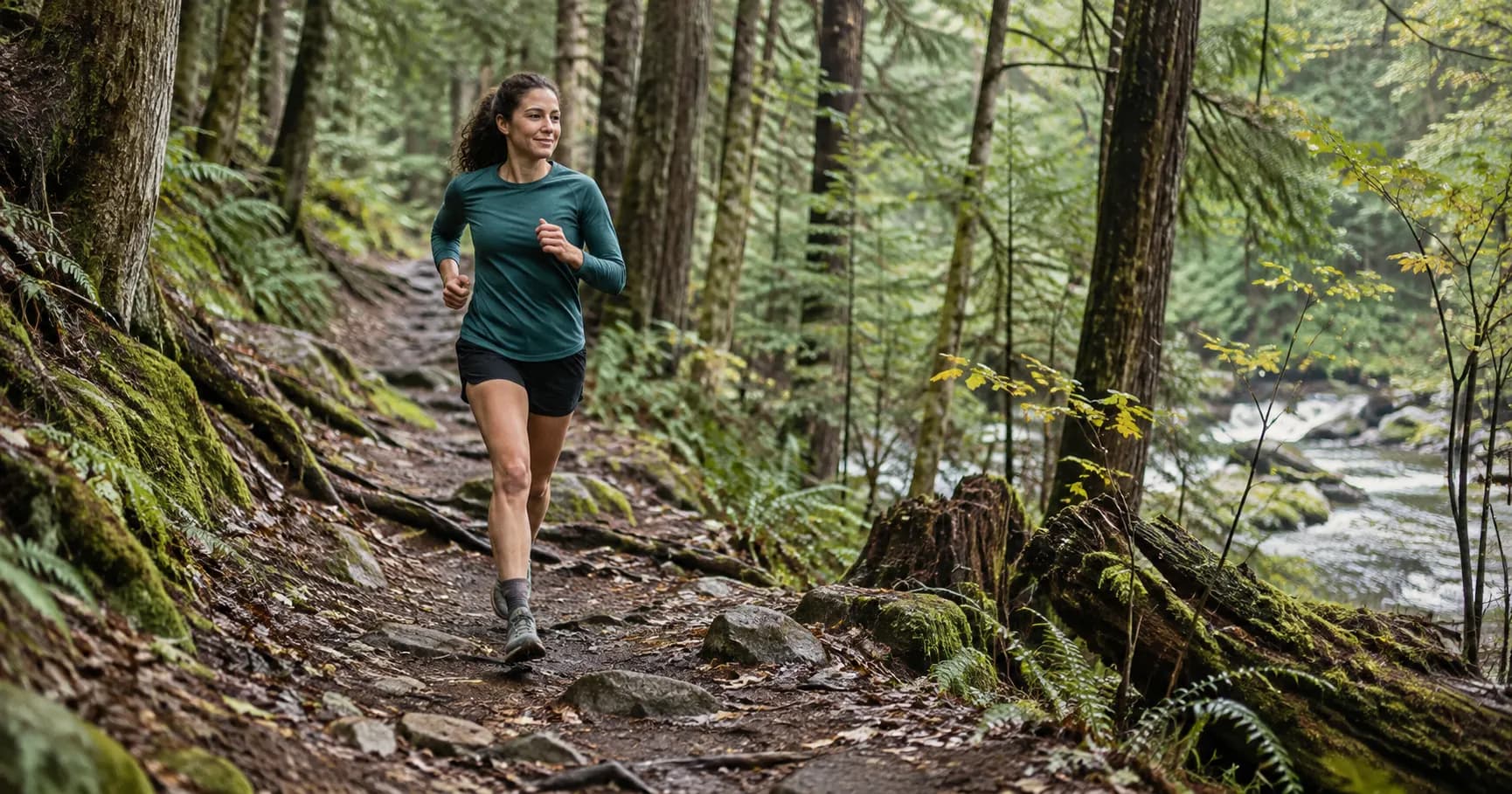
Road running is a treadmill you happen to be outdoors for. Trail running is the same movement with roots, mud, hills, and a much better view — and because the terrain forces you to slow down, it is often kinder to your knees and your ego than pounding pavement.
What it costs
Bare-minimum start: about $90 — trail shoes with real grip, using clothes and a water bottle you already own. This is the one purchase that actually matters; road running shoes slip on loose or muddy ground.
Practical setup: about $125. That's the same trail shoes (~$90) plus a basic hydration vest or handheld bottle (~$35) for runs over about an hour. The shoes are worth buying properly — they're the one thing worth spending on — but don't upgrade the vest until your runs are actually long enough to need it.
Optional later: a headlamp (~$25) if you'll ever start or finish in the dark, and a GPS watch once you're sure you're sticking with it — your phone is genuinely fine as a tracker until then. Ignore GPS watches at the start; they're the classic way to spend $200+ on a hobby you've done twice.
Shoes are the one recurring cost — trail tread wears down faster than road shoes because it's biting into rougher terrain, so budget to replace a pair every 300-500 miles depending on how technical your trails are.
What to buy
Trail shoes with real lugged grip — this is the one gear decision that changes how the run actually feels, since road shoes slip constantly off pavement. A soft-flask vest or handheld bottle once your runs regularly pass an hour. Everything else — shirts, shorts, socks — you already own from road running or the gym.
Skip the GPS watch and the headlamp until you know you're sticking with it. A watch adds nothing your phone doesn't already do at this stage, and a headlamp is dead weight unless you're actually running before sunrise or after dark. You can borrow a hydration vest for a single long run before deciding to buy one — plenty of runners have a spare they'll lend out.
How to start
Start at the nearest park or nature reserve with a marked path, in your regular running clothes plus trail shoes. You don't need a hydration vest yet if the run is under an hour.
Run the flat sections and walk the steep ones without worrying about pace — trail pace is genuinely meaningless because terrain varies so much run to run, and comparing it to road pace will just discourage you. Start with 20–30 minutes twice a week and add time before you add hills; hills are where most new trail runners overdo it and end up sore or hurt. Watch your footing on roots and loose rock, especially downhill, where most trail injuries happen from a moment of inattention rather than the distance itself.
Progress in the first month looks like running the flat sections without walking, not running faster — speed comes after your legs adapt to uneven ground. The most common beginner mistake is increasing distance and hill work in the same week — trails load your ankles and stabilizing muscles differently than roads do, and doing both at once is how minor tweaks turn into weeks off. Add one variable at a time.
Is it for you?
Trail running suits people who find road running boring but still want the same fitness payoff — the terrain forces a variety that flat pavement can't. It asks for more attention to footing than road running, and for access to actual trails, which not everyone has nearby. If you're chasing a specific pace or time, it'll frustrate you, since terrain makes those meaningless; if you want running to feel less like a treadmill, it's exactly that.
Starter gear
Soft suggestions to get going. These are affiliate links — buying through one may earn us a commission at no extra cost to you.