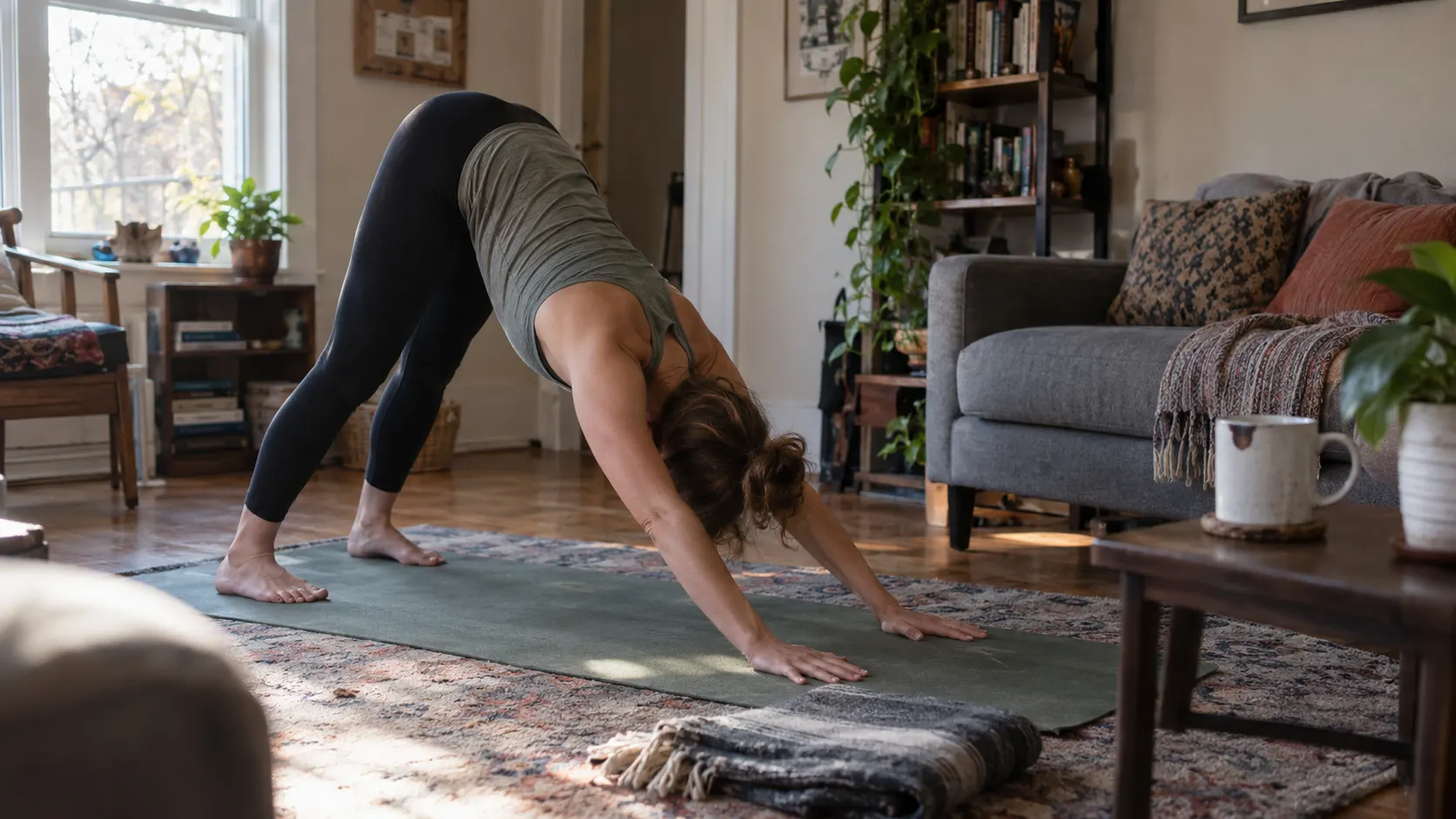
Yoga
Stretching with a soundtrack of your own breathing, and a surprising amount of sweating.
- Cost to start
- ~$40 to start
- Learning curve
- 2 / 5
- Typical session
- 20–45 min
- Physical demand
- 3 / 10
- Social level
- 1 / 10
- Setting
- At home
Yoga carries a certain Instagram reputation — perfect light, a beach, a pose most beginners physically cannot do. Almost none of that is required to actually start; the real beginner version is a mat on your living room floor and a free video, sweating in ways you didn't expect from "just stretching."
What it costs
Bare-minimum start: about $15 — a basic yoga mat, since a towel or carpet genuinely doesn't grip well enough for balance poses and slides during sun salutations. A free YouTube channel (Yoga with Adriene is the standard beginner recommendation) covers everything you need to start.
Practical setup: about $40. That's a proper yoga mat with real grip (~$30) and a pair of foam yoga blocks (~$10), which most beginners need for poses that assume flexibility you haven't built yet — blocks aren't a crutch, they're how the poses are supposed to work while your body adapts.
Optional later: a studio drop-in class (~$20–25) for in-person form correction, which catches alignment issues a video genuinely can't, plus a bolster and a strap once you know your practice's direction (restorative versus more athletic styles want different props).
There's little ongoing cost with a home practice — a decent mat lasts a couple of years of regular use. Studio classes are where recurring cost shows up, so decide deliberately whether you're building a home habit or a studio one, since the two have very different long-term price tags.
What to buy
A yoga mat with real texture and grip — thin, ultra-cheap mats slide during standing poses, which is both frustrating and a real fall risk. A pair of foam blocks, which most beginners assume are for advanced students and are actually the opposite — they make poses accessible while your flexibility and strength catch up.
Skip a strap, a bolster, and specialty yoga clothes at first. Any clothes that let you move and bend are fine, and a strap only matters for a handful of specific poses you likely won't attempt in your first month. You can also borrow blocks from a friend who practices, or substitute firm books and folded towels for your first few sessions before buying dedicated foam ones.
How to start
Start with a beginner-labeled video and just a mat. You don't need blocks or a studio membership yet.
Follow along without pushing into pain — yoga rewards showing up at your actual current flexibility, not the version you're picturing. Breathe through your nose, matching breath to movement rather than holding it, which is a real skill you'll notice improving before your flexibility does. Do this two or three times a week rather than daily; consistency matters more than frequency at the start, and daily sessions before your body adapts is a common way people quit from soreness.
The most common beginner mistake is comparing your pose to the instructor's and forcing your body to match it — yoga poses are meant to look different on different bodies, and forcing depth you don't have yet is how people strain hamstrings and lower backs in month one. A real safety note: any sharp, joint-level pain (as opposed to a general stretch sensation) means back off the pose immediately rather than pushing through it — that distinction is one of the first things worth learning to feel.
Is it for you?
Yoga suits people who want a workout that's also, honestly, a mental reset — the breath-focus genuinely changes how a session feels compared to most exercise. It asks for real patience with a slow, sometimes humbling flexibility curve. If you want fast, visible fitness progress, this will feel slow; if you want something that improves your body and your stress level at roughly the same pace, it delivers both.
Starter gear
Soft suggestions to get going. These are affiliate links — buying through one may earn us a commission at no extra cost to you.
Tagged
More like this
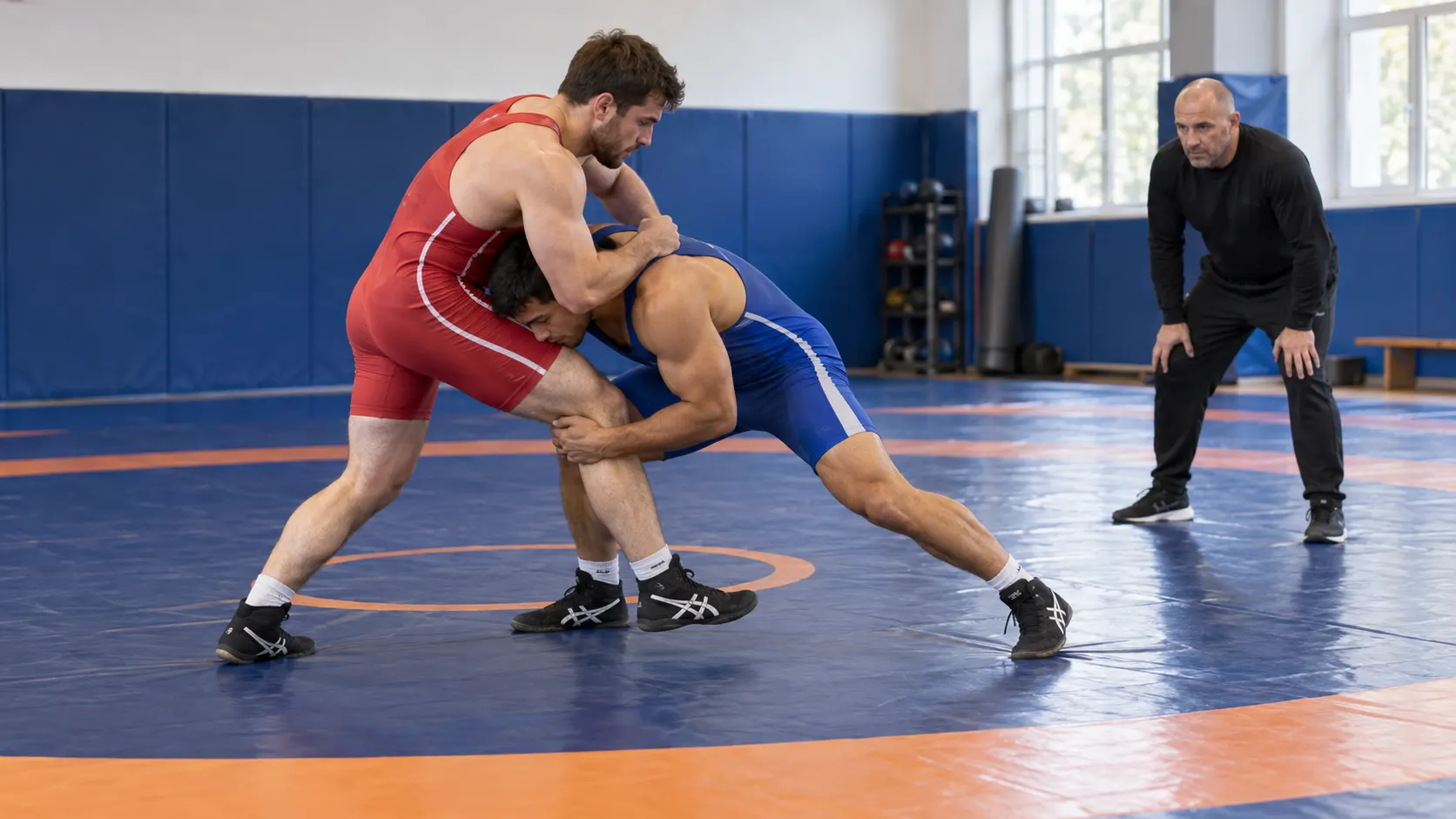
Amateur Wrestling
Chess, if the pieces could also put you in a headlock.
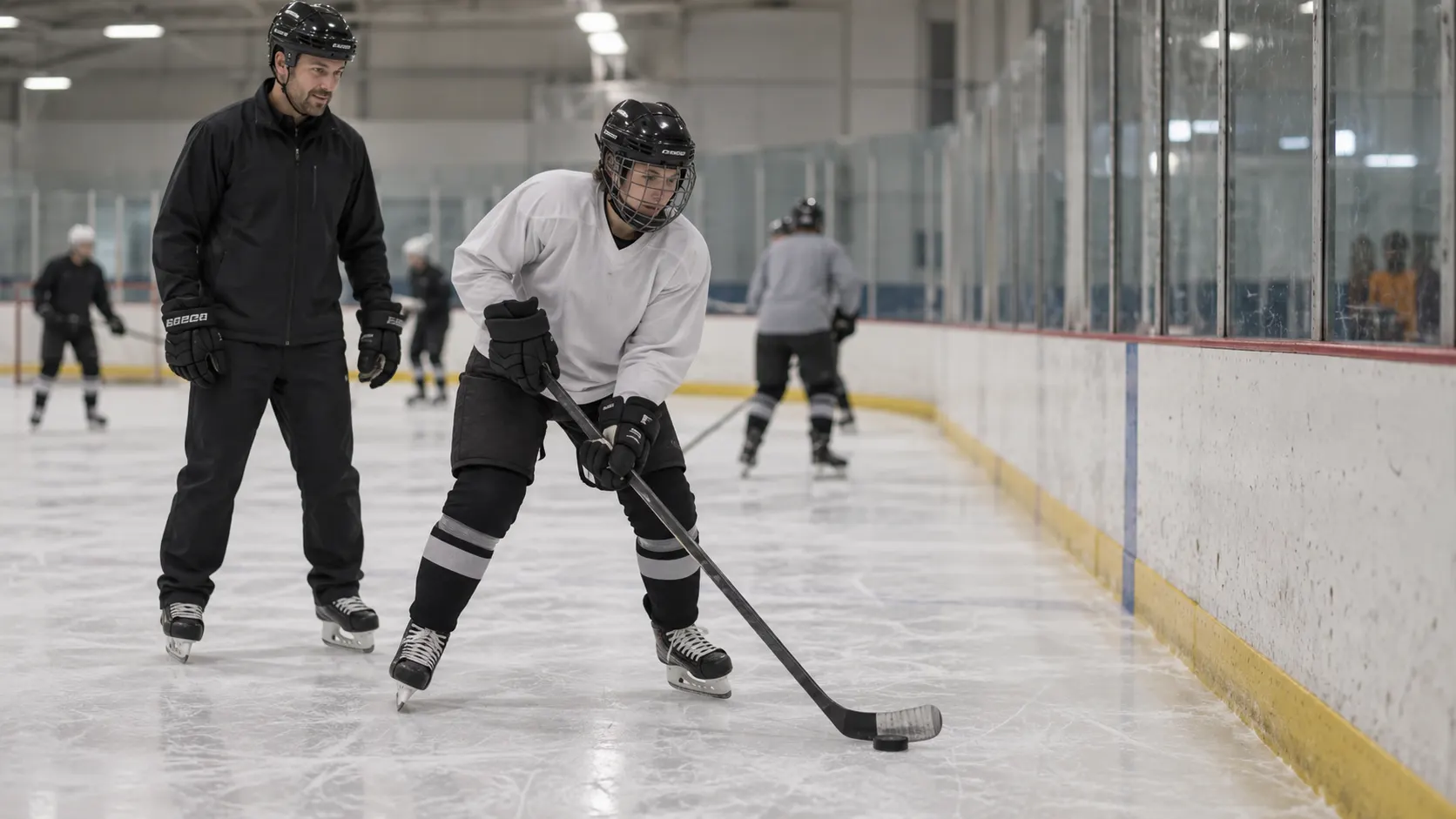
Ice Hockey
Learning to stand on knives while chasing a rubber disc, and somehow that's the fun part.
Skydiving
Voluntarily exiting a perfectly functional airplane, then paying for the privilege.
Overlanding
Camping, but you brought the entire garage with you and somehow still forgot a can opener.
Kitesurfing
Strapping a giant kite to yourself and letting the wind decide how your afternoon goes.